ISO 22000: Why Is It Becoming Essential For Food Businesses?
As food safety requirements continue to rise, businesses are facing increasing pressure from both international markets and domestic regulations. Traditionally, compliance relied on documentation and formal inspections. However, this approach is gradually being replaced by performance-based supervision, which requires operational capability to be demonstrated through a structured system.
At the same time, the introduction of Decree 46/2026/ND-CP marks a significant shift in regulatory practices. Organizations are not only expected to establish procedures but also to demonstrate control across the entire operation chain—from raw material input to final products.
In this context, management systems such as ISO 22000 are no longer optional. Instead, they are becoming a necessary foundation to meet increasingly stringent requirements. So, what makes this standard almost inevitable for food businesses in 2026? The following sections provide a detailed analysis.
What Is ISO 22000?
ISO 22000:2018 is an international standard for Food Safety Management Systems (FSMS). It is designed to control hazards that may affect product quality and safety throughout the entire supply chain.
Unlike fragmented approaches, this standard establishes a structured operating framework based on three core elements:
- A unified management structure (High Level Structure – HLS), which enables integration with other systems
- The PDCA cycle (Plan – Do – Check – Act) for continuous improvement
- Risk-based thinking applied across all activities
As a result, food safety control no longer depends on isolated stages. Instead, it is managed through a coordinated system that can be measured and continuously improved over time.
ISO 22000:2018 – International standard for food safety management systems
Is ISO 22000 Mandatory?
Currently, regulations do not require all food businesses to implement ISO 22000. Adoption remains a strategic decision, depending on each organization’s development direction and management approach.
1. Mandatory for Certain High-Risk Product Groups
Under Decree 46/2026/ND-CP, high-risk products must apply appropriate control systems, including:
- Health supplements
- Medical nutrition products
- Products for children
- Food additives
In these cases, businesses are required to establish strict control mechanisms. ISO 22000 is often selected due to its comprehensive structure and its ability to demonstrate compliance during audits.
2. In Practice: A Near-Essential Requirement for Growth
Even without full regulatory enforcement, ISO 22000 plays a critical role in business operations:
- International markets require certification for supplier approval
- Modern distribution systems demand standardized processes
Therefore, the standard goes beyond compliance. It directly impacts a company’s ability to enter and maintain its position in the market.
Why Are Food Businesses Increasingly Required to Adopt ISO 22000?
From 2026 onward, inspection frequency and regulatory oversight in the food industry have significantly increased. Organizations without a robust control system may face operational limitations. In this environment, ISO 22000 becomes a strategic solution.
1. Stricter Export Requirements
Major markets such as the EU, the US, and Japan evaluate not only the final product but also the entire management system. Without appropriate certification, businesses may be excluded from the initial screening stage.
2. Shift Toward Performance-Based Evaluation
New regulations focus on actual operational capability rather than documentation alone. As a result, organizations must maintain an effective system and be able to demonstrate it during inspections.
3. Increasing Operational Risks and Losses
Food safety incidents may lead to:
- Large-scale product recalls
- Production disruptions
- Significant financial losses
- Decline in brand reputation
In comparison, preventive investment is typically more cost-effective.
4. Rising Competitive Pressure
As more companies standardize their systems, ISO 22000 becomes a key criterion in partner selection. This directly affects a company’s ability to:
- Participate in tenders
- Secure large contracts
- Expand distribution networks
In this context, the absence of a structured management system creates a clear disadvantage.
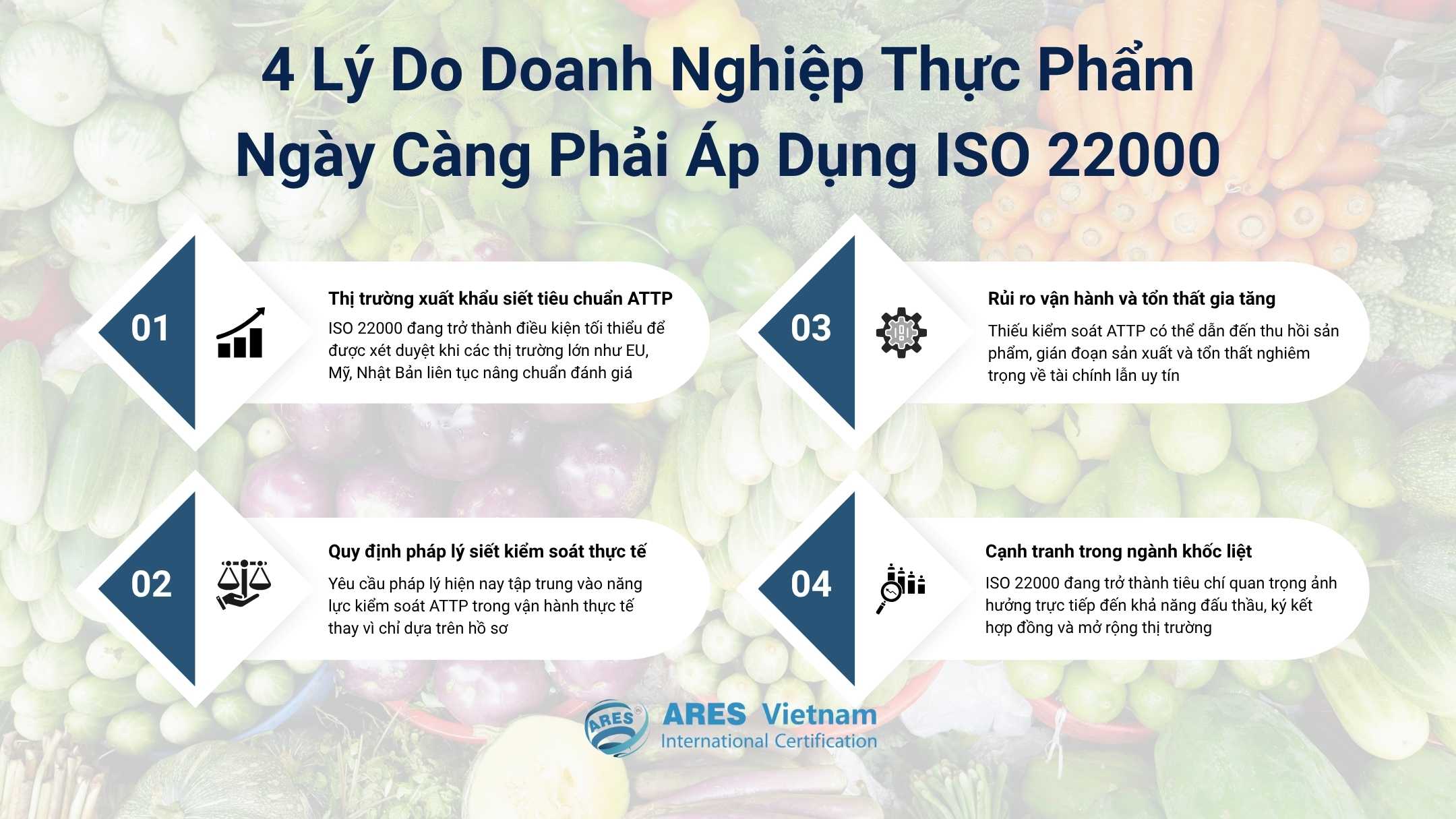
4 reasons food businesses must increasingly apply ISO 22000
How Does Decree 46/2026/ND-CP Impact Businesses?
Decree 46/2026/ND-CP introduces a management approach based on on-site inspections and post-market surveillance, rather than relying solely on declared documentation. As a result, organizations must maintain a constant state of operational readiness.
For high-risk product groups, businesses are required to implement systems such as HACCP, ISO 22000, or GMP before December 31, 2026. This requirement creates clear pressure in terms of both timeline and system maturity.
In this context, ISO 22000 stands out as a suitable option due to its ability to simultaneously address control, monitoring, and continuous improvement requirements.
▶️ For more details on the impact of Decree 46/2026/ND-CP on food businesses, see: Decree 46/2026/ND-CP on Food Safety
How Is ISO 22000 Different from HACCP?
Many organizations confuse these two models because both focus on hazard control. However, their scope and approach differ significantly.
| Criteria | HACCP | ISO 22000 |
| Scope | Focuses on critical control points | Covers the entire management system |
| Approach | Moderate, mainly technical | Advanced, integrates management, operations, and control |
| System structure | Limited | Comprehensive and structured |
| Certification | Not mandatory | Independently certified |
ISO 22000 does not replace HACCP. Instead, it incorporates and expands it into a more comprehensive management system.
Which Businesses Need To Apply ISO 22000?
If not all organizations are required to adopt it, the more important question is: which business models need this system to ensure operational capability and maintain a competitive advantage?
1. Food Manufacturing and Processing Companies
These businesses directly impact product quality and safety. Therefore, control must be embedded in daily operations rather than relying solely on final inspection, reducing internal risks.
2. Export-Oriented or International Market Participants
Meeting global food safety standards is a prerequisite for market acceptance. ISO 22000 helps establish the foundation needed to maintain access and strengthen competitiveness.
3. OEM Businesses and Supply Chain Stakeholders
In multi-party supply chains, consistency across all stages is critical. A unified management system minimizes coordination gaps and ensures requirements are met throughout the value chain.
4. Companies Expanding Their Scale
As operations grow, complexity increases. Standardizing processes and controlling key points help maintain stability and reduce risks during expansion.
5. Organizations Aiming to Strengthen Governance
For businesses transitioning from experience-based operations to system-based management, ISO 22000 provides a structured foundation to improve consistency and overall performance.
In short, ISO 22000 is not only for “required” businesses. It is particularly important for organizations pursuing long-term growth, market expansion, and sustainable operations.
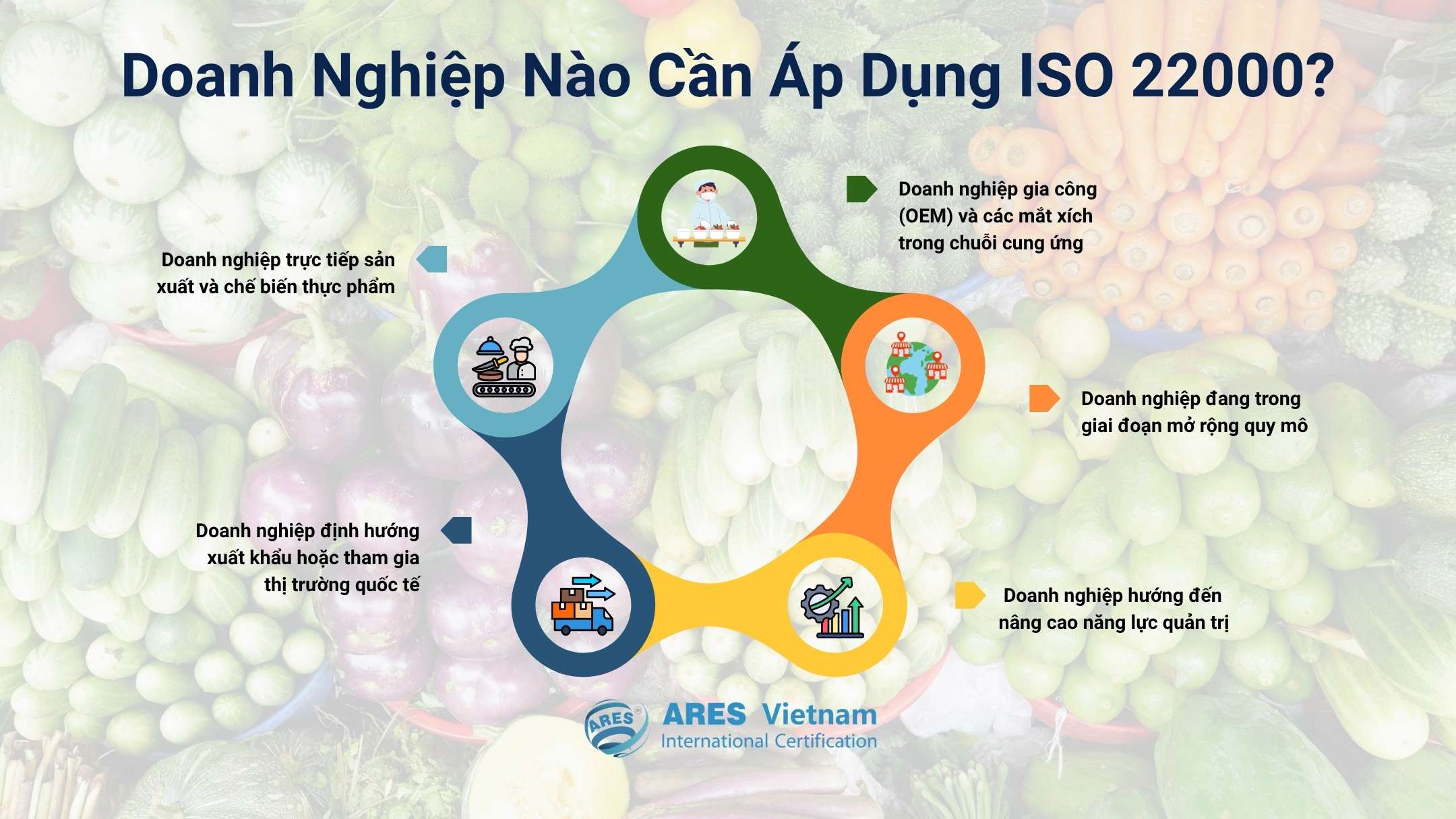
Business groups are required to apply ISO 22000
Benefits of ISO 22000 for Food Businesses
A well-implemented ISO 22000 system not only ensures compliance but also delivers clear operational and long-term benefits:
🔹Expand access to international markets: Meet global food safety expectations and improve acceptance rates during evaluations
🔹Increase opportunities with large partners: Become a key criterion in supplier selection, especially in tenders and high-standard supply chains
🔹Control risks during operations: Minimize incidents, product recalls, and operational disruptions
🔹Optimize costs through process standardization: Reduce errors, rework, and unnecessary expenses
🔹Enhance credibility and market trust: Demonstrate transparent management capability and strengthen positioning with partners
More importantly, the system helps businesses stay prepared for increasingly strict inspections, rather than reacting passively when issues arise.
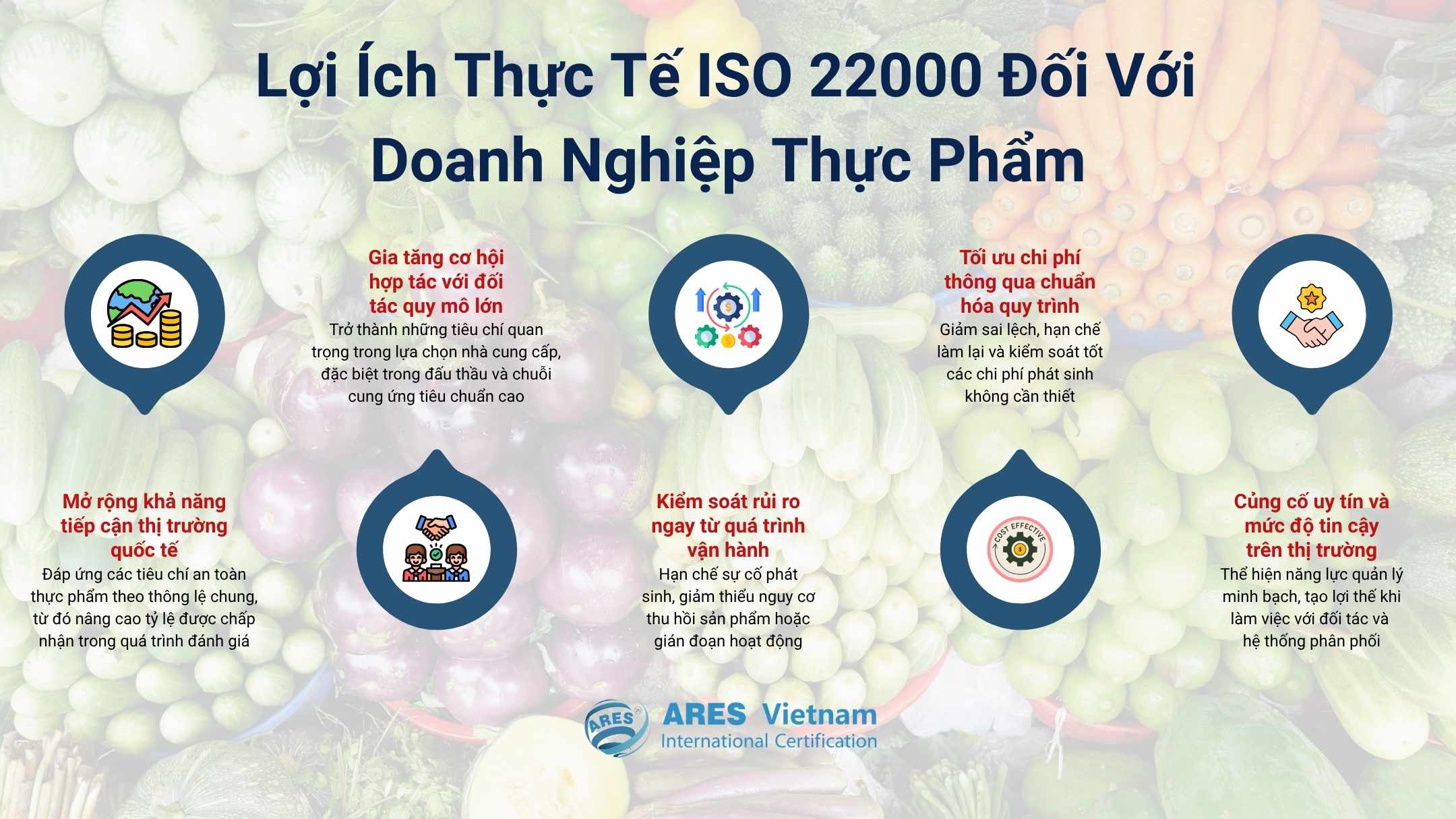
Actual benefits ISO 22000 brings to food businesses
What Should Food Businesses Do To Effectively Implement ISO 22000?
With tighter regulatory requirements under Decree 46/2026/ND-CP, ISO 22000 implementation should follow a structured approach rather than a reactive one. A clear roadmap not only shortens implementation time but also ensures real operational effectiveness.
Here are the core steps:
Step 1: Assess Current Status and Leadership Commitment
- Identify gaps between the current system and ISO 22000:2018 requirements.
- At the same time, leadership commitment is critical for resource allocation and implementation direction.
Step 2: Establish Documentation and Control Mechanisms
- Develop food safety policies, objectives, and prerequisite programs (PRPs).
- Then, build a hazard control plan based on HACCP principles, aligned with actual operations.
Step 3: Organization-Wide Implementation and Training
- Apply control measures to daily operations.
- At the same time, raise employee awareness to ensure consistent and effective system execution.
Step 4: Internal Audit and Continuous Improvement
- Conduct regular internal audits to refine the system before certification.
- Maintain continuous improvement mechanisms to adapt to operational changes.
ISO 22000 implementation does not have to be complex if approached correctly. With the right strategy, businesses can not only meet regulatory requirements but also enhance operational capability in a sustainable way.
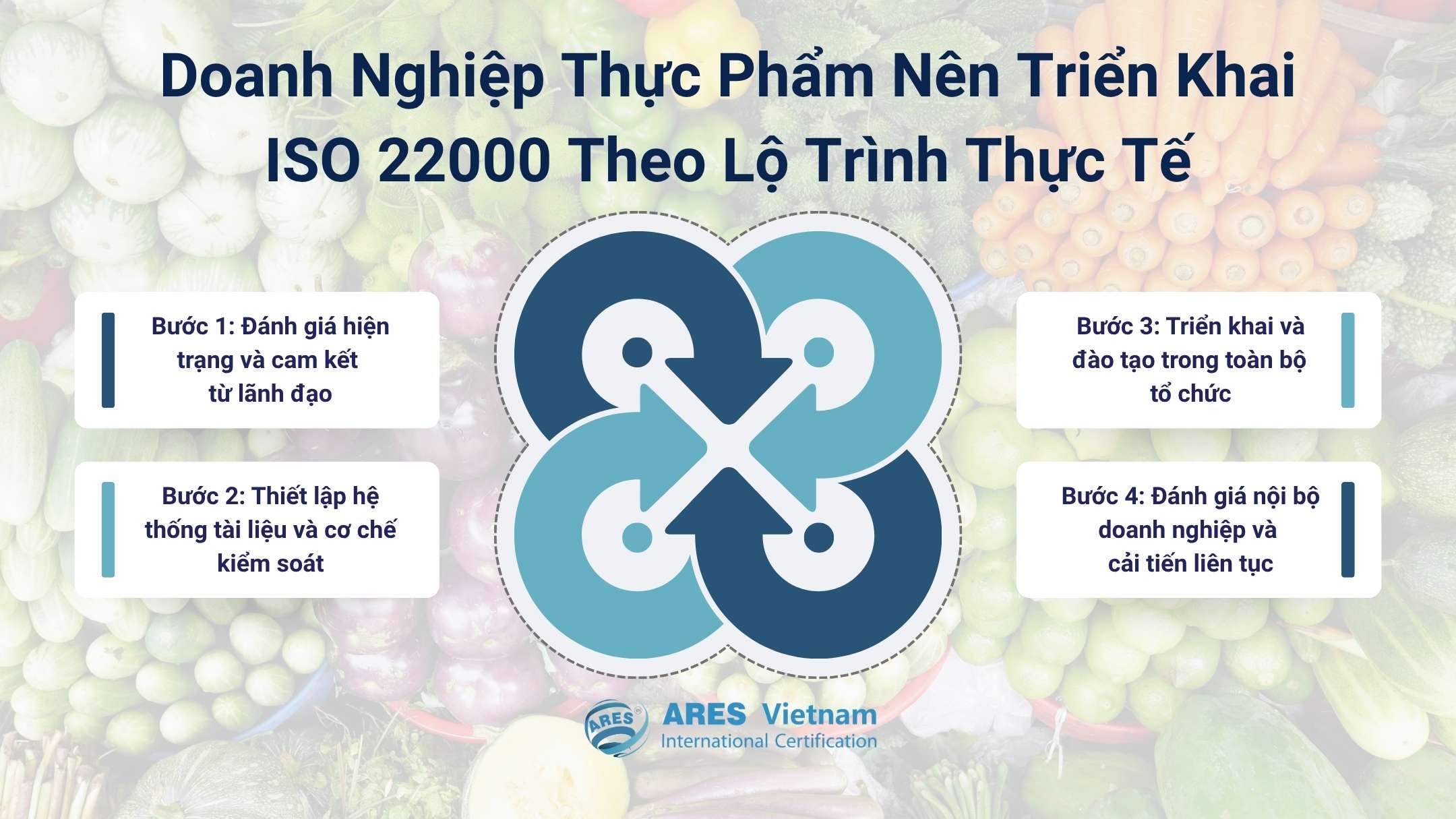
Roadmap for implementing ISO 22000 for food businesses
2026 Is The Time To Act
In practice, many organizations only begin implementation when required by partners or during inspections. However, since system development often takes several months, early preparation plays a decisive role in controlling timelines and minimizing disruptions.
Therefore, 2026 is no longer a period for consideration. It is the point at which businesses must take proactive action to meet increasingly clear expectations from both the market and regulators.
ISO 22000 consulting services
With extensive experience in management system standardization, ARES Vietnam supports businesses by:
- Assessing current status and identifying gaps
- Developing tailored implementation roadmaps
- Supporting implementation through to certification
Contact us today to determine your current stage and what needs to be prepared before the December 31, 2026 deadline.
▶️ Explore more FAQs about ISO 22000:2018 here: Frequently Asked Questions
Related news

Circular 49/2026/TT-BCT Takes Effect Soon: Which Environmental Records Should Factories Review?
Read more

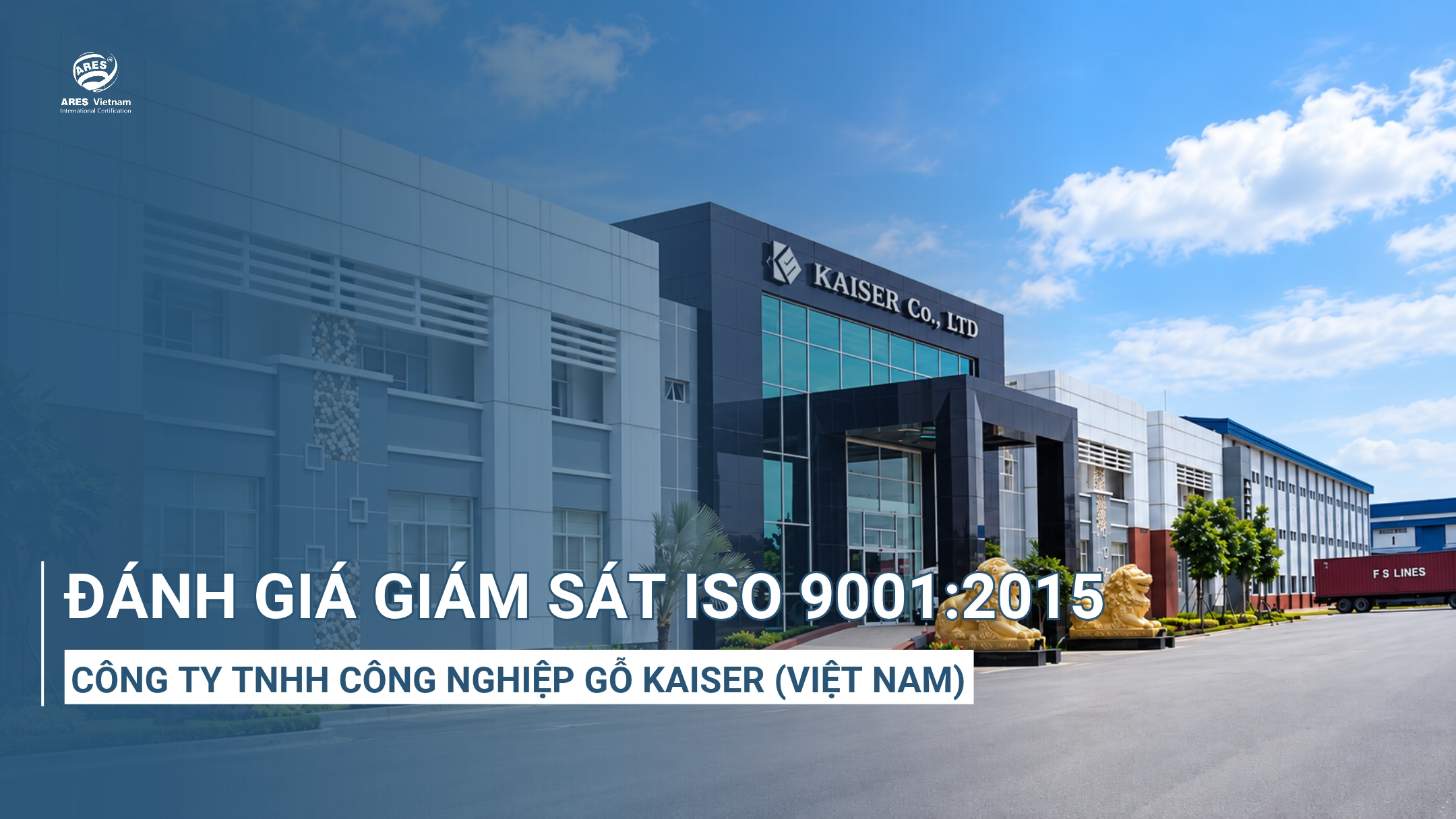
ARES Vietnam Conducts the Second ISO 9001:2015 Surveillance Audit at KAISER 1 & KAISER 2 (Vietnam)
Read more

National Single Window and ASEAN Single Window: What Documents Should Import–Export Businesses Prepare?
Read more

ARES Vietnam Awards ISO 9001:2015 Certification to Simona Leather Company Limited
Read more

ARES Vietnam Conducts ISO 9001:2015 Surveillance Audit at Simona Leather Company Limited
Read more