Why Are International Supply Chains Increasingly Requiring ISO Certification?
In many international transactions today, companies are not excluded due to price or production capacity, but rather stopped at the initial evaluation stage. The screening criteria have shifted: commitment is no longer sufficient — management capability must be demonstrated through a verifiable system.
In practice, many companies without ISO certification are not even included in supplier lists, meaning they have no opportunity to access requests for quotation (RFQs) or proceed to deeper evaluation stages.
This reflects a clear shift: within global supply chains, internationally standardized management systems have become a condition for participation, rather than an added advantage as before.
How Is The Global Supply Chain Changing?
Large-scale disruptions such as COVID-19 have forced multinational corporations to reassess their entire supply chains and recognize a core limitation: supplier selection models based on experience, relationships, or localized checks are no longer reliable.
In modern supply chain structures:
- Production activities span multiple countries
- A single product may pass through multiple supplier tiers
- Risk at one point can impact the entire system
Even without direct operational control, lead firms remain ultimately responsible for:
- Product quality
- Environmental compliance
- Labor conditions
The gap between accountability and actual control has forced them to change how they evaluate partners.
Instead of checking individual activities, organizations are shifting toward assessing operational capability at the system level — where processes, data, and control mechanisms can all be verified.
In this context, ISO standards have become a common basis for measuring and comparing supplier capabilities globally.
Why Are International Businesses Increasingly Requiring ISO Certification?
ISO certification requirements in supply chains are not driven by formality, but by the practical need to control risk, standardize evaluation, and ensure operational stability.
1. ISO as a prerequisite for passing supplier evaluation
In international procurement systems, the pre-qualification stage plays a decisive role.
Companies without appropriate certification may:
- Not be invited to participate in RFQs
- Not be included in evaluation lists
- Not gain access to detailed technical information
Conversely, ISO certification serves as verified evidence of management capability, helping companies overcome initial barriers and access business opportunities.
This is the most practical and immediately visible reason for businesses.
2. Supply chains require consistency — not one-time performance
In international supply chains, the key factor is not being “the best at one moment,” but maintaining stable quality over time.
Systems such as ISO 9001 help companies:
- Control processes instead of relying on individuals
- Reduce systemic errors
- Ensure repeatable outcomes
These are core criteria when partners evaluate and select suppliers.
3. Increasing pressure on environmental compliance and carbon emissions
Environmental requirements have shifted from recommendations to mandatory conditions in many export markets.
Companies are required to provide CO₂ emissions data, demonstrate environmental control, and meet ESG criteria.
Therefore, standards such as ISO 14001 and ISO 14064 become the foundation to:
- Establish environmental management systems
- Measure and report data
- Meet partner and market requirements
In reality, many companies are already required to provide environmental data at the initial evaluation stage.
4. Standardization requirements from multinational corporations
Multinational corporations often apply a unified standard system across their entire supply network.
This leads to:
- ISO becoming a default criterion in partner selection
- Requirements being applied consistently across multiple countries
- Standards extending across all supply chain tiers
Companies that fail to meet these requirements will struggle to pass evaluations, regardless of their actual production capacity.
5. Reducing operational and legal risks across the entire chain
For lead firms, each supplier represents a potential risk point.
A single deviation can lead to:
- Large-scale product recalls
- Regulatory violations in import markets
- Production disruptions
Selecting ISO-certified companies helps:
- Assess risks from the outset
- Establish clear control mechanisms
- Ensure long-term stability
Therefore, ISO is not just an internal management tool, but a risk mitigation mechanism for the entire supply chain.
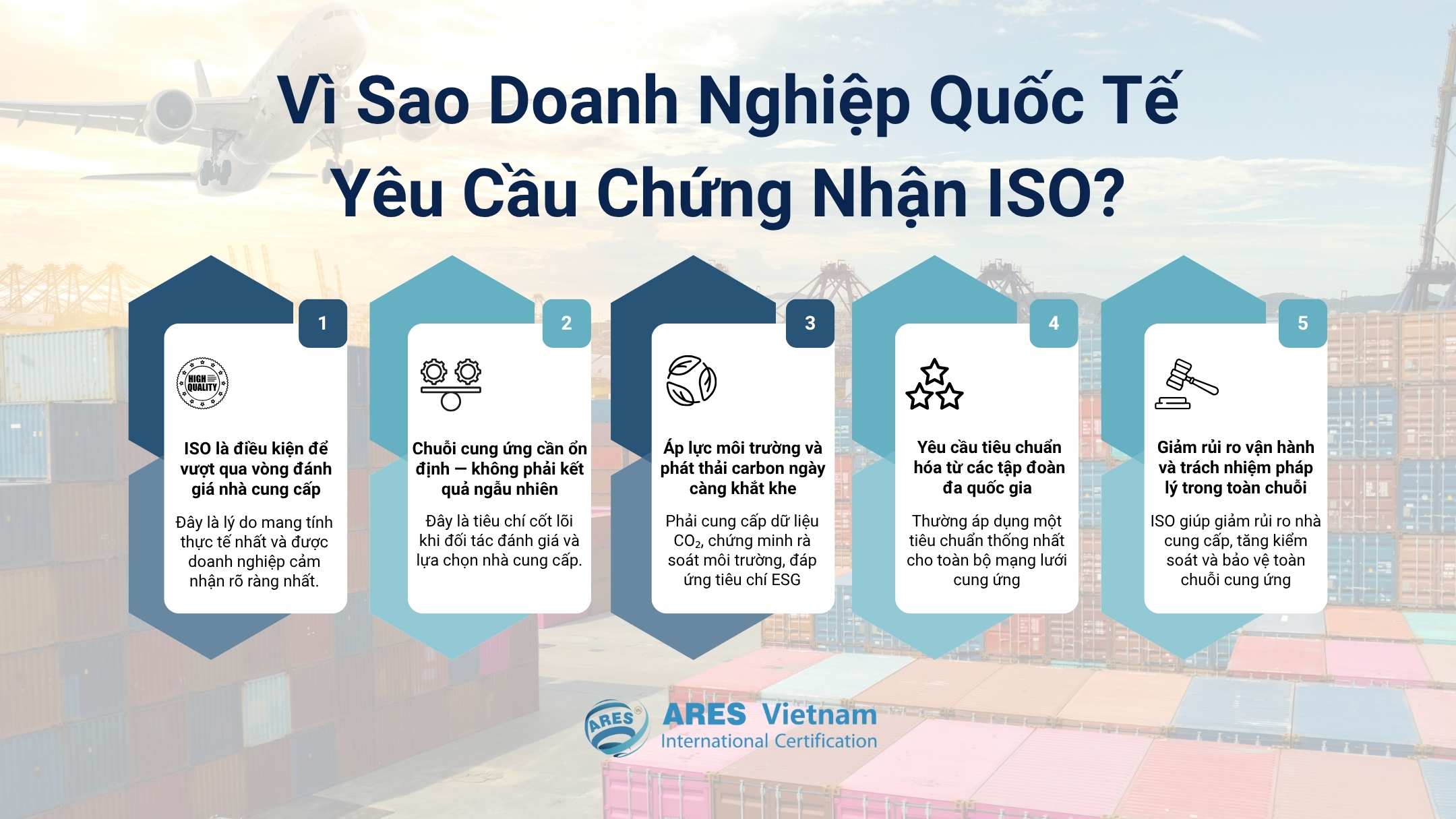
Why are international businesses increasingly requiring ISO certification
What Happens If A Company Lacks ISO Certification?
The biggest impact of not having ISO is not implementation cost, but being excluded from opportunities at the very beginning.
In practice, many organizations fail to pass basic screening stages:
- No response to RFQs
- Not included in supplier lists
- Not invited for capability audits
- Unable to join FDI supply chains
- Classified as high-risk suppliers
Depending on the industry, the impact may vary:
- Manufacturing: unable to access export orders
- Services: unable to join large enterprise supplier systems
- Technology: unable to meet data security requirements
- Regulated sectors (food, healthcare): ineligible for supply chains
In many cases, companies are excluded not due to weak capability, but because they fail to meet system and data transparency requirements.
The consequence is not about investment cost, but about losing the chance to be considered from the start.
Which ISO Standards Are Shaping Supply Chains?
Companies do not need to implement all standards, but should select based on industry and target markets.
Common standards include:
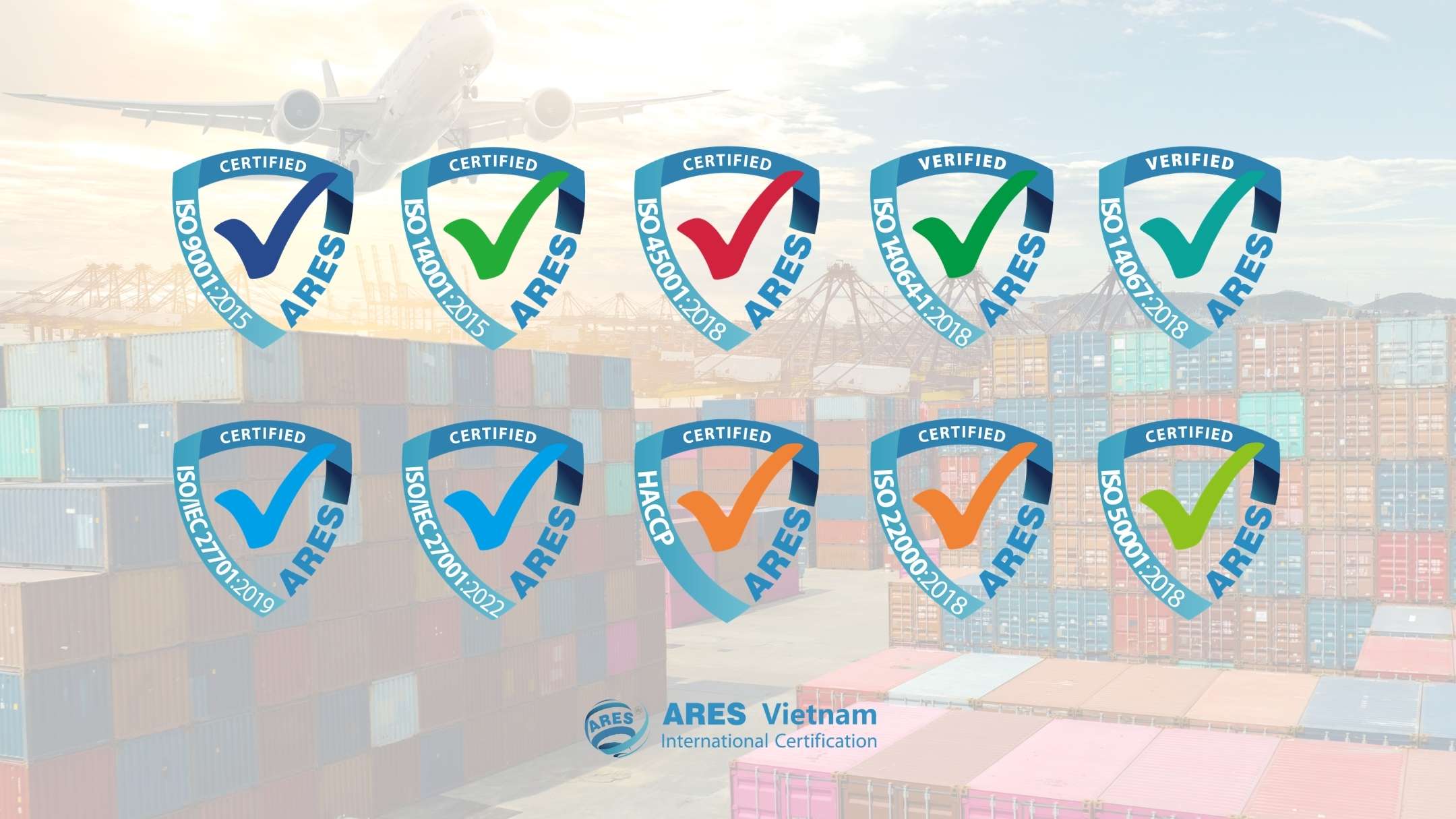
- ISO 9001 – Quality Management System
- ISO 14001 – Environmental Management
- ISO 14064 – Greenhouse Gas Inventory
- ISO 45001 – Occupational Health and Safety
- ISO/IEC 27001 – Information Security
- ISO 22000 – Food Safety
- ISO 13485 – Medical Devices
- IATF 16949 – Automotive Industry
- ISO 50001 – Energy Management
In practice, companies often adopt clusters:
- Export manufacturing: ISO 9001 + ISO 14001 + ISO 45001
- European markets: add ISO 14064
Sector-specific:
- Food: ISO 22000
- Healthcare: ISO 13485
- Automotive: IATF 16949
This approach helps build an integrated management system that can be controlled and demonstrate capability across multiple criteria.
When Should Companies Start Implementing ISO?
The timing does not depend on whether a company is “ready,” but on market signals.
Typical indicators include:
- Starting export activities
- Working with FDI companies or multinational corporations
- Being required to provide environmental or emissions data (CO₂, ESG)
- Internal systems lacking control or relying heavily on individuals
By the time a company is asked about ISO, it is usually already the stage where implementation is urgent. Delays can lead to lost opportunities in the short term.
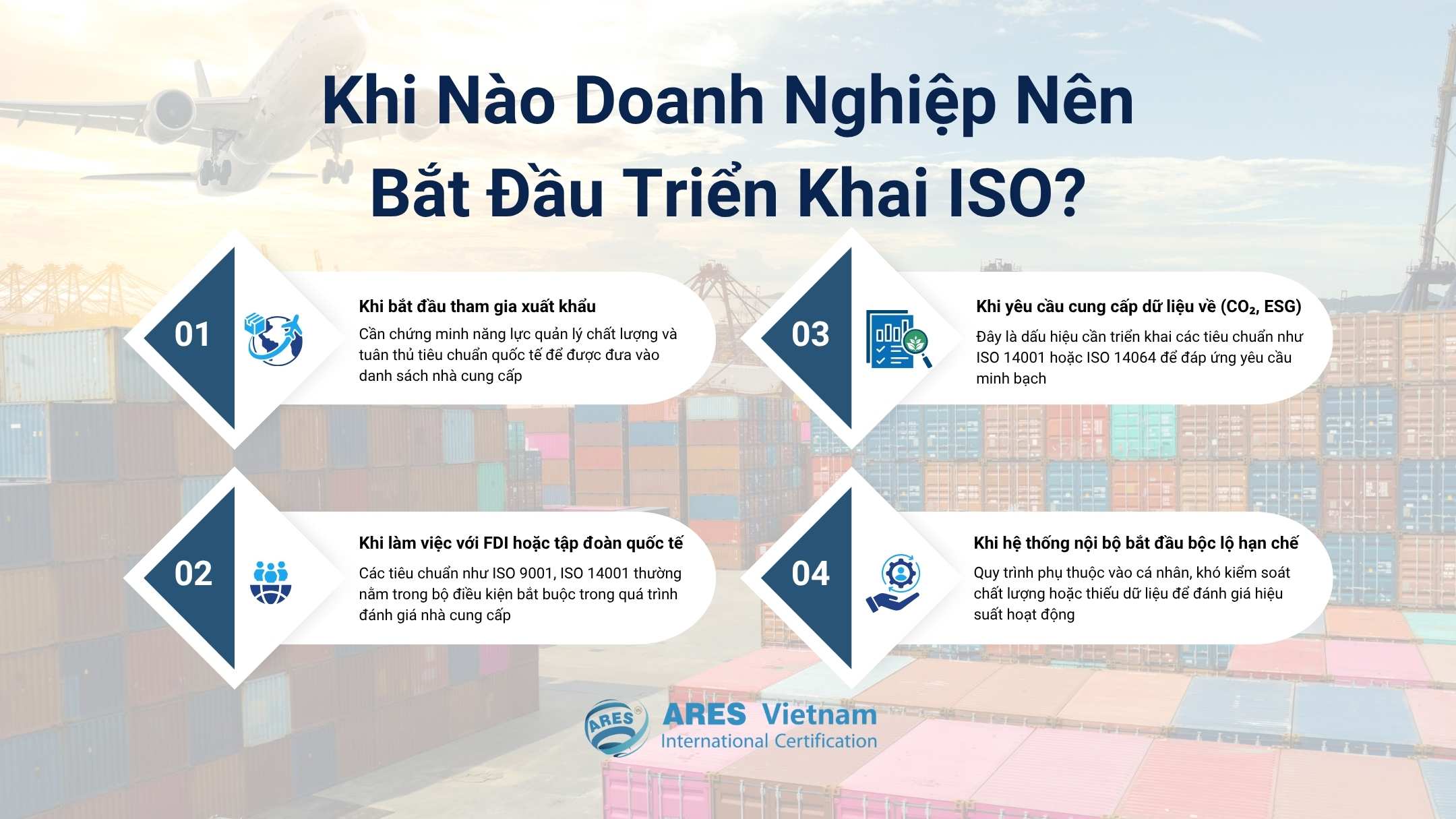
When should companies start implementing ISO?
Readiness For Global Supply Chains Starts With Management Systems
As supplier selection criteria become increasingly standardized, management systems are no longer optional — they are the foundation for entering the evaluation process.
ISO implementation must follow the right direction — not only to obtain certification, but to meet real requirements from partners and target markets.
ARES Vietnam supports companies in reviewing, standardizing, and certifying ISO systems, helping them effectively and sustainably participate in international supply chains.
▶️ Contact us for consultation on an implementation roadmap tailored to your industry and development direction
▶️ Register for a preliminary system assessment (free) | Hotline: 0274 3858 553
Related news

Circular 49/2026/TT-BCT Takes Effect Soon: Which Environmental Records Should Factories Review?
Read more

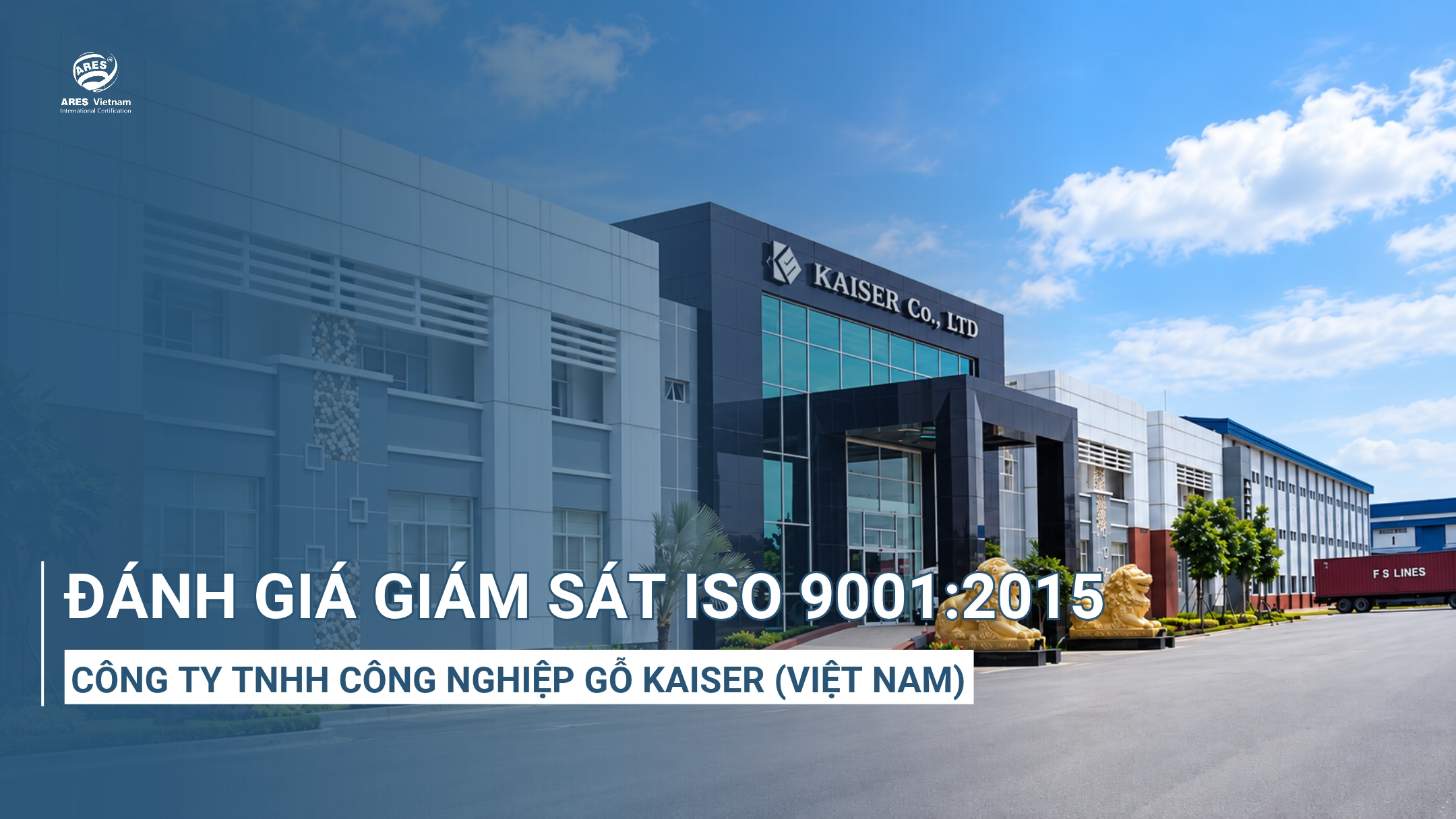
ARES Vietnam Conducts the Second ISO 9001:2015 Surveillance Audit at KAISER 1 & KAISER 2 (Vietnam)
Read more
National Single Window and ASEAN Single Window: What Documents Should Import–Export Businesses Prepare?
Read more
ARES Vietnam Awards ISO 9001:2015 Certification to Simona Leather Company Limited
Read more
ARES Vietnam Conducts ISO 9001:2015 Surveillance Audit at Simona Leather Company Limited
Read more