Do Small And Medium Enterprises Need ISO? When Is the Right Time To Implement?
In practice, many small and medium enterprises (SMEs) still assume that ISO is only for large corporations, or that it becomes necessary only after the business reaches a stable scale.
However, most operational issues do not appear at the beginning. Instead, they accumulate silently as the business grows, and only become visible when the system starts to be overloaded.
At this stage, companies often face recurring errors, rising operating costs, and increasing difficulty in controlling quality. At that point, the question “do SMEs need ISO” is largely answered.
More importantly, the key question becomes: when should ISO be implemented to ensure real effectiveness while avoiding resource dispersion?
Do SMEs Need ISO?
The answer is: Yes — but only with the right timing and the right approach.
ISO is not merely a certificate. It is a management framework that enables businesses to establish structured operations, control risks, and maintain consistent quality. This is especially critical for SMEs during growth and expansion.
When effectively implemented, ISO delivers core values:
• Reduced dependency on individuals: Processes are standardized, ensuring operational continuity
• Root-cause control of errors: Issues are addressed based on causes rather than symptoms
• Aligned internal operations: Departments work consistently, reducing conflicts and disruptions
• Enhanced credibility with partners: Requirements of major clients and global supply chains are met
However, ISO delivers maximum value only when the business reaches a certain level of management need and operational complexity. Implementing too early may disperse resources and increase costs, while delaying too long can significantly raise the cost of correcting inefficiencies.
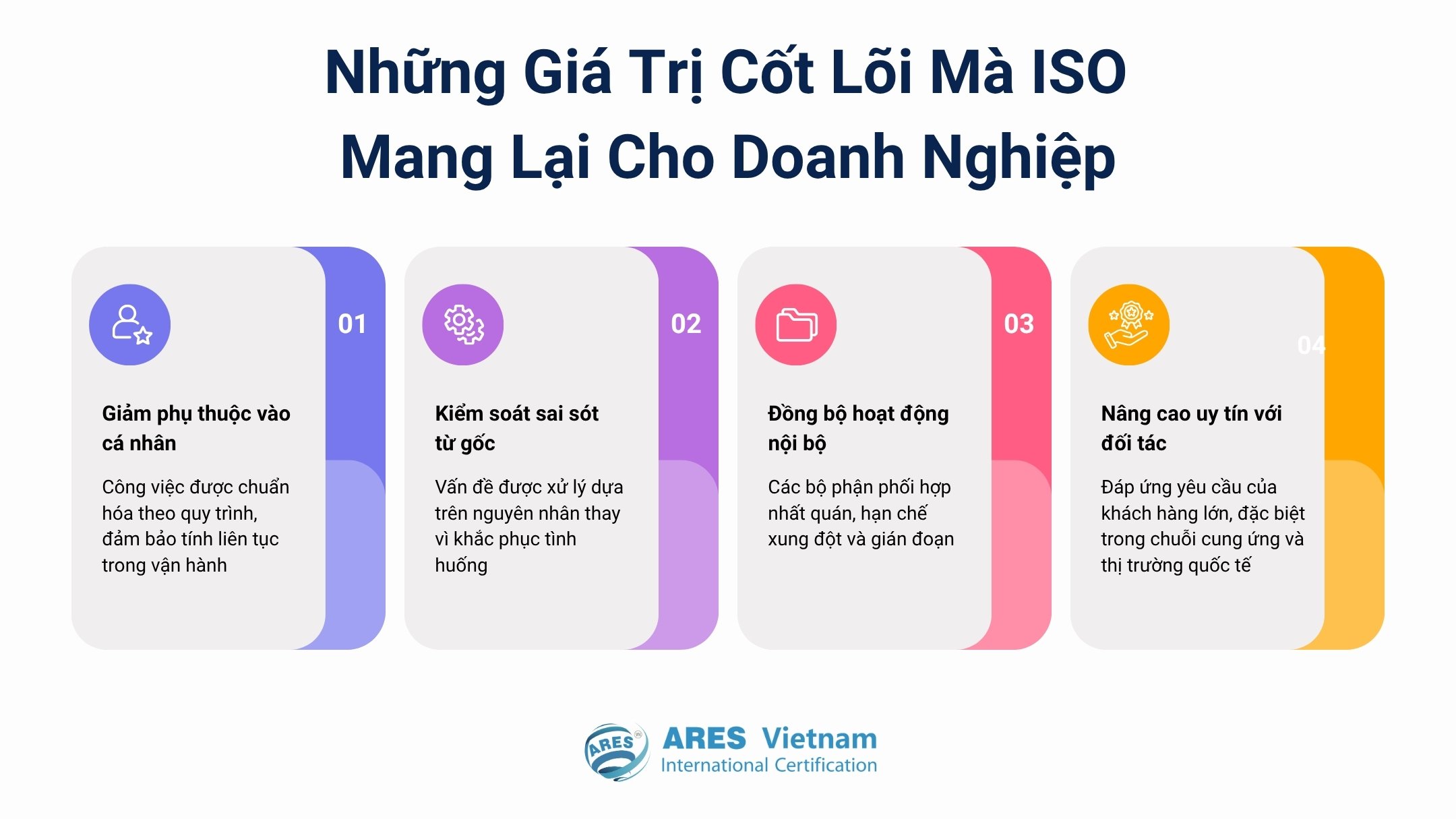
The core values that ISO brings to SMEs
When Is the Right Time to Implement ISO? Identify 5 Key Signals
In reality, the “right time” is not defined by company size or years of operation. Instead, it is reflected in operational patterns. When the following signals appear repeatedly, they indicate structural gaps in how the business is organized and controlled.
1. Inconsistent processes and reliance on individuals
When each department works differently, or operations depend on a few experienced individuals, output quality becomes unstable. Operations become “random,” depending more on people than on standards.
As a result, training and handover become fragmented, while the system is vulnerable to disruption during staff changes. The issue lies not in people, but in the absence of a unified operational foundation.
2. Recurring errors without root-cause resolution
Repeated issues indicate that root causes are not under control. If the business focuses only on fixing situations, deviations will continue to reappear in different forms, consuming time and resources.
Over time, this reduces operational efficiency and affects internal trust as well as customer experience. This is a clear sign of the absence of a systematic management and improvement mechanism.
3. Business expansion without system alignment
As the business grows, coordination points between departments increase, while management methods remain unchanged. This leads to information gaps, poor progress control, and inconsistent output quality.
These issues may not appear immediately but accumulate over time and become major barriers to growth. The root cause lies in the failure to adjust operational structures to increased complexity.
4. Customers or partners start requiring ISO
In many industries, especially in bidding or working with large partners, ISO is no longer a competitive advantage but a prerequisite.
At this stage, the barrier is not product or service capability, but the ability to demonstrate system stability and compliance. Therefore, ISO becomes a necessary foundation for accessing and sustaining long-term partnerships.
5. The need to control costs and improve efficiency
As businesses move into optimization stages, cost control and efficiency improvement become priorities. However, without a data foundation and clear measurement mechanisms, performance evaluation often remains subjective.
This makes it difficult to trace cost drivers, while key decisions still rely heavily on experience. The lack of standardized processes and data limits both management effectiveness and long-term improvement.
Conclusion: When a business shows two to three of these signals, ISO implementation is no longer a preparatory option. Instead, it becomes a necessary step to rebuild operational foundations and ensure sustainable growth.
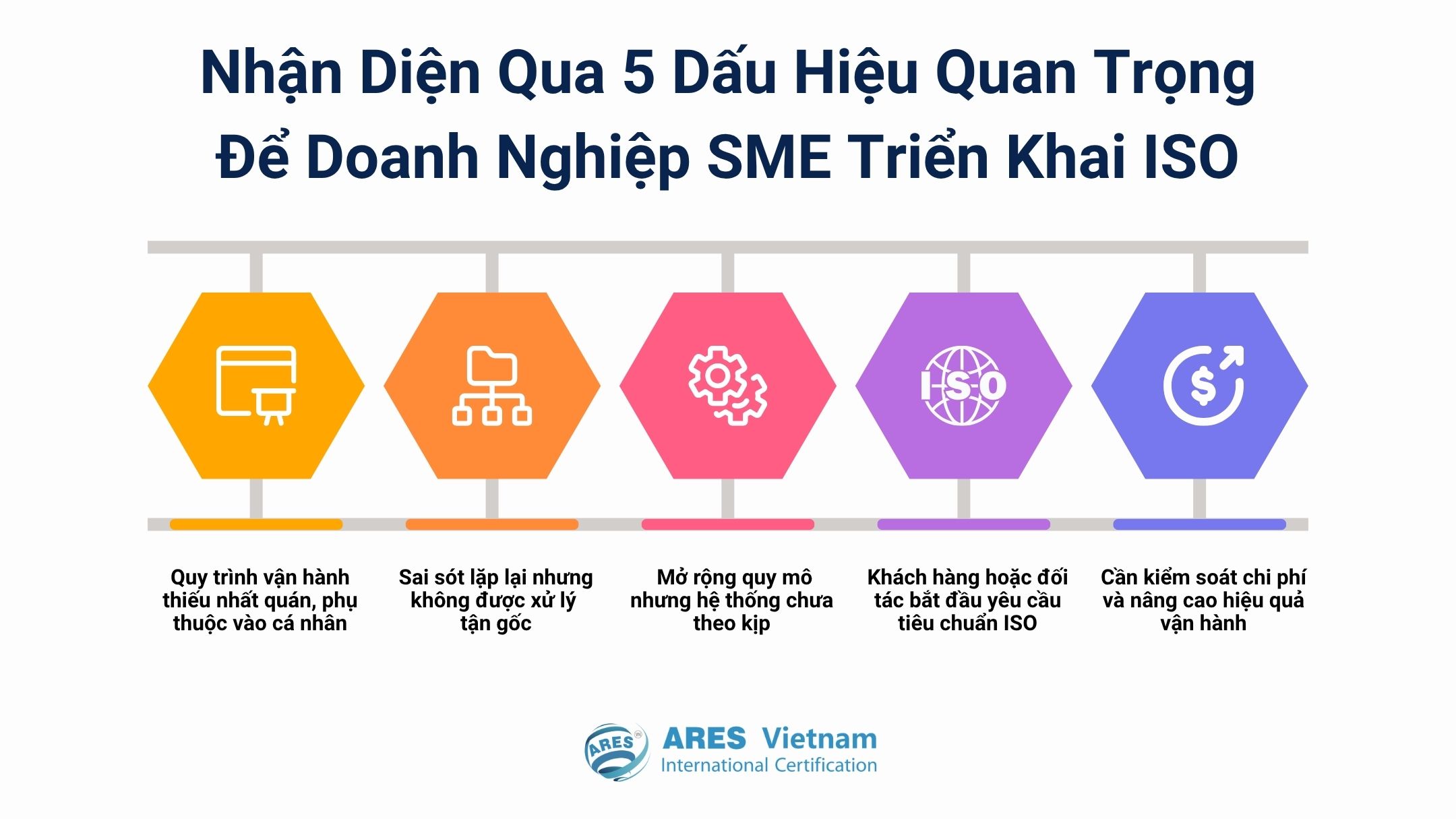
5 key moments for SMEs to implement ISO
How Should SMEs Implement ISO for Real Effectiveness?
For SMEs, ISO should not be treated as an administrative process to obtain certification. Instead, it should be approached as a system that operates effectively and is maintained over time.
1. Define clear implementation objectives
Before starting, businesses should clarify their objectives, such as:
- Standardizing internal processes
- Meeting customer or partner requirements
- Building a foundation for expansion
Clear objectives ensure proper direction and optimal resource allocation.
2. Select the appropriate standard
Not all businesses need the same standard. Selection should be based on industry characteristics and development goals:
- ISO 9001 – Quality Management System
- ISO 14001 – Environmental Management Systems
- ISO 45001 – Occupational Health and Safety Management Systems
Among these, ISO 9001 is often the most suitable starting point, helping establish core management foundations before expanding to other systems.
3. Prepare the system before certification assessment
ISO only creates value when applied in practice. Therefore, before certification, businesses should:
- Conduct a gap analysis against standard requirements
- Develop and standardize key processes
- Establish and maintain documented evidence
- Perform internal audits and continuous improvement
If the focus is only on documentation to obtain certification, the system will quickly lose effectiveness and fail to deliver real value.
ISO: A Matter of Timing and Approach
ISO is not a barrier. It is a foundation for building a strong management system. When implemented at the right time, it stabilizes operations, enhances competitiveness, and improves risk control.
Conversely, an inappropriate approach may turn ISO into a burden rather than a solution. Therefore, the key is not just whether to implement ISO, but when and how to do it.
Is your business ready to implement ISO?
With experience in management system assessment and certification, ARES Vietnam supports SMEs in evaluating their readiness and identifying gaps before certification. Contact us to discuss directly with experts and choose an implementation approach aligned with your current situation and development goals.
Businesses can also explore more about ISO standards: ARES Vietnam service link
Related news

Circular 49/2026/TT-BCT Takes Effect Soon: Which Environmental Records Should Factories Review?
Read more

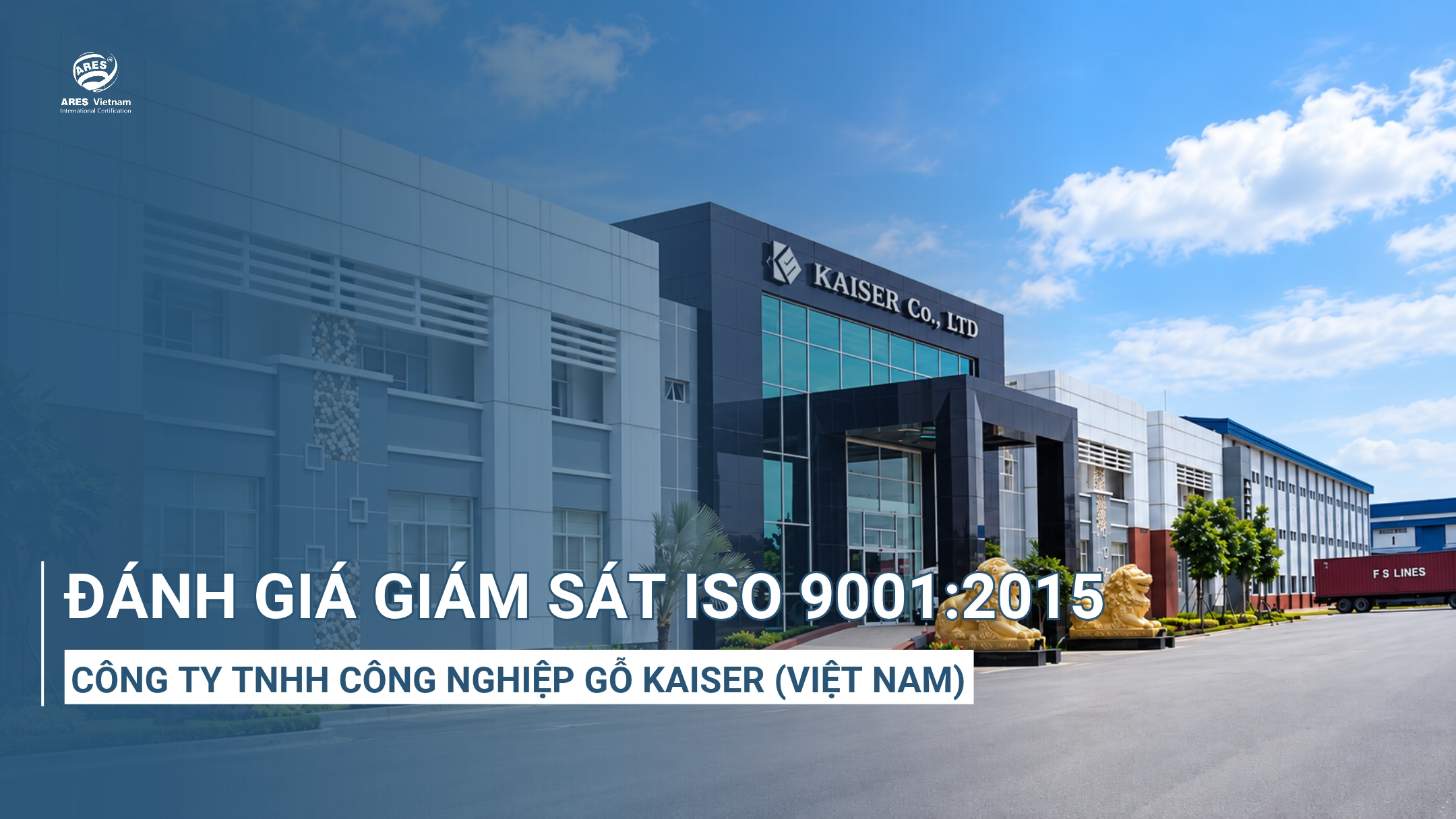
ARES Vietnam Conducts the Second ISO 9001:2015 Surveillance Audit at KAISER 1 & KAISER 2 (Vietnam)
Read more

National Single Window and ASEAN Single Window: What Documents Should Import–Export Businesses Prepare?
Read more
ARES Vietnam Awards ISO 9001:2015 Certification to Simona Leather Company Limited
Read more
ARES Vietnam Conducts ISO 9001:2015 Surveillance Audit at Simona Leather Company Limited
Read more