ISO 14001 Preparation Checklist for Manufacturing and Export Businesses
Since 2025, the pressure to “green” supply chains has never been stronger. The EU CBAM and international ESG requirements compel businesses to manage emissions and environmental operations systematically.
In this context, ISO 14001 has become a benchmark for environmental management capability, helping companies demonstrate professionalism, lead in sustainable practices, and gain a competitive edge in global markets.
This article presents five strategic pillars for ISO 14001 preparation, enabling companies to assess readiness, implement effectively, and maximize benefits from the international standard.
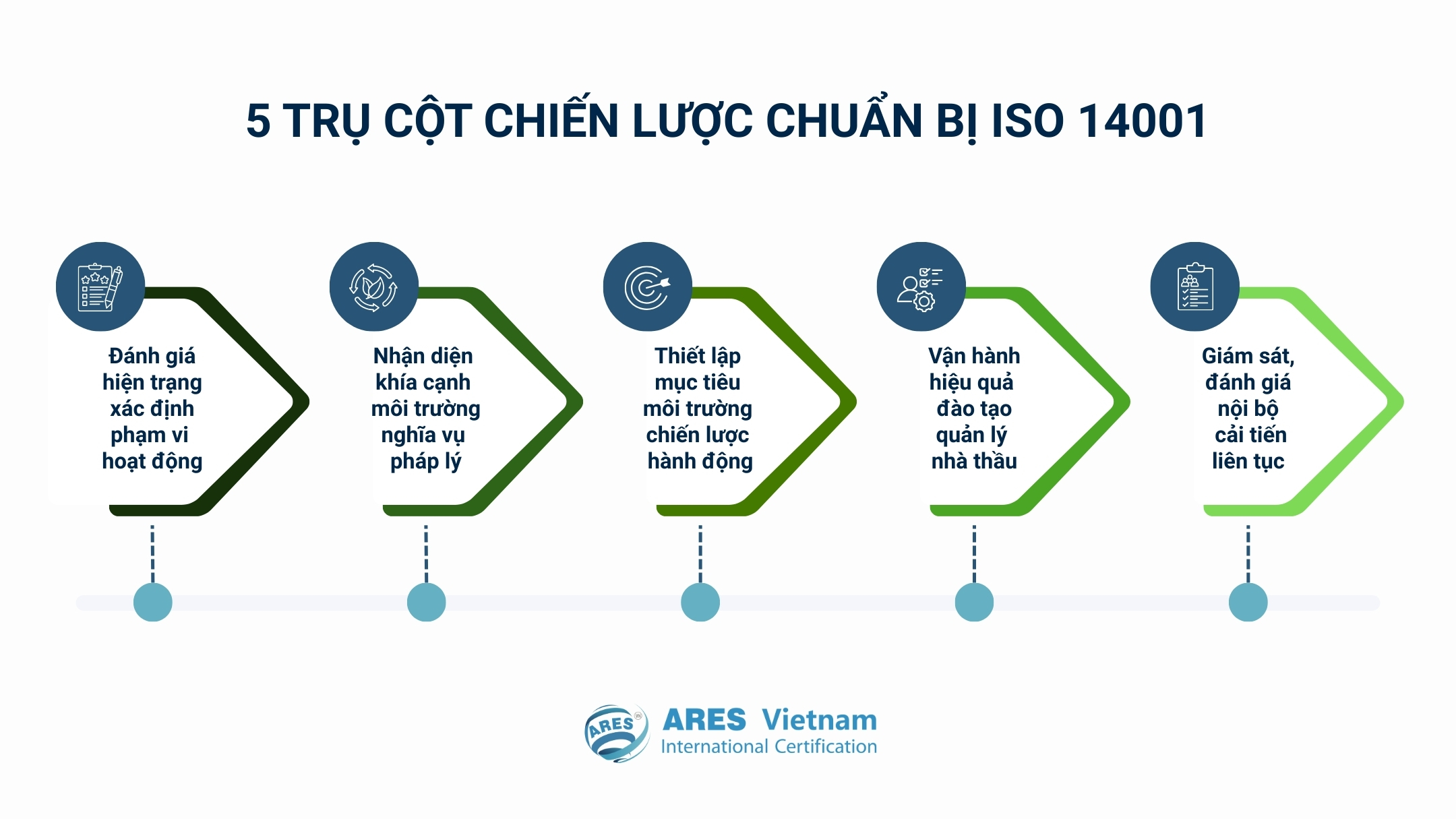
Five strategic pillars for ISO 14001 implementation
ISO 14001 Is A Strategy, Not Just A Certification
Many companies still view ISO 14001 as merely a “green label.” In reality, its core value lies in the ability to operate an environmental management system proactively and under control.
When properly implemented, ISO 14001 helps reduce legal risks, prevent environmental incidents, optimize energy and resource costs, and establish a clear governance structure with standardized procedures and monitored environmental metrics.
Thus, companies not only meet ESG requirements but also build a sustainable management foundation that allows early risk control rather than reactive responses to inspections or violations.
Five Strategic Pillars For ISO 14001 Implementation
1. Assess Current Status & Define Scope
Before defining processes or objectives, companies must have a clear view of their current situation. Without this assessment, any implementation plan is speculative.
The review process should include waste sources, treatment efficiency, legal compliance, and indirect factors such as energy, raw materials, and subcontractor activities.
The results help define the EMS scope, identify environmental hotspots and potential risks, and provide foundational data for setting realistic strategic objectives and measuring implementation effectiveness.

Assess current status & define the scope for ISO 14001
2. Identify Environmental Aspects & Legal Obligations
Every production activity generates direct or indirect environmental impacts, making accurate identification essential for proactive risk management.
Enterprises should therefore:
◼️List all activities with potential impacts.
◼️Classify impacts as direct (wastewater, emissions, solid waste, noise) or indirect (energy use, chemical leaks, logistics).
◼️Maintain up-to-date legal obligations (2020 Environmental Protection Law, Decree 08/2022/ND-CP, QCVN, operating permits).
A thorough approach allows companies to identify significant environmental risks and establish appropriate control levels for each aspect, forming a foundation before system implementation.
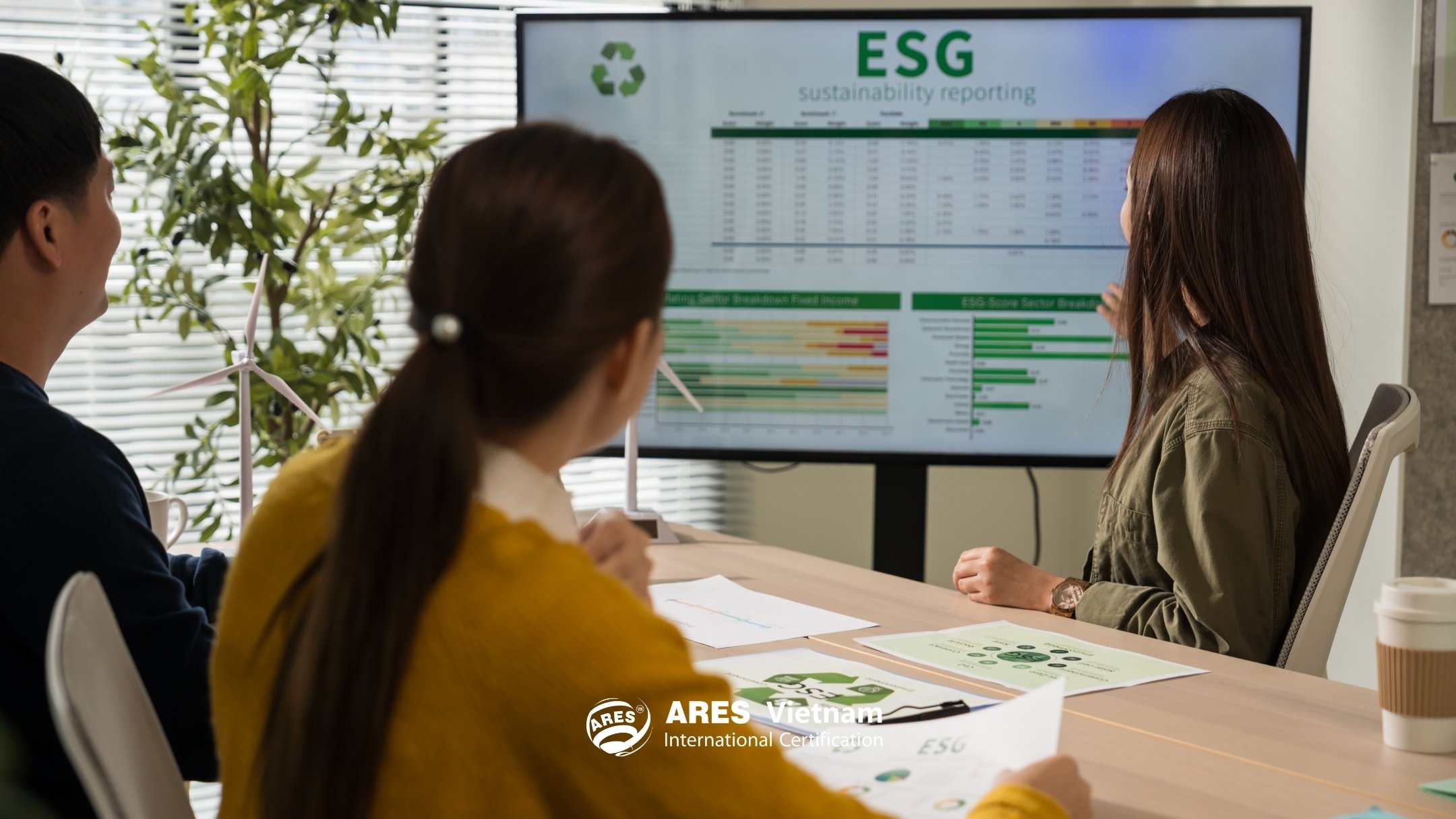
Identify environmental aspects & legal obligations
3. Set Environmental Objectives & Action Plans
After identifying environmental aspects, companies need to convert this information into actionable directions:
◼️Environmental policy aligned with long-term strategy, legal compliance, risk prevention, and continuous improvement.
◼️Realistic and measurable KPIs covering energy use, emissions, and recycling rates.
◼️Distribute objectives by department and implement periodic monitoring and reporting
Well-designed objectives turn ISO 14001 into a tool for real change, boosting operational efficiency and meeting market sustainability expectations.
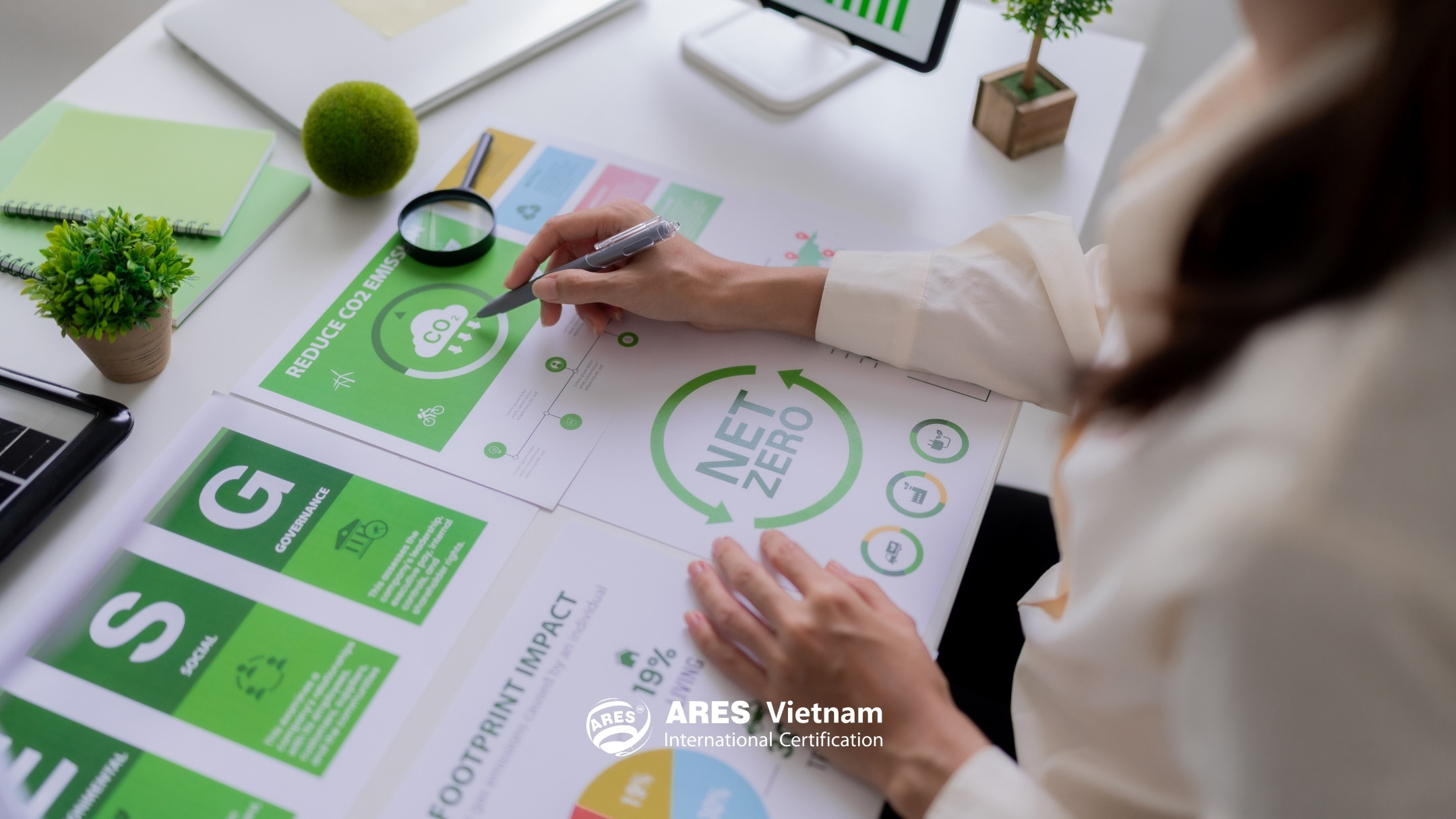
Set environmental objectives & action plans
4. Operate Effectively & Manage Contractors
A system only holds value if it is correctly operated and maintained across the entire activity chain:
◼️Standardize operational instructions for high-risk processes (chemical handling, wastewater, painting/welding).
◼️Train staff on emergency response (oil spills, chemical leaks, fire hazards).
◼️Evaluate and manage contractors and waste treatment units.
This pillar helps minimize risks, maintain stability, and strengthen partner confidence.

Operate effectively & manage contractors
5. Monitor, Evaluate & Continuously Improve
The strength of ISO 14001 lies in the PDCA cycle, where all activities are measured, reviewed, and continuously refined.
Companies should ensure:
◼️Regular monitoring of environmental KPIs (energy, water, emissions, recycling rates).
◼️Conduct internal audits and management reviews.
◼️Implement improvements based on data, optimizing technology, equipment, and processes per legal updates.
Strictly maintaining the PDCA cycle ensures companies retain certification while transforming ISO 14001 from a compliance requirement into a strategic advantage and a credible position in green supply chains.

Monitor, evaluate & continuously improve
Documents & Evidence Required For ISO 14001 Implementation
An ISO 14001 system is only credible if supported by complete and consistent documentation. This provides proof of operational capability and ensures transparency during internal audits and certification assessments.
Key documents should be prepared to enable smooth system operation and audit readiness.
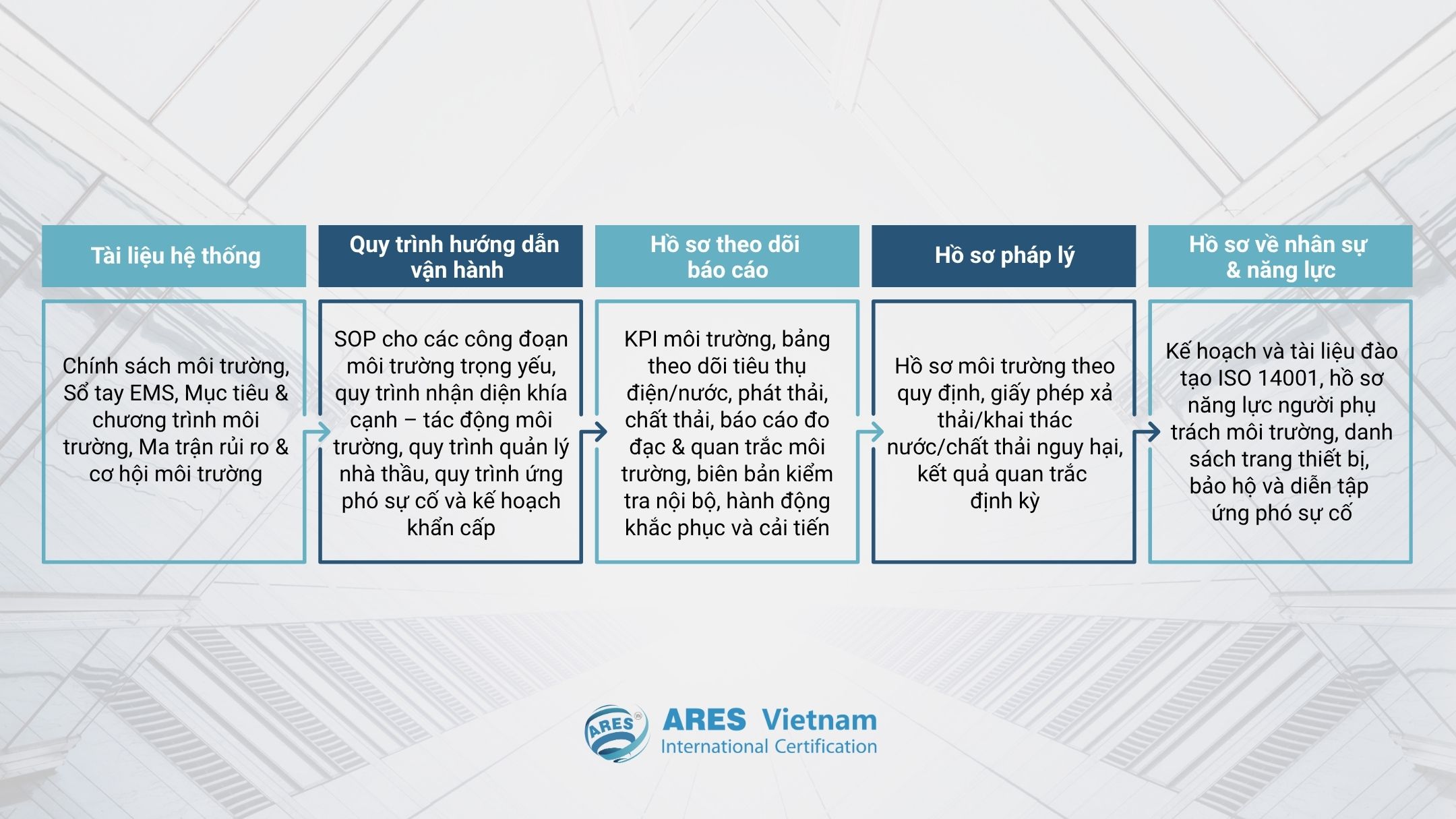
Documents & evidence required for ISO 14001 implementation
ISO 14001 is more than a certification; it is a strategic tool to operate efficiently, control environmental risks, and optimize resources.
Let ARES Vietnam accompany your journey. We support you from assessing your current status to building the system. We provide training for your personnel and guidance for continuous improvement. Our goal is to help you transform standards into tangible competitive advantages. We enhance your green credibility and position your company as a leader in international supply chains.
Related news
How Does the EU CBAM Affect Manufacturing Companies in Vietnam?
Read more

Greenhouse Gas Inventory Process for Businesses Under ISO 14064-1
Read more
Classification of Import and Export Goods Under Circular 85/2026/TT-BTC: What Should FDI Enterprises Control?
Read more
Control of Measuring Equipment in Manufacturing Plants: What Should FDI Enterprises Consider Under ISO 9001?
Read more
ARES VIETNAM AT THE 2ND MEMBER CONGRESS OF TERM 19 & MID-AUTUMN FESTIVAL GALA
Read more