National Single Window and ASEAN Single Window: What Documents Should Import–Export Businesses Prepare?

Decree No. 336/2026/ND-CP took effect on October 15, 2026, regulating administrative procedures for exported, imported and transited goods, as well as means of transport, under the National Single Window (NSW) and ASEAN Single Window (ASW) mechanisms.
For import–export businesses, documentation requirements vary depending on the goods, transactions and applicable procedures. This article outlines the information and supporting documents businesses should prepare, along with key points to review before submission.
How Do the National Single Window and ASEAN Single Window Differ?
The National Single Window (NSW) and ASEAN Single Window (ASW) are interconnected through data exchange. However, they serve different operational purposes.
| Criteria | National Single Window (NSW) | ASEAN Single Window (ASW) |
| Scope | Facilitates administrative procedures and coordinates their processing between declarants and relevant authorities in Vietnam. | Connects the National Single Window systems of ASEAN member states. |
| Main functions | Receives and transfers information and documents, and provides feedback on procedure processing results. | Enables the exchange of electronic information and documents among participating countries within the implemented scope. |
| Key considerations for businesses | Applicable procedures, responsible authorities and required supporting documents. | Eligible document types, data requirements and exchange status with partner countries. |
Note: Under Point (a), Clause 1, Article 10 and Clause 2, Article 49 of Decree No. 336/2026/ND-CP, the list of procedures implemented through the National Single Window and their implementation schedules are determined according to announcements issued by the Minister of Finance.
What Documents and Information Should Import–Export Businesses Prepare?
To prepare documents that comply with applicable sector-specific regulations, businesses should follow these four steps.
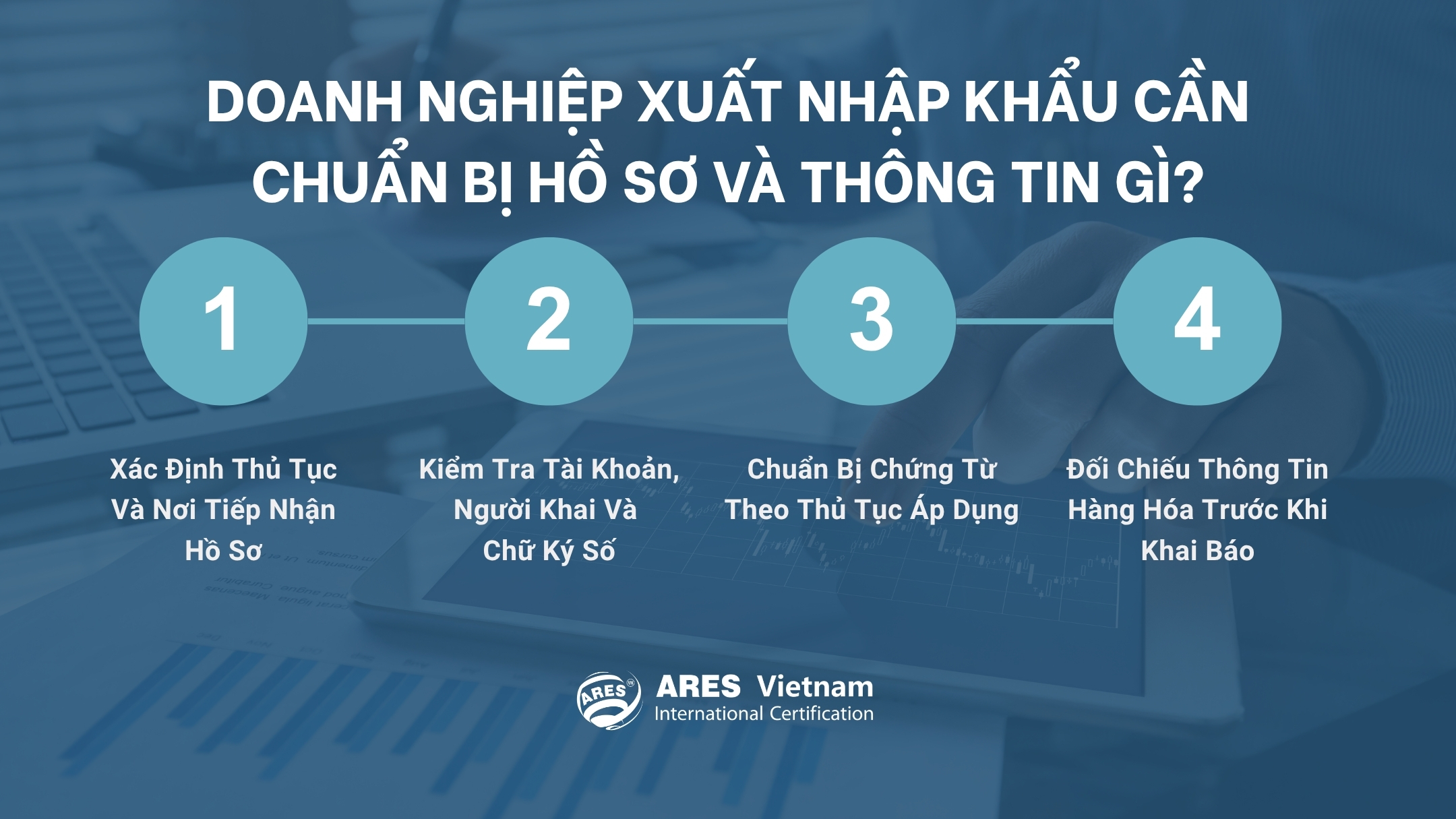
1. Identify the Applicable Procedures and Submission Channels
Before preparing documents, businesses should determine the regulatory requirements applicable to their goods and identify the necessary procedures based on:
- Goods information: Product names, composition, technical specifications, intended uses and proposed Harmonized System (HS) codes.
- Transaction types: Export, import, transit or activities involving means of transport.
- Sector-specific procedures: Licensing, quality inspection, quarantine, food safety or other procedures applicable to the goods.
- Responsible authorities and submission systems: Competent authorities, implementation status on the National Single Window Portal and current guidance.
The review should identify the procedure name, responsible authority, submission channel and required documents. HS codes provide an important reference and should be assessed alongside the goods’ characteristics, intended uses and applicable sector-specific regulations.
2. Verify Accounts, Declarants and Digital Signatures
Under Articles 11 and 12 of Decree No. 336/2026/ND-CP, businesses should verify the following information before submitting documents:
- Registration information: Company name, tax identification number, legal representative and contact details.
- Declarant accounts: Account status, access permissions and personnel authorized to perform procedures.
- Digital signatures: Validity of digital certificates and certificate holder information.
- Updated information: Complete re-registration when the circumstances specified in Clause 3, Article 12 apply.
Businesses may use their electronic identification accounts through VNeID to register and access the system under Clause 1, Article 11. However, procedures requiring digital signatures remain subject to the applicable digital signature requirements.
3. Prepare Documents for the Applicable Procedures
Once the applicable procedures have been identified, businesses should gather the documents required for submission, presentation or declaration purposes. Specific documentation requirements depend on each procedure and the sector-specific regulations governing the goods.
| Document category | Examples of required documents | Purpose |
| Application forms | Registration applications, declarations and request forms | Meet the documentation and form requirements of each procedure. |
| Commercial and transport documents | Commercial invoices, packing lists, bills of lading and relevant contracts | Provide information about transactions, transportation and shipments. |
| Product documentation | Catalogues, technical specifications and information on product composition and intended uses | Support product identification and determination of applicable regulatory requirements. |
| Sector-specific documents | Licenses, quarantine records, quality inspection documents, food safety records and other specialized documents | Fulfill requirements when goods are subject to sector-specific management or inspection. |
| Origin documents | Certificates of origin and related supporting documents | Meet applicable procedural or rules-of-origin requirements. |
The table provides a general overview of document categories commonly reviewed. The exact documentation requirements vary by shipment and procedure. Therefore, businesses should refer to the applicable procedures to identify all mandatory documents.
4. Cross-Check Goods Information Before Declaration
Sau khi tập hợp chứng từ, doanh nghiệp cần đối chiếu dữ liệu trên hồ sơ nguồn với thông tin dự kiến khai báo trước khi gửi qua hệ thống.
Under Article 18 and Appendix III of Decree No. 336/2026/ND-CP, key information includes:
- Identification information: HS codes, product names, descriptions and characteristics.
- Quantitative information:Quantities, units of measurement, weights or masses, and values.
- Related information: Origin, manufacturers, country of production, intended uses and invoice details.
The required data fields depend on the applicable procedure. Businesses should identify the relevant information and cross-check it against source documents to ensure accurate and consistent declarations.
Read more: Classification of Imported and Exported Goods under Circular No. 85/2026/TT-BTC.
What Requirements Apply to Electronic Documents? When Are Paper Documents Required?
Under Articles 14 and 15 of Decree No. 336/2026/ND-CP, businesses should distinguish between the requirements for electronic and paper documents. They should also review the conditions for converting paper documents into electronic form for submission or presentation.
| Electronic documents and records | Paper documents |
| Comply with the applicable data fields, forms and formats. | Must be submitted or presented when required by sector-specific regulations. |
| Meet the requirements of the applicable procedures and laws on electronic transactions. | May be used when the National Single Window Portal or sector-specific processing systems experience technical issues, subject to guidance from competent authorities. |
| Include digital signatures from authorized persons when required. | Must meet the applicable requirements for form and content. |
For electronic documents converted from paper documents, Clause 2, Article 15 requires the integrity of the original content to be maintained. The converted document must also bear the declarant’s digital signature registered with the National Single Window Portal.
Accordingly, scanned copies or photographs of documents qualify as valid electronic documents only when they meet the applicable requirements. Businesses should verify the conversion requirements and accepted submission formats for each procedure before use.
What Should Businesses Consider When Exchanging Documents Through the ASEAN Single Window?
For documents exchanged through the ASEAN Single Window, businesses can use e-Form D as an example to review the scope of application, document information and transmission status.
1. Confirm Whether Documents Are Eligible for Exchange
Before conducting a transaction, businesses should verify whether the relevant document type is eligible for exchange through the ASW and whether the exchange mechanism has been implemented with the partner country.
For example, when using e-Form D, businesses should determine whether the transaction falls within the scope of the electronic Certificate of Origin (C/O Form D). ASW exchanges apply to specific document types and participating countries within the implemented framework.
2. Verify Information on e-Form D
Before using e-Form D for subsequent procedures, businesses should cross-check the e-COO number, issuing country, shipment details and origin information against the relevant supporting documents. If discrepancies are identified, businesses should seek clarification from the issuing authority or relevant document issuer before proceeding.
3. Monitor Document Exchange Status
Businesses should distinguish between the issuance status of e-Form D and its transmission and receipt status across systems. Document issuance, transmission and successful receipt by the importing country’s system represent separate processing stages.
Businesses can check the status of e-Form D on the National Single Window Portal by entering the e-COO number and selecting the corresponding document type.
If an export e-COO cannot be found, businesses should contact the Ministry of Industry and Trade to request retransmission. For an import e-COO, businesses should request retransmission from the exporting country in accordance with the Portal’s instructions.
Check here: Track e-Form D Status on the National Single Window Portal.
How Should Businesses Control Documents Before and After Submission?
In addition to preparing the required documents, businesses should monitor each submission throughout the processing stages. This approach supports timely responses to requests for additional information or amendments while maintaining complete processing records. These activities serve as internal controls rather than additional mandatory procedures under Decree No. 336/2026/ND-CP.
| Stage | Control activities | Records to retain |
| Before submission | Verify document completeness and declaration data. | Reviewed document package. |
| After submission | Monitor receipt status and processing feedback. | Application reference numbers and processing notifications. |
| When supplementation or amendments are required | Identify requests, update documents and resubmit. | Feedback records and updated documents. |
| Upon completion | Close the records for each procedure or shipment. | Processing results and final document package. |
When businesses engage freight forwarders or customs agents to handle procedures, they should continue monitoring submission status, requests for additional information and processing results to ensure complete and up-to-date records.
How Do ISO 9001 and ISO/IEC 27001 Support Document Management?
Businesses can apply ISO 9001:2026 and ISO/IEC 27001:2022 to standardize responsibility assignments, document control and information protection.
| Management area | Relevant standard | Supporting role |
| Document processing procedures | ISO 9001:2026 | Define workflow sequences, responsibilities and authority. |
| Documents and version control | ISO 9001:2026 | Control current documents and record changes. |
| Information access rights | ISO/IEC 27001:2022 | Manage data access permissions according to assigned roles. |
| Electronic data protection | ISO/IEC 27001:2022 | Support information confidentiality, integrity and availability. |
These standards support internal management practices. Documentation and procedural requirements under Decree No. 336/2026/ND-CP and applicable sector-specific regulations continue to apply independently.
Frequently Asked Questions (FAQ)
| Question | Answer |
| 1. Must electronically submitted documents be retained? | Yes. Clause 5, Article 14 requires declarants to retain both electronic and paper documents in accordance with applicable laws. Retention periods depend on the regulations governing each document type. |
| 2. Who is responsible when information differs between paper and electronic documents? | Under Point (c), Clause 2, Article 13, declarants are responsible for the accuracy and truthfulness of declared information, submitted or presented documents, and consistency between paper and electronic records. |
| 3. Does submission through the Portal replace tax, fee and charge obligations? | No. Under Point (b), Clause 2, Article 13, declarants must continue fulfilling their obligations concerning taxes, fees, charges and other statutory payments in accordance with applicable laws. |
ARES Vietnam provides ISO 9001 and ISO/IEC 27001 assessment and certification services for businesses in the manufacturing, trading and service sectors. Companies seeking certification are welcome to contact ARES Vietnam for information about certification scope and suitable audit plans.
- Hotline: 085.3858.553
- Email: service@aresvietnam.vn
Related news
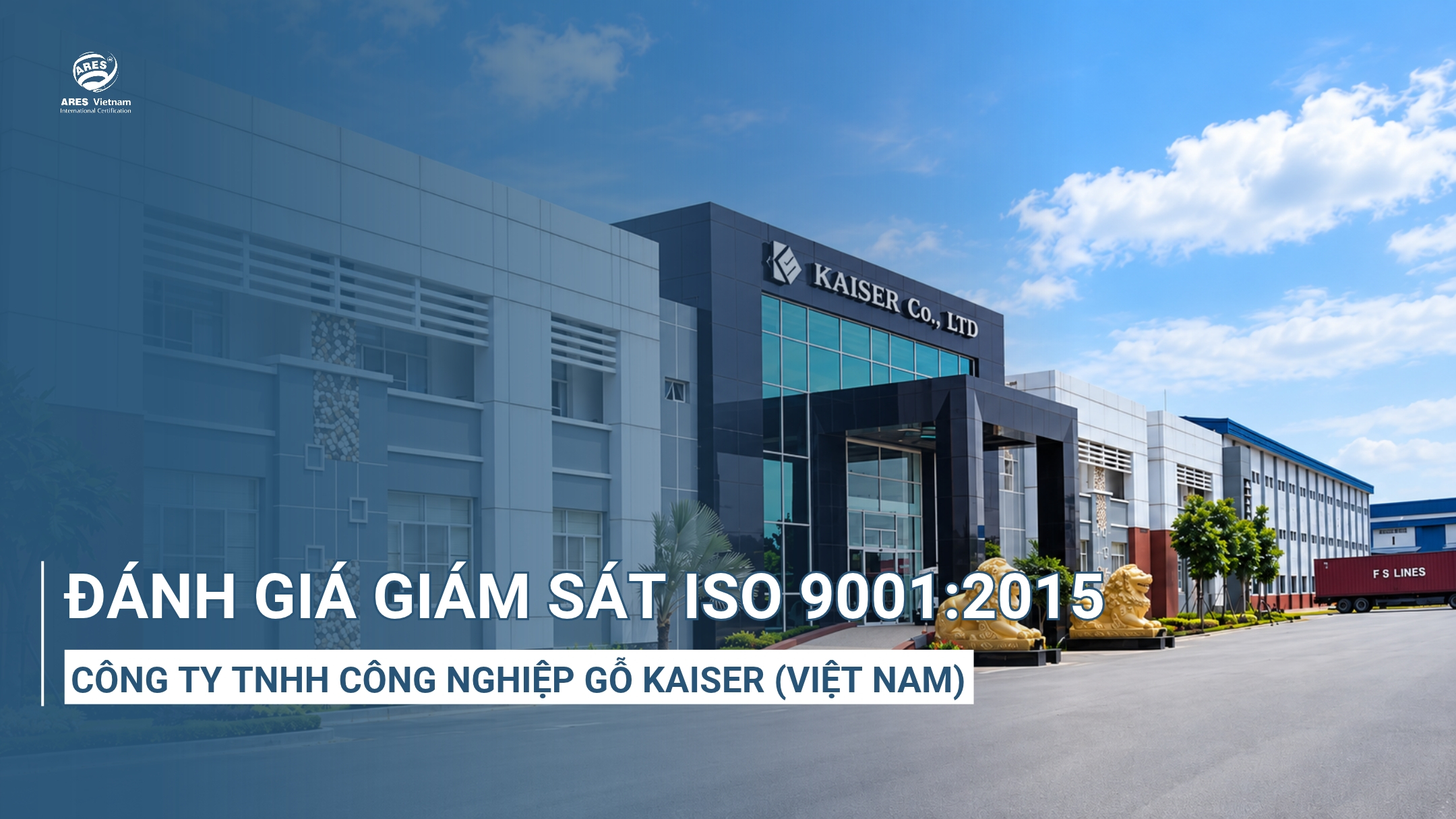
ARES Vietnam Conducts the Second ISO 9001:2015 Surveillance Audit at KAISER 1 & KAISER 2 (Vietnam)
Read more


ARES Vietnam Awards ISO 9001:2015 Certification to Simona Leather Company Limited
Read more

ARES Vietnam Conducts ISO 9001:2015 Surveillance Audit at Simona Leather Company Limited
Read more

Emissions Data & CBAM: 5 Practical Questions from Factory Operations
Read more

Greenhouse Gas Inventory Challenges: What Data Should Businesses Prepare?
Read more