Classification of Import and Export Goods Under Circular 85/2026/TT-BTC: What Should FDI Enterprises Control?
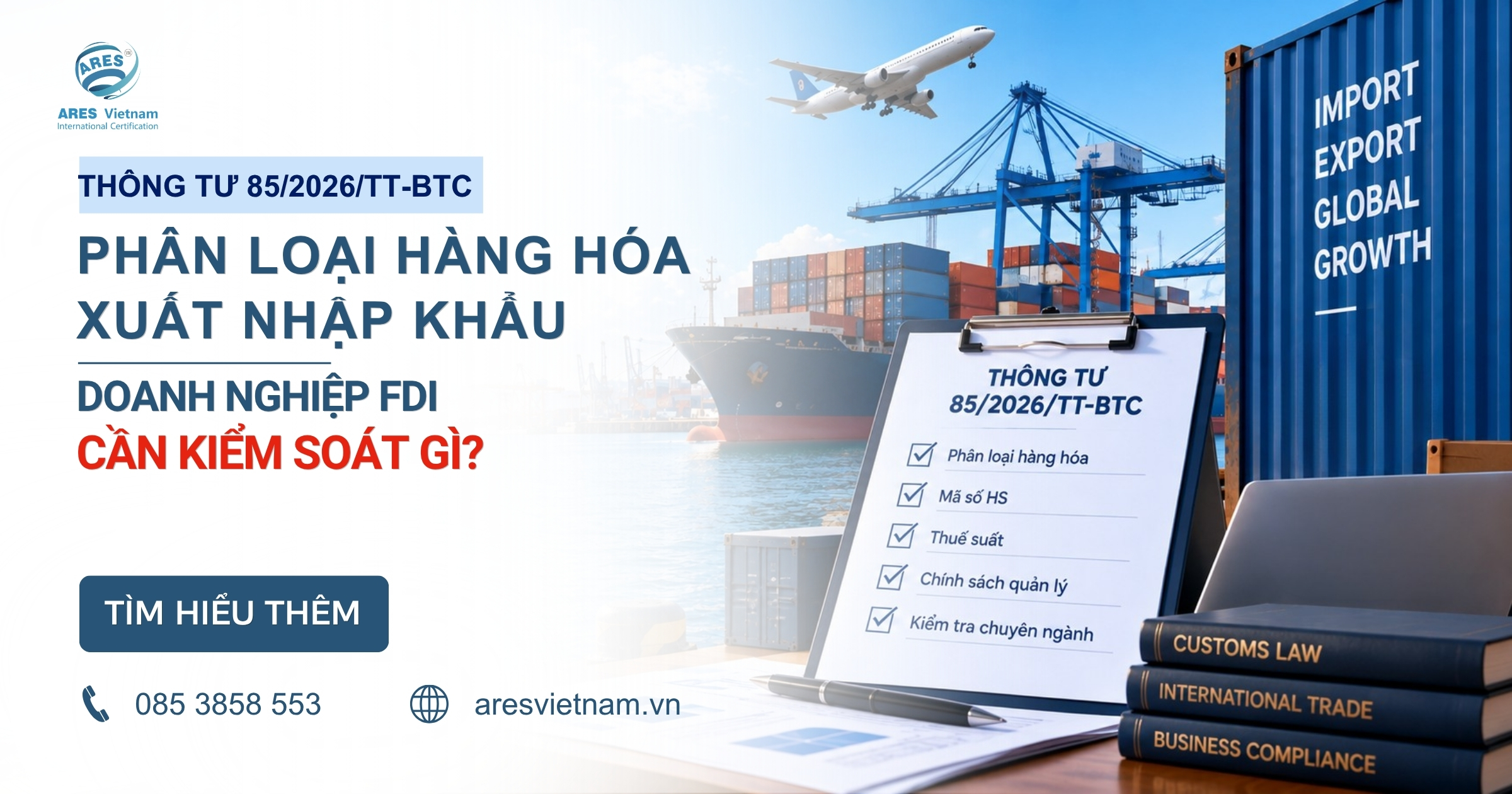
When classifying import and export goods, FDI enterprises need to control four key areas: product information; technical documentation and the basis for determining HS codes; relevant changes; and coordination responsibilities among departments.
Since data may come from the parent company, suppliers and internal departments, matching the correct product with up-to-date documentation gives enterprises a sound basis for reviewing and explaining HS classifications. Circular No. 85/2026/TT-BTC, effective from 15 September 2026, provides the regulatory context for reviewing these matters in actual import and export activities.
What Does Circular No. 85/2026/TT-BTC Regulate?
Circular No. 85/2026/TT-BTC regulates the classification and analysis of import and export goods for classification purposes, as well as the development and use of the database for Vietnam’s Nomenclature of Exports and Imports. The Circular applies to customs declarants, customs authorities, customs officers, and organisations and individuals involved in related activities. It takes effect on 15 September 2026, replacing Circular No. 14/2015/TT-BTC and Circular No. 17/2021/TT-BTC.
Under Article 4, each item is assigned a single code according to Vietnam’s Nomenclature of Exports and Imports. Classification must follow the bases specified in Clause 2 of this Article, including Vietnam’s Nomenclature of Exports and Imports, the applicable tariff schedules, and the six General Rules for the Interpretation of the Harmonized System.
Under Article 5, classification results are used to apply goods management policies and tax rates in force at the time the customs declaration is registered. The corresponding conditions, procedures and documentation must also be fulfilled.
What Information Is Required for Import and Export Goods Classification?
A product name or internal product code helps identify an item. HS classification, however, requires a clear understanding of the actual characteristics of the goods and comparison with the relevant classification bases.
1. Actual Characteristics of the Goods
Depending on the type of goods, relevant information may include composition, structure, materials, properties, features, intended use and other related characteristics. For machinery, equipment or components, enterprises may also need to clarify their functions, operating principles and relationship with the equipment in which they are used.
For manufactured products, the information should reflect the characteristics of the actual finished product. Where the production process changes the characteristics of the input materials, the finished product should be described based on its resulting characteristics rather than relying solely on input data.
2. Technical Documentation and Classification Bases
Product catalogues, technical specifications, drawings, bills of materials, assessment reports or test results can help clarify the characteristics of the goods. These documents should correspond to the specific product, model or version being imported or exported.
Technical information provides the basis for comparing the goods with the classification provisions set out in Article 4 of Circular No. 85/2026/TT-BTC. Where a single code has yet to be determined, Clause 1, Article 6 provides for the additional use of the HS Explanatory Notes, the WCO Compendium of Classification Opinions, the Supplementary Explanatory Notes to the AHTN, and the database for Vietnam’s Nomenclature of Exports and Imports.
Where customs authorities require further grounds to verify the classification made by the customs declarant, goods may undergo analysis and assessment in accordance with Article 3 of the Circular.
What Should FDI Enterprises Control When Classifying Goods?
For FDI enterprises, classification information may come from the parent company, suppliers and several internal departments. Therefore, in addition to having sufficient technical information, enterprises need to ensure that they use the correct product, the correct documentation, the appropriate classification basis and the current document version.
1. Cross-Check Product Information Across Different Sources
Internal product codes, supplier codes, product names and model numbers should all be traceable to the correct physical goods. Information on commercial and customs documents should also be cross-checked against catalogues, specifications, drawings and other relevant technical data.
For example, the parent company, supplier and commercial documents may identify the same component using different codes or product names. Proper cross-checking helps ensure that technical documentation is matched with the correct item.
2. Maintain HS Classification Bases and Technical Records
For each product code, enterprises should retain records of the characteristics reviewed, documents used and basis applied to determine the HS code. The records should correspond to the correct model and version and remain traceable for future reviews or explanations.
Where documents are updated or internal translations are used, enterprises should maintain a clear link to the original documents so that the correct version is applied.
3. Review Classification When Goods or Classification Bases Change
Changes in composition, structure, intended use, model, source of supply, technical documentation or relevant legal bases should be reviewed whenever they may affect the product characteristics or the classification basis currently applied.
A change should first trigger an assessment of its relevance to classification. For example, when switching suppliers, the enterprise should determine whether goods from the new source have different characteristics relevant to classification before continuing to apply the existing HS code.
4. Assign Responsibilities and Resolve Incomplete Information
Classification information often involves several departments. Enterprises should therefore define clear responsibilities for providing information, confirming technical details, reviewing HS codes and updating data.
When information from different sources is incomplete or inconsistent, the enterprise should identify the points requiring clarification, the person or department responsible for confirmation, and the deadline for updating the result before using the data for customs declaration. Where the available records provide insufficient information to determine the necessary product characteristics, the enterprise should obtain additional documentation or consider using assessment services where appropriate.
Checklist for Reviewing Information and Documents Before Customs Declaration
Before using product data for customs declaration, enterprises can review the following six areas:
| Review Item | Points to Confirm |
| Product identification | Product code, product name and model are correctly linked to the actual goods |
| Technical characteristics | Sufficient information is available to support the classification review |
| Documents and translations | Documents relate to the correct product and version, with consistent information across sources |
| HS classification basis | The documents and classification bases used can be traced and retrieved |
| Relevant changes | Potential impacts have been reviewed and the results have been updated |
| Unresolved issues | Missing or inconsistent information that may affect classification has been clarified, or an appropriate handling method has been established in accordance with applicable requirements before declaration |
Note: This checklist is intended for internal information control. It is not a standard list of legally required documents applicable to every type of goods.
Document Control and Internal Coordination Within an ISO 9001 Management System
Enterprises can apply ISO 9001 requirements for the control of documented information and the process approach to incorporate these review activities into their management systems. This helps maintain consistent implementation and supports improvement when errors or discrepancies arise.
ISO 9001 provides a management framework for these controls, while the legal and technical basis for goods classification remains subject to the applicable customs classification requirements. The accuracy of an HS code is determined through the relevant classification rules and supporting information.
ARES Vietnam provides ISO 9001 assessment and certification services for manufacturing and service enterprises. Contact ARES Vietnam to learn more about the appropriate assessment scope and certification process.
Frequently Asked Questions (FAQ)
| Question | Answer |
| Can an enterprise use an HS code provided by an overseas supplier? | The supplier’s HS code can serve as a reference for comparison. The enterprise should also review the actual goods and the classification bases applicable in Vietnam. Determining the HS code should therefore draw on the relevant classification rules and supporting technical information, together with supplier or parent-company references where appropriate. |
| Can previously imported goods continue to use the same HS code? | Yes, where the previously used code was appropriately determined and remains applicable to the current goods under the classification rules in force. The enterprise should review the product characteristics and any relevant changes. Previous use of a code serves as historical information, while the current classification should continue to be supported by the applicable basis. |
| What should enterprises consider when machinery is imported in multiple shipments? | Under Article 7 of Circular No. 85/2026/TT-BTC, for combined machines or machine combinations under Chapters 84, 85 and 90 imported in multiple shipments, the customs declarant may choose to classify each machine or piece of equipment separately or apply Legal Notes 3, 4 and 5 of Section XVI. Where the latter option is selected, the documentation and procedures under Article 9 apply, including registration of the List before the customs declaration for the first import shipment is registered. |
Related news

Greenhouse Gas Inventory Process for Businesses Under ISO 14064-1
Read more

Control of Measuring Equipment in Manufacturing Plants: What Should FDI Enterprises Consider Under ISO 9001?
Read more

ARES VIETNAM AT THE 2ND MEMBER CONGRESS OF TERM 19 & MID-AUTUMN FESTIVAL GALA
Read more

Liquid Milk Has Passed Testing: What Else Should Businesses Control?
Read more

ARES Vietnam Conducts ISO 50001:2018 Surveillance Audit at Gemtek Vietnam Corporation Limited
Read more