Greenhouse Gas Inventory Challenges: What Data Should Businesses Prepare?

Greenhouse gas inventory challenges often arise before calculations even begin. Data may be scattered across departments, source records may require additional documentation, or inventory boundaries may need clarification. These issues make it difficult to establish a consistent set of inputs.
Inventory results can support regulatory requirements, customer expectations, parent company requests, supply chain requirements, or sustainability reporting. Therefore, businesses should identify potential challenges early and prepare appropriate data from the outset.
Common Challenges in Preparing a Greenhouse Gas Inventory
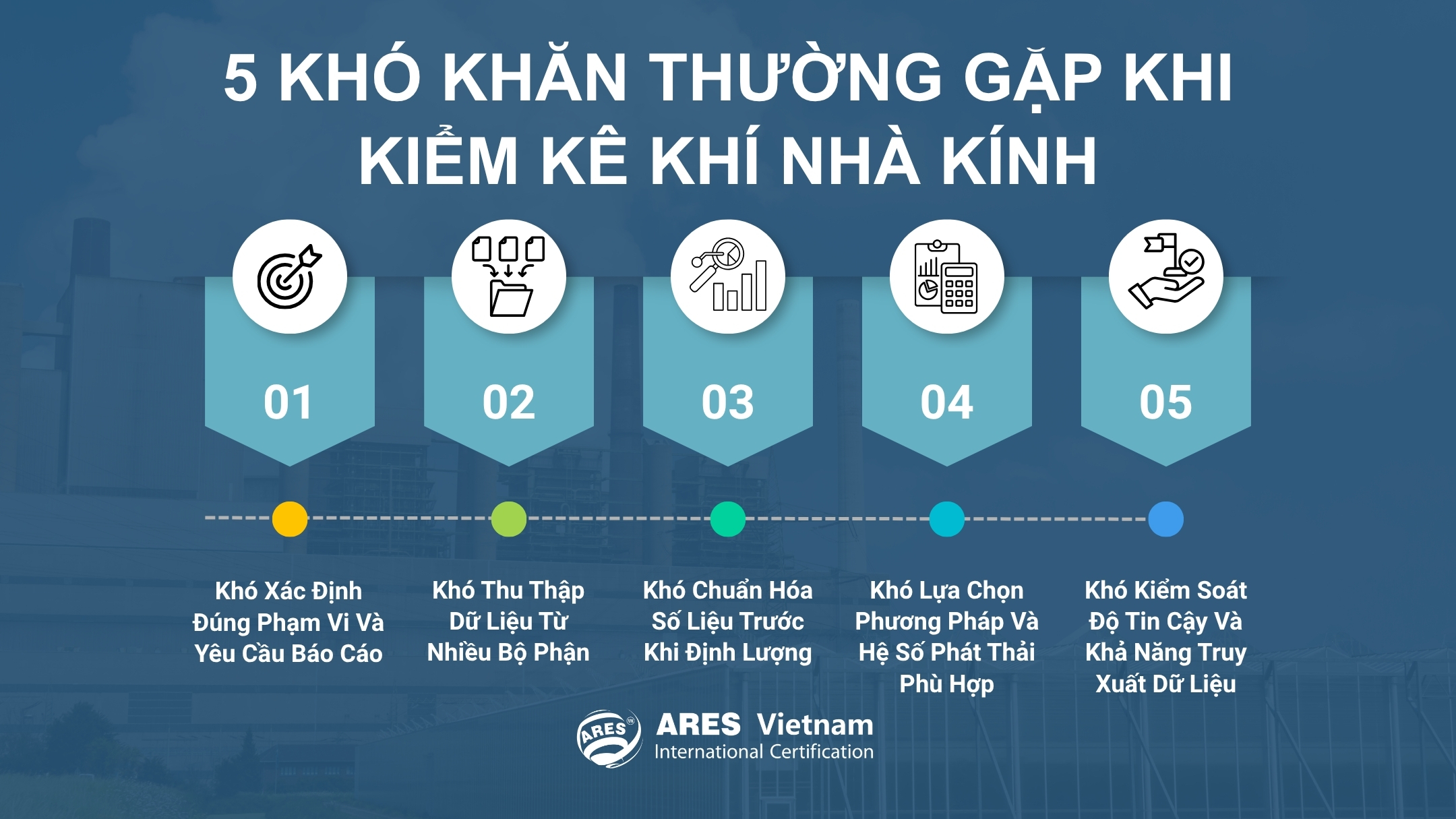
These challenges typically fall into five areas: inventory boundaries, data collection, data standardization, quantification methods, and traceability.
1. Defining Inventory Boundaries and Reporting Requirements
Depending on the reporting purpose, businesses may need to define different organizational boundaries, reporting periods, and emission sources to consider.
This becomes particularly challenging for businesses with multiple factories, branches, or complex ownership structures.
For example, a business may need to define boundaries across several production sites or distinguish activities under its control from outsourced operations. It may also need to assess how changes to facilities, production lines, or activities affect the inventory during the reporting period.
2. Collecting Data Across Departments
Inventory data is often managed by several departments. Accounting retains invoices, production tracks output, maintenance manages equipment and refrigerants, and logistics holds transportation information.
When records are stored across different systems or templates, data gaps can arise, and identifying the official version can become difficult. Similarly, the completeness of data from suppliers, transport providers, or waste treatment contractors depends on the records each party maintains.
3. Standardizing Data Before Quantification
Data collected from different departments may vary in measurement units, recording periods, or level of detail. The same fuel may be recorded in liters at one site and kilograms at another. Production output may also be recorded by product count or weight.
When data comes from multiple facilities, differences in recording practices further increase the work required. Businesses must convert, separate, and reconcile figures before using them in calculations.
4. Selecting Appropriate Methods and Emission Factors
Purchased electricity, fuel combustion, refrigerants, production processes, and waste treatment have different characteristics. Each therefore requires an appropriate quantification approach.
The challenge often lies in selecting suitable methods, emission factors, and inputs for each source. Where direct measurement data is unavailable, calculations may require proxy data, estimation methods, or assumptions.
5. Maintaining Data Reliability and Traceability
Even a complete dataset requires supporting source records for verification. A consolidated spreadsheet may contain figures, while the corresponding invoices, inventory issue slips, system reports, or operating logs still need to be collected for cross-checking.
Discrepancies may also arise between fuel quantities in accounting records and warehouse issue records, or between production output in the ERP system and factory reports. As data passes through more files, systems, or processing steps, tracing final results back to their original sources takes more time.
These challenges can increase the number of rounds needed to supplement, reconcile, and review data. The workload also depends on the number of facilities and emission sources, reporting boundaries, and the readiness of supporting records. Together, these factors affect the time and cost required.
Read more: Factors Affecting the Cost of a Greenhouse Gas Inventory
What Data Should Businesses Prepare for a Greenhouse Gas Inventory?
After defining inventory boundaries and identifying emission sources, businesses should prepare a data checklist for each source category. Each category should include supporting records for cross-checking, ensuring that the figures are substantiated and traceable.
| Data Category | Data to Prepare | Supporting Records |
| Inventory boundaries | Facilities, reporting period, base year, and activities covered |
Facility lists, organizational charts, and operational records
|
| Purchased electricity | Electricity consumption by month or reporting period |
Electricity bills and meter readings
|
| Fuels | Types and quantities of gasoline, oil, LPG, gas, and coal used |
Invoices, inventory receipt and issue slips, and usage logs
|
| Refrigerants | Types and quantities added, recovered, or replaced |
Maintenance records and refrigerant charging records
|
| Production | Raw materials, production output, scrap, or other relevant data |
Production reports, ERP records, and inventory slips
|
| Transportation | Shipment weight, distance traveled, and transport mode |
Contracts, delivery orders, and logistics data
|
| Waste and wastewater, where generated and within inventory boundaries | Quantities, composition, and treatment methods |
Operating logs, treatment records, and monitoring records
|
| Supply chain | Purchased raw materials, suppliers, and inbound transportation, where within inventory boundaries |
Purchasing records, supplier data, and logistics documents
|
| Calculations | Emission factors, global warming potential (GWP) values, formulas, and assumptions |
Calculation files, reference sources, and conversion tables
|
The actual checklist depends on each business’s inventory boundaries and operational characteristics. Each facility should prepare the data categories relevant to its activities.
How Does ISO 14064-1:2018 Support Greenhouse Gas Inventories?
ISO 14064-1:2018 specifies principles and requirements for quantifying and reporting greenhouse gas emissions and removals at the organization level. It supports businesses in developing, managing, and presenting inventories consistently, transparently, and with traceable information.
| Area | Role of ISO 14064-1:2018 |
| Boundaries | Supports the definition of organizational boundaries, reporting boundaries, and emission sources to consider. |
| Quantification | Establishes appropriate data, methods, and bases for quantifying emission sources and greenhouse gas removal activities. |
| Information management | Supports the relevance, completeness, consistency, accuracy, and transparency of the inventory. |
| Reporting | Specifies the information to be identified and presented in an organization-level greenhouse gas report. |
When a greenhouse gas report undergoes verification, the verification activities follow the relevant requirements and guidance of ISO 14064-3:2019.
Conclusion
The greatest challenges in preparing a greenhouse gas inventory often arise from defining appropriate boundaries, gathering sufficient data, and maintaining traceable records before the final calculations.
Businesses seeking verification of their greenhouse gas inventory reports under ISO 14064-3:2019 can provide details of their reporting period, inventory boundaries, and applicable requirements. ARES Vietnam can then discuss a suitable verification plan.
- Hotline: 085.3858.553
- Email: service@aresvietnam.vn

Related news

Emissions Data & CBAM: 5 Practical Questions from Factory Operations
Read more


ARES Vietnam Conducts ISO 45001:2018 Surveillance Audit at A&J (VIETNAM) CO., LTD.
Read more

Rice Export and Import Business Under Decree 365/2026/ND-CP: What Should Enterprises Control?
Read more

ARES Vietnam Verifies Greenhouse Gas Report under ISO 14064-1:2018 at GE LAN Vietnam
Read more

ISO 9001:2026 Has Been Officially Published
Read more