CBAM 2026: What Obligations Must Vietnamese Businesses Fulfill In the Full Implementation Phase?
From 2026, the Carbon Border Adjustment Mechanism (CBAM) of the European Union (EU) officially enters its full implementation phase. As a result, this marks a fundamental shift in how environmental costs are calculated in international trade. Under this mechanism, greenhouse gas emissions embedded in products are no longer a “hidden” factor. Instead, they become a cost component that must be declared, verified, and converted into financial obligations when exporting goods to the EU market.
This regulation is expected to directly impact many Vietnamese businesses exporting high-emission products, such as steel, aluminum, cement, fertilizers, electricity, and hydrogen. At the same time, CBAM introduces stricter requirements for environmental data transparency and emission management across the entire production chain.
CBAM 2026: How Does the Full Phase Differ From The Transitional Phase?
CBAM is implemented in two phases to support gradual adaptation by businesses and regulators.
During the transitional phase (from October 2023 to the end of 2025), the main objective is to collect emission data and refine carbon calculation methodologies. According to the European Commission, exporters to the EU are only required to report emissions embedded in products. At this stage, no financial obligation applies.
However, from January 1, 2026, CBAM moves into full implementation. At this point, imported goods must not only declare greenhouse gas emissions generated during production, but also fulfill carbon obligations through CBAM certificate submission.
Moreover, certificate prices are linked to the EU Emissions Trading System (EU ETS). If the exporting country already applies carbon pricing, the paid amount can be deducted when calculating CBAM obligations.

Comparison of the transitional phase and the full implementation phase of CBAM 2026 for Vietnamese businesses
What Obligations Must Vietnamese Businesses Fulfill Under CBAM 2026?
Currently, CBAM applies to high-emission sectors exporting to the EU, including steel, cement, aluminum, fertilizers, electricity, and hydrogen. These sectors are also key areas where many Vietnamese businesses participate in global supply chains.
As the CBAM scope may expand, companies should prepare early to reduce cost risks and avoid export disruptions. In particular, from 2026 onward, carbon emission data becomes a mandatory factor that directly affects competitiveness.
Accordingly, businesses should focus on the following core obligations:
1. Collect and manage emission data
First, companies need to identify emission sources in production, including energy use, raw materials, and processes. Then, they should establish a monitoring system to track carbon emission data. This forms the foundation for accurate product-level carbon calculations.
2. Report carbon emissions for exported goods
Next, businesses must provide emission data to EU importers. This includes product volume, emission intensity, and calculation methods.
According to the European Commission, actual measured data should be prioritized. Otherwise, default values—often higher—may be applied, leading to increased carbon costs.
3. Verify emission data
From 2026, emission data must be verified by an independent third party. This ensures transparency and reliability. If requirements are not met, default emission values may apply, which can reduce competitive advantage.
4. Purchase CBAM certificates
Finally, carbon costs are reflected through CBAM certificates based on emission levels. Although EU importers make the payment, the cost is typically embedded in purchase prices. Therefore, companies with high emission intensity may face stronger competitive pressure if efficiency is not improved.
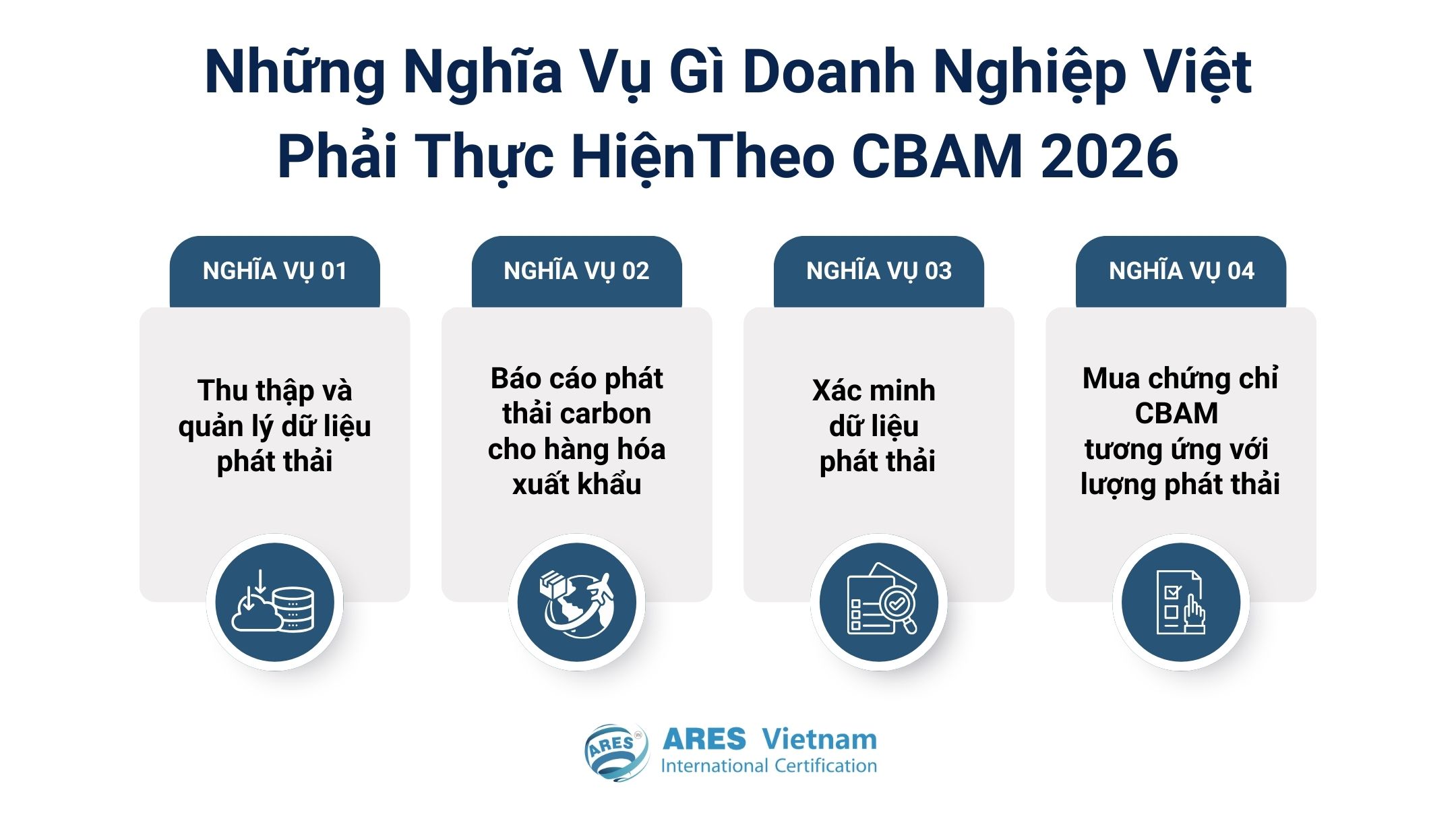
Obligations that vietnamese businesses must fulfill under CBAM 2026
How Should Vietnamese Businesses Prepare?
The transition to full CBAM implementation is not only a compliance requirement. More importantly, it reflects a broader shift in environmental standards within global trade.
To adapt effectively, businesses should proactively build a structured and long-term emission management foundation:
Step 1: Establish Monitoring and Tracking Systems: Companies should deploy tools to monitor energy consumption, raw materials, and emission sources. This enables accurate calculation of product carbon intensity.
Step 2: Standardize Methodologies Based on International Standards: Applying international standards improves consistency and verification capability. Key standards include:
- ISO 14064 – Greenhouse gas inventory at the organizational level
- ISO 14067 – Product carbon footprint quantification
- ISO 14001 – Environmental management system
Integrating these standards not only supports CBAM compliance, but also strengthens sustainable governance capabilities.
Step 3: Ensure Supply Chain Data Transparency: Product emissions may include upstream supplier data. Therefore, businesses should collaborate with partners to collect and standardize environmental data. This ensures completeness and accuracy in reporting.
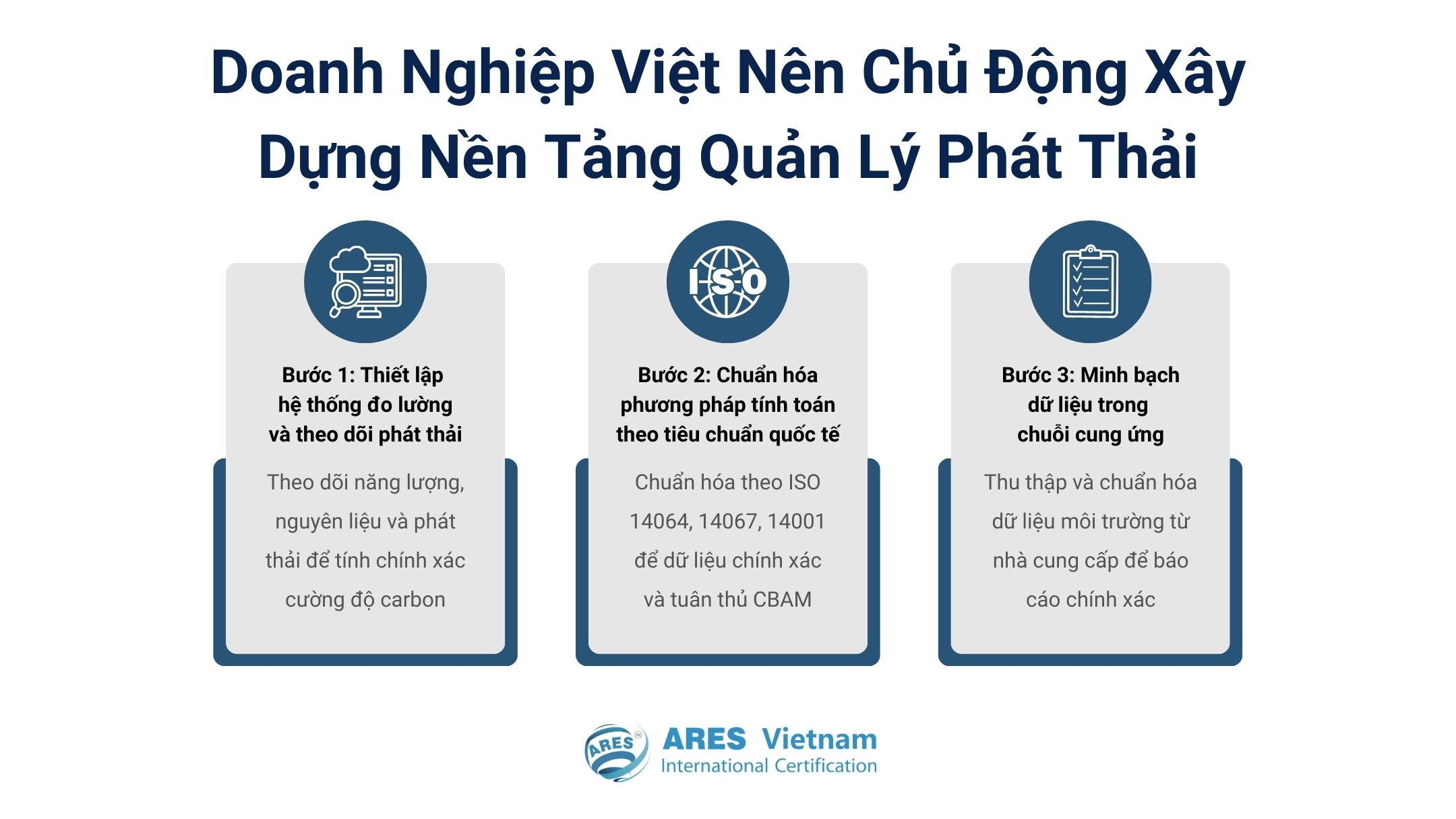
Businesses need to proactively build a structured and long-term emission management foundation
CBAM 2026: From Compliance To Competitive Advantage
CBAM 2026 marks the transition from data collection to full carbon obligation enforcement for goods entering the EU. As the mechanism becomes fully operational, greenhouse gas emissions will become a structural cost component in international trade.
In this context, proactively building systems for measuring, managing, and verifying emissions is essential. Not only does this support compliance, but it also creates a foundation for stronger competitiveness in global supply chains.
With expertise in environmental management system certification and assessment, ARES Vietnam provides independent verification and evaluation services. In addition, the company supports businesses in developing carbon management systems aligned with international standards. As a result, enterprises can move toward sustainable development and respond effectively to evolving EU market requirements.
Related news

Circular 49/2026/TT-BCT Takes Effect Soon: Which Environmental Records Should Factories Review?
Read more

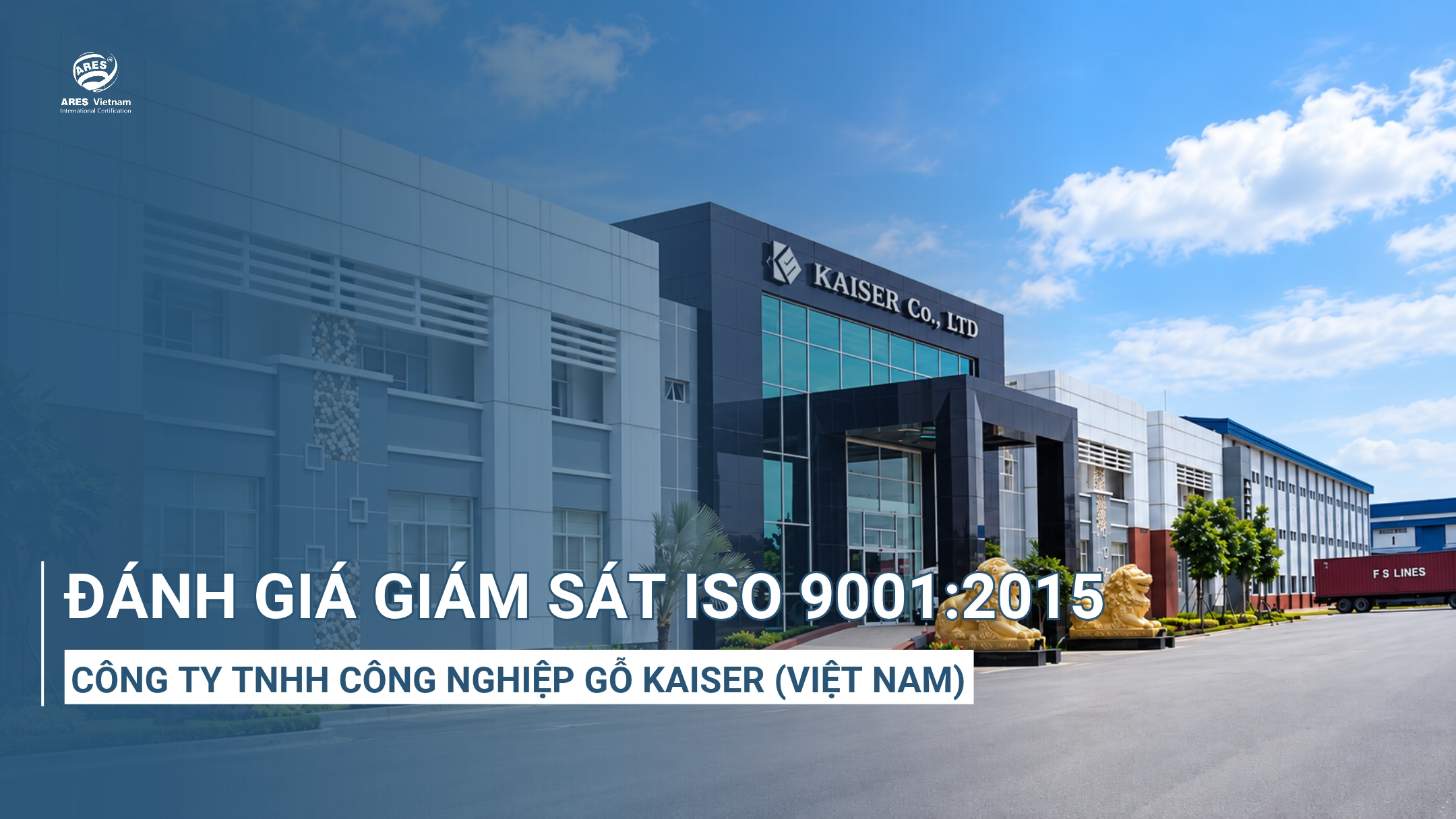
ARES Vietnam Conducts the Second ISO 9001:2015 Surveillance Audit at KAISER 1 & KAISER 2 (Vietnam)
Read more

National Single Window and ASEAN Single Window: What Documents Should Import–Export Businesses Prepare?
Read more

ARES Vietnam Awards ISO 9001:2015 Certification to Simona Leather Company Limited
Read more

ARES Vietnam Conducts ISO 9001:2015 Surveillance Audit at Simona Leather Company Limited
Read more