Emission Quotas 2026: What Should Businesses in the Thermal Power, Steel, and Cement Industries Prepare?
Starting in 2026, Vietnam will implement a greenhouse gas emission quota mechanism. This policy targets industries with high emission intensity. These include thermal power, steel production, and cement manufacturing. Under this mechanism, each production facility must comply with a specific emission cap. Previously, businesses mainly fulfilled environmental reporting obligations.
However, emissions will now become a regulated operational indicator. Therefore, excess emissions may require businesses to purchase additional carbon credits. As a result, environmental compliance costs will link directly to production activities. Operational efficiency will also influence carbon costs.
Consequently, many organizations are asking an important question. What should businesses prepare now to adapt to emission quotas? Moreover, early preparation can help avoid future carbon cost risks.
What Are Emission Quotas And Why Are These Industries Affected?
1. What is an emission quota?
According to Decree 06/2022/ND-CP on greenhouse gas mitigation, an emission quota defines the maximum allowed emissions. This limit applies within a specific period for each sector or facility.
Based on this framework, authorities determine the total emission volume for each sector. Subsequently, they allocate specific quotas to organizations subject to greenhouse gas inventory requirements. Therefore, this mechanism helps control emissions in key industrial sectors. At the same time, it supports the development of Vietnam’s future carbon market
Once fully implemented, greenhouse gas emissions will become an essential management factor. In many ways, it will resemble energy or raw material costs.

2. Why are thermal power, steel, and cement prioritized?
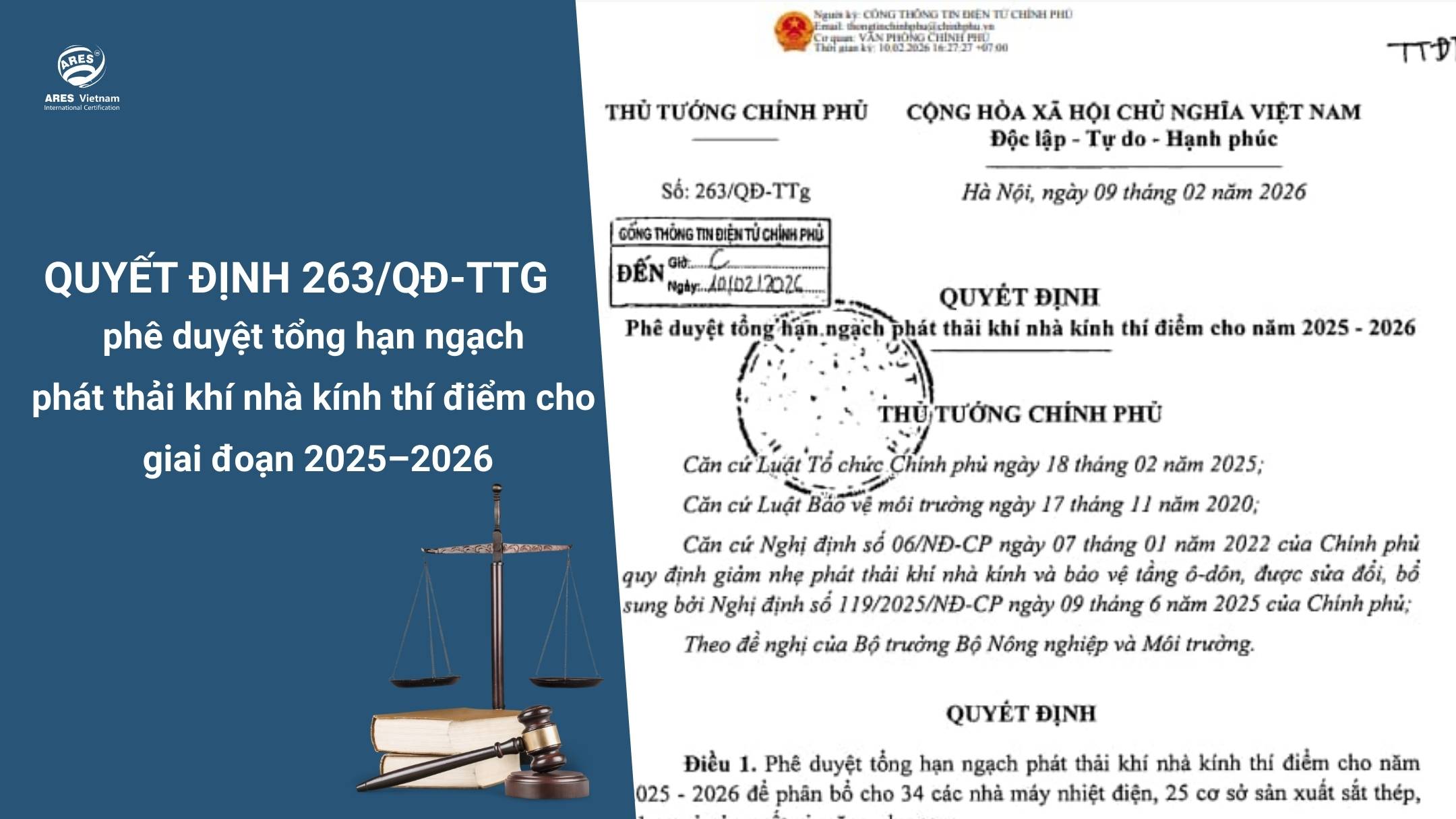
On February 9, 2026, Deputy Prime Minister Tran Hong Ha signed Decision 263/QD-TTg. This decision approved pilot emission quotas for the 2025–2026 period.
Accordingly, emission quotas were allocated to 110 production facilities. These facilities operate in three sectors: thermal power, steel production, and cement manufacturing. These industries were selected due to their high emission intensity. For example, coal combustion in power generation produces significant emissions. Similarly, metallurgical processes in steel production release large amounts of CO₂. In addition, clinker production in cement manufacturing generates substantial carbon emissions.
Furthermore, Vietnam designed the emission control roadmap in phases. This approach allows businesses to gradually adapt. Key milestones in the allocation roadmap include:
• 2025–2026: Pilot implementation for high-emission sectors such as power, steel, and cement.
• 2027–2030: Expansion of the mechanism to additional sectors. Authorities will also adjust quotas and establish regular allocation cycles.
Therefore, starting with high-emission industries will improve national emission control. These sectors represent a large share of total emissions.
3. Risks if businesses do not prepare early
Once the quota mechanism is enforced, emission data will become essential for production management. Organizations without a greenhouse gas inventory system may face several challenges. For example, they may struggle to:
- Accurately determine greenhouse gas emissions
- Compare actual emissions with allocated quotas
- Develop effective emission reduction strategies
If emissions exceed the allowed threshold, businesses may need to purchase additional carbon credits. Consequently, operational costs could increase significantly. Moreover, unclear emission data may create compliance risks. It may also affect participation in future carbon markets.
What Should Businesses Prepare Before The 2026 Emission Quota Mechanism?
Given the policy changes in emission control, high-emission industries should begin preparation early. Most organizations start by building a systematic emission management framework. Typically, the preparation process includes several key steps.
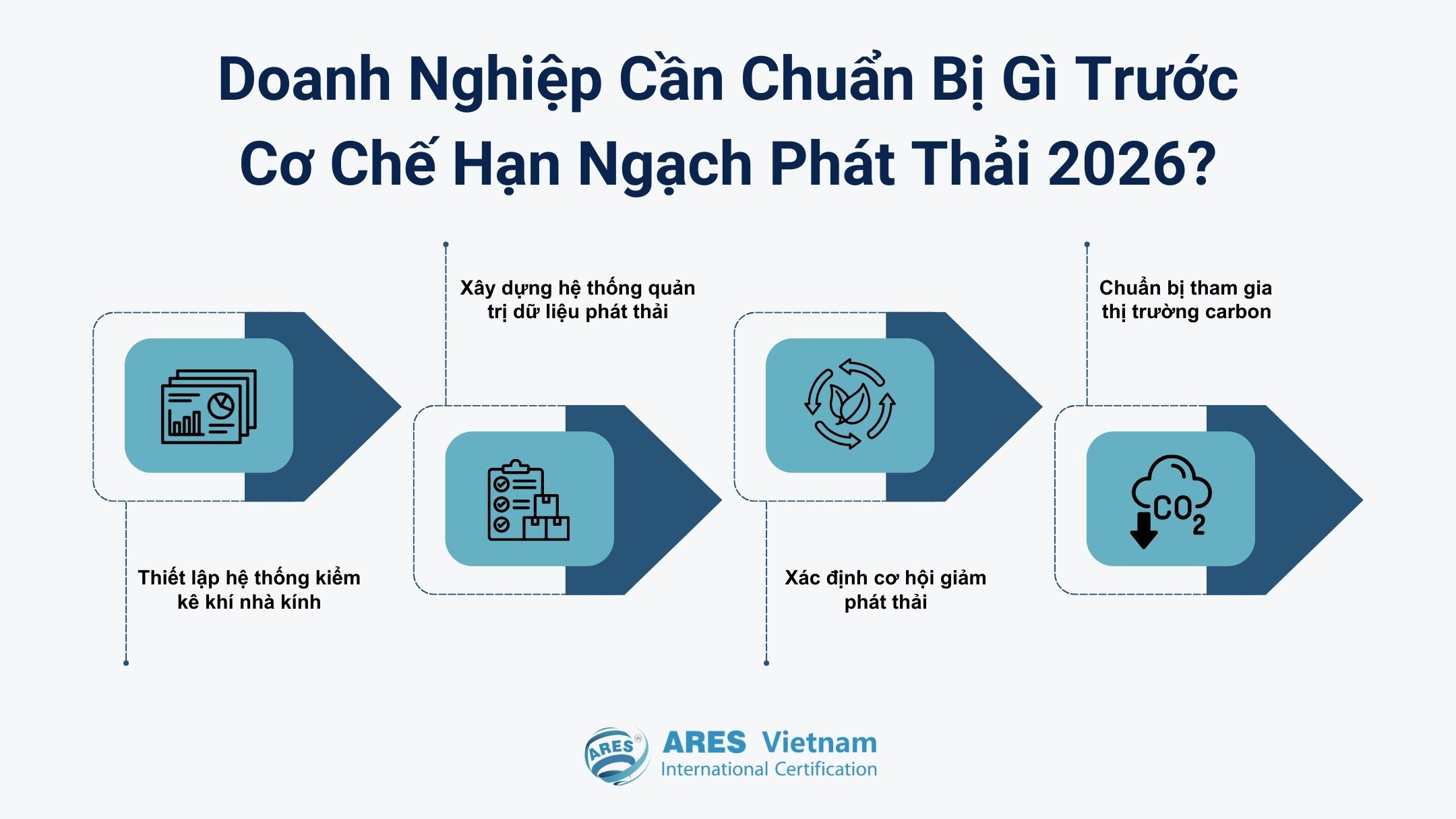
1. Establish a greenhouse gas inventory system
The first step is to quantify emissions from production activities. Therefore, businesses should:
- Identify major emission sources in operations
- Collect fuel and energy consumption data
- Calculate emissions in CO₂ equivalent
A widely adopted international standard for this process is ISO 14064-1. This standard provides a structured framework for greenhouse gas inventories. Furthermore, it standardizes calculation methods. As a result, organizations can improve data transparency and reliability.
2. Build an emission data management system
In practice, emission data often spreads across multiple departments. For example, production teams manage fuel data. Meanwhile, engineering teams handle technical information. Energy managers may also collect relevant data.
Consequently, data consolidation becomes challenging.
Therefore, organizations should establish a centralized emission data system. Such a system enables monitoring of:
- Fuel and energy consumption
- Emissions from each operational activity
- Key environmental performance indicators
With a clear data platform, businesses can calculate emissions more accurately. In addition, they can forecast emissions against allocated quotas.
3. Identify emission reduction opportunities
Once emission data is collected and analyzed, organizations can identify suitable reduction strategies. These strategies should align with production characteristics.
Common approaches include:
- Improving energy efficiency
- Upgrading production technologies
- Transitioning to renewable or cleaner energy sources
These solutions reduce actual emissions. Moreover, they help lower carbon cost pressure when quotas expand.
4. Prepare for participation in the carbon market
According to Vietnam’s climate policy roadmap, a carbon market will gradually emerge. In the future, businesses may trade emission quotas or carbon credits. Therefore, early preparation provides several advantages.
Organizations can:
- Determine their current emission levels
- Forecast future quota requirements
- Develop suitable carbon trading strategies
This proactive approach improves carbon cost control. At the same time, it strengthens adaptability to environmental policies.
Priorities for businesses preparing for the 2026 emissions quota mechanism
The Role Of ISO Standards In Corporate Emission Management
The pilot allocation of emission quotas shows a clear trend. Greenhouse gas management is becoming a mandatory governance requirement for manufacturers.
In response, many organizations are adopting international standards. Examples include ISO 14064-1 for greenhouse gas inventory and reporting. Another key standard is ISO 14001 for environmental management systems. These standards help businesses build structured emission management frameworks. They also enhance environmental data transparency.
Specifically, ISO standards can support organizations by:
- Standardizing greenhouse gas inventory methods
- Improving transparency of emission data
- Establishing structured environmental management systems
- Strengthening compliance with national and international requirements
As an international certification body in Vietnam, ARES Vietnam provides ISO assessment and certification services.
These services focus on environmental and greenhouse gas management systems.
Through independent evaluation, businesses can strengthen environmental governance. Additionally, they can improve the credibility of emission data. Most importantly, they can prepare for future emission control mechanisms and carbon markets.
Related news

Emissions Data & CBAM: 5 Practical Questions from Factory Operations
Read more

Greenhouse Gas Inventory Challenges: What Data Should Businesses Prepare?
Read more

ARES Vietnam Conducts ISO 45001:2018 Surveillance Audit at A&J (VIETNAM) CO., LTD.
Read more

Rice Export and Import Business Under Decree 365/2026/ND-CP: What Should Enterprises Control?
Read more

ARES Vietnam Verifies Greenhouse Gas Report under ISO 14064-1:2018 at GE LAN Vietnam
Read more