ISO 14064-1 Greenhouse Gas Inventory For Food Export Businesses
As major export markets such as the EU, the United States, and Japan tighten environmental criteria, food industry enterprises are facing growing pressure to improve transparency in emissions data in order to sustain export capability.
From GHG inventories to carbon certification at the product-line level, importer expectations are steadily increasing. As a result, emissions data now directly influences supplier assessment and approval processes.
In Vietnam, Decree No. 06/2022/NĐ-CP and Decision No. 13/2024/QĐ-TTg establish emissions thresholds and criteria for identifying entities subject to mandatory inventories. These regulations provide enterprises with clearer guidance on the scope of their obligations.
This article supports food enterprises in determining whether they fall under mandatory GHG inventory requirements. It also highlights potential risks of delayed compliance. At the same time, it presents a standardized implementation roadmap aligned with both domestic regulations and increasingly rigorous international market expectations.
Are Food Industry Enterprises Required To Conduct Greenhouse Gas Inventories?
To correctly understand current legal requirements, it is first essential to clarify what a greenhouse gas inventory entails. A GHG inventory is the process of quantifying total CO₂e emissions generated from production activities, based on internationally recognized methodologies and technical standards.
More importantly, enterprises are not expected to merely understand the concept. They are required to implement inventories within a standardized technical framework. This includes defined emission factors, calculation methodologies, and operational procedures. Informal or symbolic approaches are no longer acceptable.
1. Market-driven pressures
At the policy level, although CBAM currently applies primarily to heavy industries, the EU increasingly views it as a comprehensive emissions risk management model for the entire economy. Consequently, the food sector is already under early scrutiny for carbon transparency, even before direct regulatory coverage is introduced.
At the supply chain level, major retailers and importers in the EU, the U.S., and Japan continue to tighten supplier selection criteria. Enterprises are now required to present CO₂e data calculated and verified in accordance with international standards. This requirement has effectively become a prerequisite for passing initial supplier capability assessments.

CBAM – Carbon Border Adjustment Mechanism of the European Union
2. Mandatory inventory obligations under regulations
Whether a food and beverage enterprise is required to conduct a GHG inventory is determined based on three legal criteria groups. Meeting any one of the following conditions triggers mandatory implementation.
◾ Annual emissions of 3,000 tons of CO₂e or more
This is the direct quantitative threshold under Decree No. 06. Facilities operating continuously and using significant thermal, electrical, or cold-chain equipment often approach or exceed this level.
◾ Inclusion in the sector list under Appendix I of Decree No. 06/2022/NĐ-CP
This list covers many common F&B subsectors, including agricultural and seafood processing, beverage manufacturing, cold storage systems, boilers, drying, and filling operations.
Importantly, facilities listed are required to conduct inventories even if total emissions have not yet reached 3,000 tons of CO₂e.
◾ Annual energy consumption of 1,000 TOE or more
TOE is a standardized unit of energy equivalence. In the food industry, continuous refrigeration and heating processes often drive energy consumption to this threshold. This signals that the facility is a key energy user and must therefore conduct a GHG inventory.
In practice, approximately 60–70% of F&B facilities fall under mandatory inventory requirements due to exceeding the energy consumption threshold rather than the CO₂e threshold. This explains why many enterprises are surprised when reassessing their legal obligations.
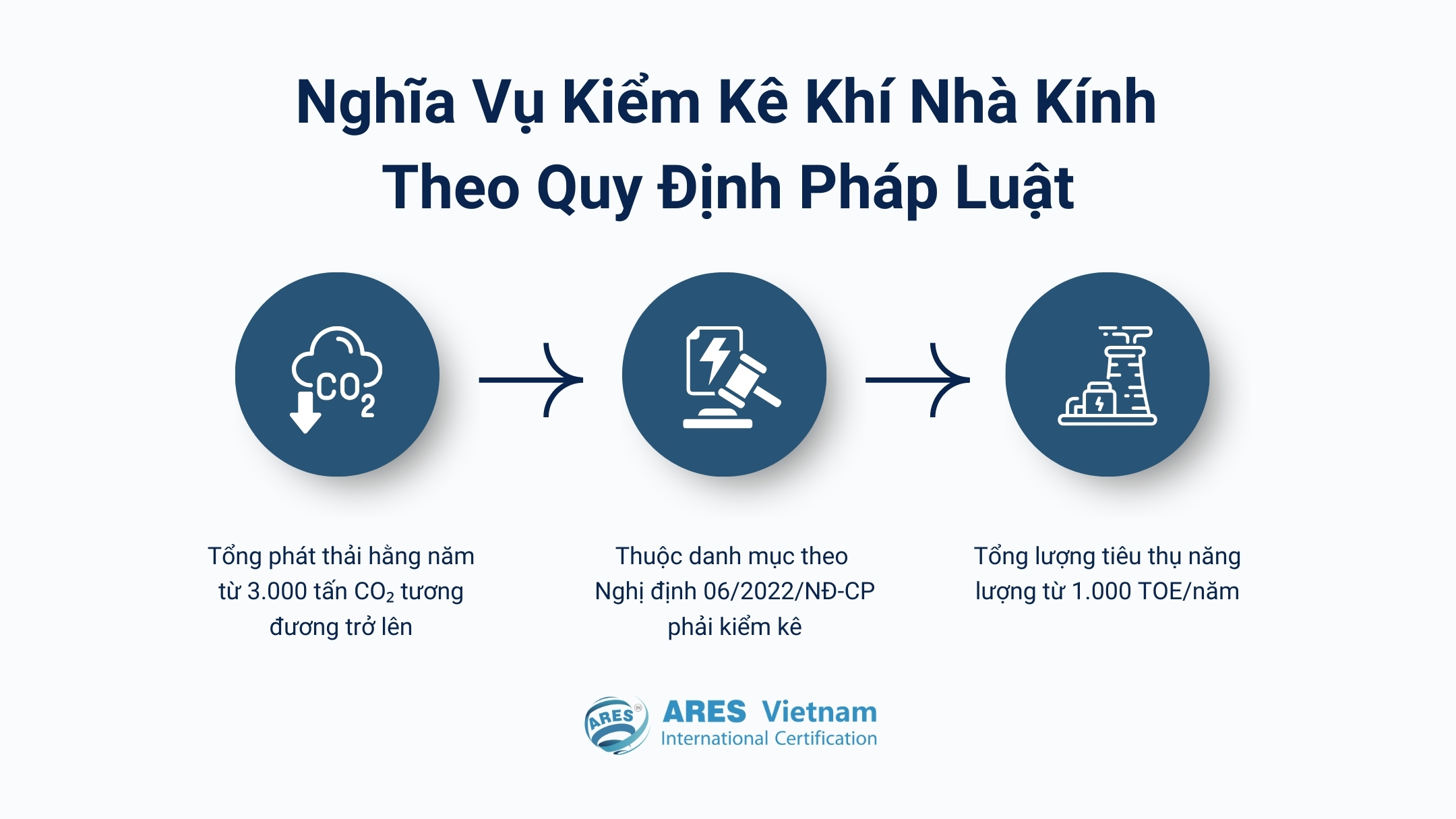
Obligations for greenhouse gas inventory in accordance with legal regulations
Legal Consequences Of Failing To Conduct A Greenhouse Gas Inventory
Under Decree No. 45/2022/NĐ-CP, failure to submit a required GHG inventory report constitutes an administrative violation and may result in penalties, depending on severity.
◾Administrative fines ranging from VND 30–50 million for failure to submit required documentation to authorities.
◾Operational suspension for three to six months in cases of serious or repeated violations.
◾Negative compliance records during bidding processes, environmental licensing, or government inspections.
Beyond legal risks, failure to conduct inventories also leads to significant indirect consequences:
◾Loss of credibility with international partners, particularly within EU, U.S., and Japanese supply chains, where CO₂e data is now a pre-screening requirement.
◾Higher corrective costs when enterprises are forced to prepare inventory reports urgently or supplement data during inspections.
These impacts demonstrate that enterprises cannot wait until inspections occur. The consequences for operations, legal standing, and financial performance are substantial.
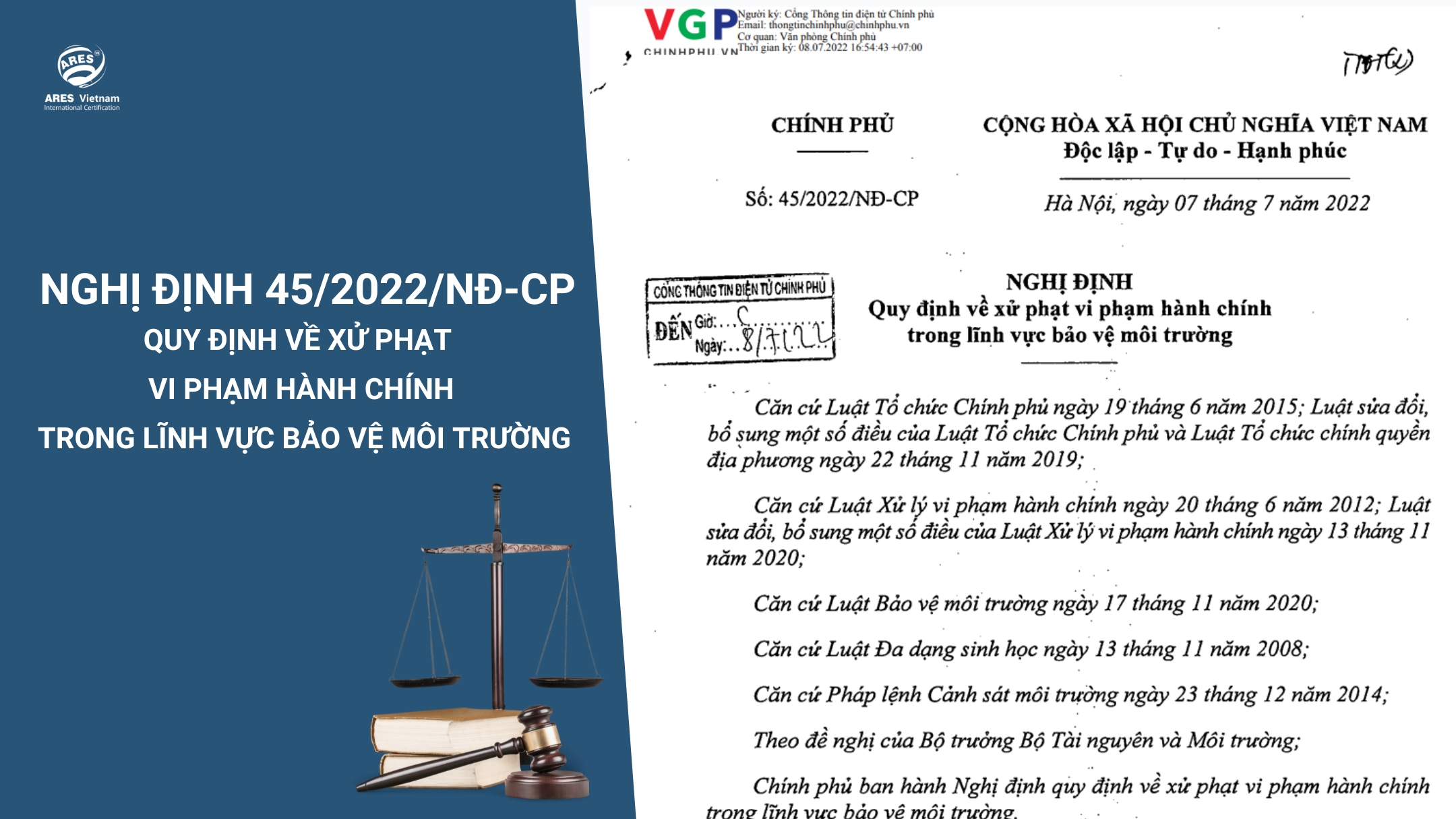
Legal consequences of failing to conduct greenhouse gas inventory
Strategic Value of Proactively Conducting Greenhouse Gas Inventories
From a competitiveness perspective, food manufacturers gain four layers of strategic value by fully complying with GHG inventory standards.
1. Safeguarding market access and reducing trade risks
Between 2025 and 2030, ESG data verification is becoming a standard commercial requirement in key export markets. Reliable emissions records significantly reduce the likelihood of additional documentation requests and prolonged assessments. As a result, enterprises can maintain stable orders and protect revenue streams.
2. Enhancing supplier selection advantages in global supply chains
Global retailers and F&B corporations such as Walmart, Aeon, and Costco increasingly classify suppliers based on carbon transparency. Enterprises with complete and verified GHG reports are prioritized for cooperation, enabling smoother long-term contract negotiations and supply scale expansion.
3. Optimizing resources and improving operational efficiency
GHG inventories based on energy, fuel, and process data allow enterprises to accurately identify major consumption points. This supports targeted optimization, reduced resource losses, and improved profit margins based on measured data rather than assumptions.
4. Strengthening brand credibility and ESG performance
Transparent disclosure of emissions data enhances corporate responsibility in the eyes of customers, retailers, and investors. At the same time, compliant GHG reporting contributes positively to ESG ratings, particularly in markets that emphasize sustainability standards.
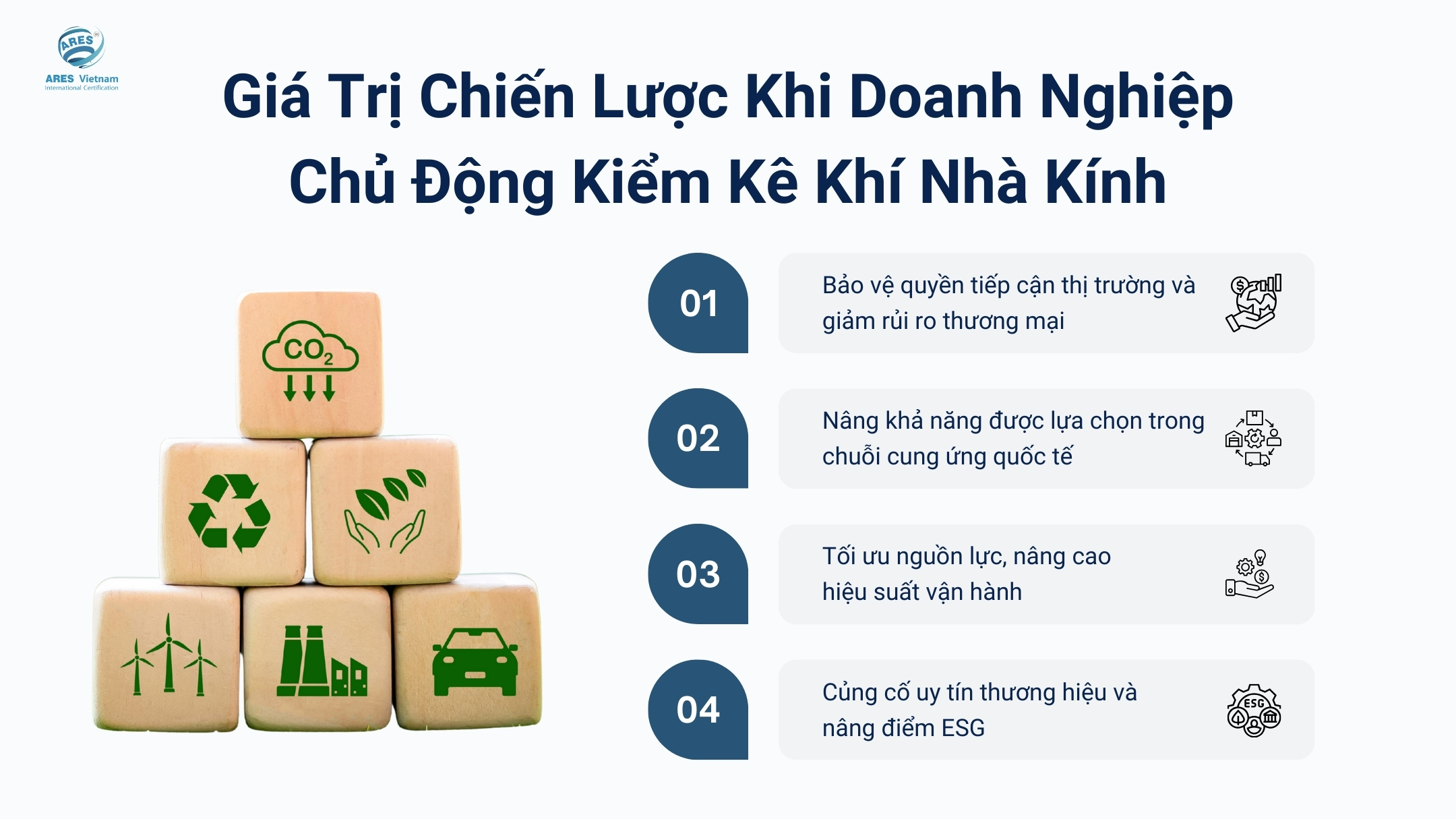
The strategic value of proactive greenhouse gas inventory for businesses
Where Should Food Enterprises Begin?
Based on practical experience implementing GHG inventories for F&B facilities, ARES Vietnam proposes the following structured and highly applicable roadmap.
Step 1: Identify obligations and inventory scope
◾Review Decree No. 06/2022/NĐ-CP.
◾Assess energy consumption thresholds under Decision No. 13/2024/QĐ-TTg (≥ 1,000 TOE/year).
◾Review relevant industry codes, including food processing, seafood, beverages, and cold storage.
◾Define objectives early, whether for legal compliance or market requirements, to determine scope accurately.
Step 2: Establish boundaries and data systems
This critical phase involves classifying emissions into three categories:
◾Direct emissions: fuel combustion, boilers, steam, gas, oil.
◾Indirect energy emissions: purchased electricity, heat, and steam.
◾Other emissions: logistics, transportation, raw materials, and distribution.
All data sources must be clearly mapped. Data collection templates should comply with Circular No. 38 and ISO guidance to ensure consistency.
Step 3: Calculate emissions using international standards
Calculations follow IPCC guidelines and cover CO₂, CH₄, N₂O, and agriculture-related emissions. Results must detail each source, identify emission hotspots, and highlight major contributing processes.
Step 4: Reporting and verification
Complete reports using the mandatory templates under Decree No. 06. Third-party verification should be conducted when required. For exporters, carbon indicators are often integrated into ESG reports or supplier assessment dossiers.
Step 5: Develop CO₂e reduction plans and Net-Zero roadmaps
◾Short-term solutions: optimize cold storage, reduce heat and electricity losses, improve fuel efficiency for material handling equipment.
◾Medium- and long-term solutions: adopt renewable energy, develop low-carbon formulations, replace high-GWP refrigerants, and collaborate with raw material regions to reduce upstream emissions.
◾Monitoring indicators: CO₂e per ton of product, CO₂e per kWh, CO₂e per square meter of cold storage.
◾Net-Zero roadmap: digitize data via ERP or dashboards, set 2030–2050 targets, and use carbon offsets only for residual emissions that cannot be further reduced.

An effective roadmap for implementing greenhouse gas inventory for enterprises
Greenhouse Gas Inventories – A Foundational Requirement For Food Enterprises To Sustain Market Access
In the food industry, market requirements are evolving faster than many enterprises can adapt. Emissions data is now treated as a mandatory component of supplier documentation and directly determines market retention and compliance outcomes.
To achieve compliance from the first submission, enterprises should begin with preliminary assessments and standardized data preparation aligned with legal templates. This creates a unified reference framework for the entire inventory process.
ARES Vietnam is ready to support enterprises in building robust data systems and implementing GHG inventories using structured, efficient, and fully compliant methodologies.
REFERENCES
Related news

Emissions Data & CBAM: 5 Practical Questions from Factory Operations
Read more


Greenhouse Gas Inventory Challenges: What Data Should Businesses Prepare?
Read more

ARES Vietnam Conducts ISO 45001:2018 Surveillance Audit at A&J (VIETNAM) CO., LTD.
Read more

Rice Export and Import Business Under Decree 365/2026/ND-CP: What Should Enterprises Control?
Read more

ARES Vietnam Verifies Greenhouse Gas Report under ISO 14064-1:2018 at GE LAN Vietnam
Read more