Do Food Packaging Manufacturers Need ISO 9001, ISO 22000, or HACCP?
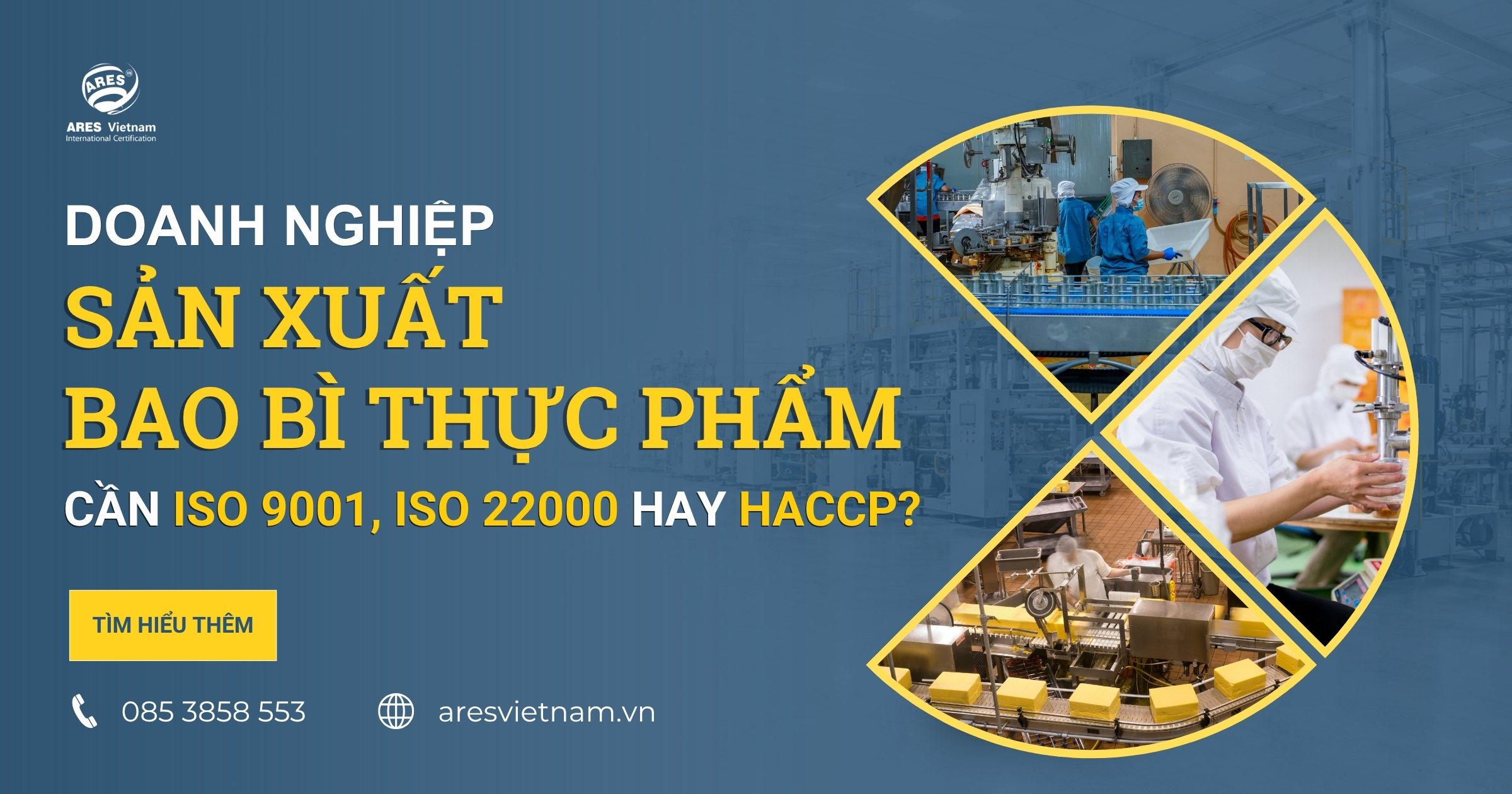
Manufacturers of bottles, jars, trays, plastic containers, PE/PP/PET films, laminated films, or metal packaging for the food industry need to control more than product specifications and finished-product quality. For packaging that comes into direct contact with food, the assessment should also cover materials, packaging structures, and intended conditions of use.
The appropriate approach varies among food packaging manufacturers. ISO 9001, ISO 22000, and HACCP address different scopes. Therefore, the most suitable option depends on customer requirements, packaging types, and the control objectives of each manufacturing facility.
This article explains the applicable requirements for food packaging, clarifies the scope of each system, and helps manufacturers identify their priorities before applying for certification.
When Should Food Packaging Manufacturers Prioritise ISO 9001, ISO 22000, or HACCP?
The selection process should begin with the issues that directly affect customer requirements. From there, food packaging manufacturers can choose a management system whose scope aligns with their operational needs.
1. When Packaging Quality and Technical Requirements Are the Main Priority
ISO 9001 should take priority when customers focus on approved samples, product specifications, technical parameters, batch-to-batch consistency, change control, defect rates, delivery performance, and complaint handling.
This management system is particularly suitable for manufacturers that need to demonstrate their ability to consistently meet agreed requirements. At the same time, technical documentation, applicable regulations, and required testing remain essential for demonstrating the suitability of packaging materials for food-contact applications.
2. When Food Safety Management Is the Main Priority in Manufacturing
ISO 22000 should be considered when customers require a food safety management system or when a manufacturer needs a structured approach to managing hazards that may affect the safety of packaging intended for food.
Depending on the packaging type and intended conditions of use, the scope may cover incoming materials, printing inks, adhesives, solvents, coatings, hygiene conditions, storage, traceability, and supplier activities.
3. When Hazard Control Based on HACCP Principles Is the Main Objective
HACCP can be considered when a manufacturer needs to focus on hazard analysis and control for a specific product group, production line, or process, particularly when a customer specifically requires a HACCP-based system.
For example, PET bottle blowing, plastic tray forming, film printing and lamination, and metal container production involve different materials, processes, and potential hazards. Therefore, each product or process should undergo an appropriate hazard analysis before the business determines Critical Control Points (CCPs), where applicable.
4. When a Manufacturing Facility Needs to Manage Both Quality and Food Safety
A facility producing printed laminated films for food applications may need to maintain thickness, print colour, adhesion, and batch-to-batch consistency. At the same time, it may need to control factors related to raw materials, printing inks, adhesives, solvents, hygiene, and storage.
In this case, the business may consider combining ISO 9001 and ISO 22000. The decision should reflect customer requirements and actual operational risks, with each certification serving a defined management purpose.
What Are the Differences Between ISO 9001, ISO 22000, and HACCP?
| Area | ISO 9001 | ISO 22000 | HACCP |
| Nature | Quality management system | Food safety management system | Hazard analysis and Critical Control Point system based on HACCP principles |
| Main focus | Maintaining consistent quality requirements, controlling changes, and driving continual improvement | Systematically managing food safety hazards within the defined scope | Identifying hazards, evaluating control measures, and determining CCPs where required |
| Application in a packaging facility | Specifications, defects, changes, complaints, traceability, and improvement | PRPs, raw materials, production conditions, hygiene, traceability, and operational controls | Hazards associated with products, production lines, processes, and corresponding control measures |
| Key consideration | Product conformity also relies on applicable food-contact requirements, technical documentation, and testing | Integrates prerequisite programmes and HACCP principles | Provides a focused hazard-control framework with a scope distinct from ISO 22000 |
In many cases, one or two of these frameworks can provide the level of control required by the business and its customers. ISO 22000 already incorporates prerequisite programmes and HACCP principles, allowing organisations to manage these elements within an integrated food safety management system.
However, when a customer specifically requires HACCP, the manufacturer should confirm the accepted certification format, required scope, and associated audit conditions before deciding on the appropriate route.
What Should a Manufacturer Determine Before Selecting a Certification?
After clarifying the scope of each system, a manufacturer should review three main areas: legal and technical requirements for the packaging, customer requirements, and the operational scope to be assessed. Together, these factors provide the basis for selecting a certification approach that matches actual manufacturing activities.
1. Legal and Technical Requirements for Food Packaging
For packaging that comes into direct contact with food, manufacturers should determine the applicable requirements relating to materials, packaging structures, and actual conditions of use.
Clauses 1 and 2 of Article 18 of the Law on Food Safety No. 55/2010/QH12 require utensils, packaging materials, and food containers to use safe raw materials, prevent the migration of harmful substances or unusual odours and flavours into food, and comply with the relevant technical regulations.
For certain groups of packaging and utensils intended for direct food contact, manufacturers may refer to the following technical regulations:
| Packaging or Utensil Group | Applicable Technical Regulation |
| Synthetic plastic materials within the applicable scope | QCVN 12-1:2011/BYT |
| Rubber materials within the applicable scope | QCVN 12-2:2011/BYT |
| Metal materials within the applicable scope | QCVN 12-3:2011/BYT |
| Glass, ceramic, porcelain, or enamelled materials within the applicable scope | QCVN 12-4:2015/BYT |
For laminated films or multilayer packaging, the assessment should focus on the actual structure of the packaging, the layer that directly contacts food, and the intended conditions of use. Relevant factors may include temperature, contact duration, freezing, heating, or sterilisation.
Compliance with applicable technical regulations demonstrates product conformity with the relevant technical requirements. Meanwhile, ISO 9001, ISO 22000, and HACCP address management and operational controls. Therefore, manufacturers should manage both product-specific compliance evidence and management-system requirements as complementary components.
2. Specific Customer Requirements
Customers may specifically require ISO 9001, ISO 22000, HACCP, or a proprietary assessment programme. In other cases, customers may ask the manufacturer to demonstrate effective quality or food safety controls through suitable evidence.
Therefore, manufacturers should review contracts, technical specifications, supplier manuals, requests for quotation, audit checklists, and relevant email correspondence. This review should clarify whether certification serves as a mandatory supplier requirement, a preferred criterion, or one component of the evidence used during supplier approval.
In addition, customers may require product testing, sample approval, technical documentation, factory audits, compliance deadlines, or certification by an accepted certification body. Manufacturers should review these conditions together with the certification requirement to gain a complete understanding of customer expectations.
3. Scope of Products, Production Lines, and Sites to Be Assessed
The certification scope should accurately reflect the organisation’s actual activities. Accordingly, manufacturers should clearly define the legal entity, site, product groups, production lines, and processes to be included in the assessment.
For outsourced activities such as printing, film lamination, subcontracted processing, or transportation, the organisation should define responsibilities and establish appropriate control methods within the management system.
Once the scope has been established, the business should review its existing processes, documented information, and available resources to support a more effective certification audit.
Has your company received a certification requirement or supplier audit checklist from a customer?
Contact ARES Vietnam to learn more about the scope, assessment process, and certification of ISO 9001, ISO 22000, or HACCP for food packaging manufacturing operations.
Frequently Asked Questions (FAQ)
The assessment should consider the role of the packaging, risks associated with the manufacturing process, and the customer’s specific requirements. These factors determine whether ISO 22000 provides an appropriate management framework.
| Question | Answer |
| Does Food Packaging with Indirect Food Contact Need ISO 22000? | |
| Can a Company Apply ISO 22000 When It Only Performs Printing, Film Lamination, or Forming Processes? | Maybe. Eligibility depends on the company’s position within the supply chain and its ability to control factors that may affect the safety of its output. A company can therefore apply ISO 22000 to a defined manufacturing scope that covers these activities. |
| Are ISO 9001 or ISO 22000 Sufficient to Demonstrate the Suitability of Recycled Materials for Food Packaging? | ISO 9001 and ISO 22000 provide evidence of management-system controls. Demonstrating the suitability of recycled materials for food-contact applications also requires information on material origin, intended conditions of use, applicable technical requirements, and appropriate conformity assessment evidence. |
Related news

Emissions Data & CBAM: 5 Practical Questions from Factory Operations
Read more


Greenhouse Gas Inventory Challenges: What Data Should Businesses Prepare?
Read more
ARES Vietnam Conducts ISO 45001:2018 Surveillance Audit at A&J (VIETNAM) CO., LTD.
Read more

Rice Export and Import Business Under Decree 365/2026/ND-CP: What Should Enterprises Control?
Read more
ARES Vietnam Verifies Greenhouse Gas Report under ISO 14064-1:2018 at GE LAN Vietnam
Read more