How Does ISO Help Upgrade Management In Vietnam’s Manufacturing Industry?
Many manufacturing enterprises in Vietnam still maintain strong technical capabilities and stable product output. However, when entering supplier evaluations conducted by major customers or international partners, many companies are screened out at an early stage.
The bottleneck often does not lie in the product itself, but in the ability to demonstrate how the product is created — including process consistency, traceability, and transparency throughout the entire operational flow.
This shift is reshaping how the market evaluates suppliers. In this context, ISO is no longer viewed as an additional certificate. Instead, it has become a foundation that helps enterprises structure their management systems in a way that can be verified, measured, and assessed.
The Current State Of Management In Vietnamese Manufacturing Enterprises
In many manufacturing companies, management systems are not designed systematically from the beginning. Instead, they gradually develop alongside business growth. As a result, processes often become fragmented, loosely connected, and difficult to implement consistently.
Common issues include:
- Different departments applying processes in different ways, depending on individual experience
- Existing procedures lacking sufficient detail for stable execution
- Product quality varying between production batches
- Data being recorded in scattered formats, making consolidation and analysis difficult
- Problem handling focusing mainly on reaction rather than prevention
These limitations do not exist only at individual stages. Over time, they accumulate into system-level risks — where product quality becomes difficult to maintain consistently, defect-related costs increase, and customer requirements become harder to meet predictably.
Market Pressure Is Making ISO A Required Standard
As environmental standards, transparency requirements, and ESG expectations continue to tighten, the way the market evaluates manufacturing capability has changed significantly. Capability is no longer judged only by finished products, but by the entire operational system behind them.
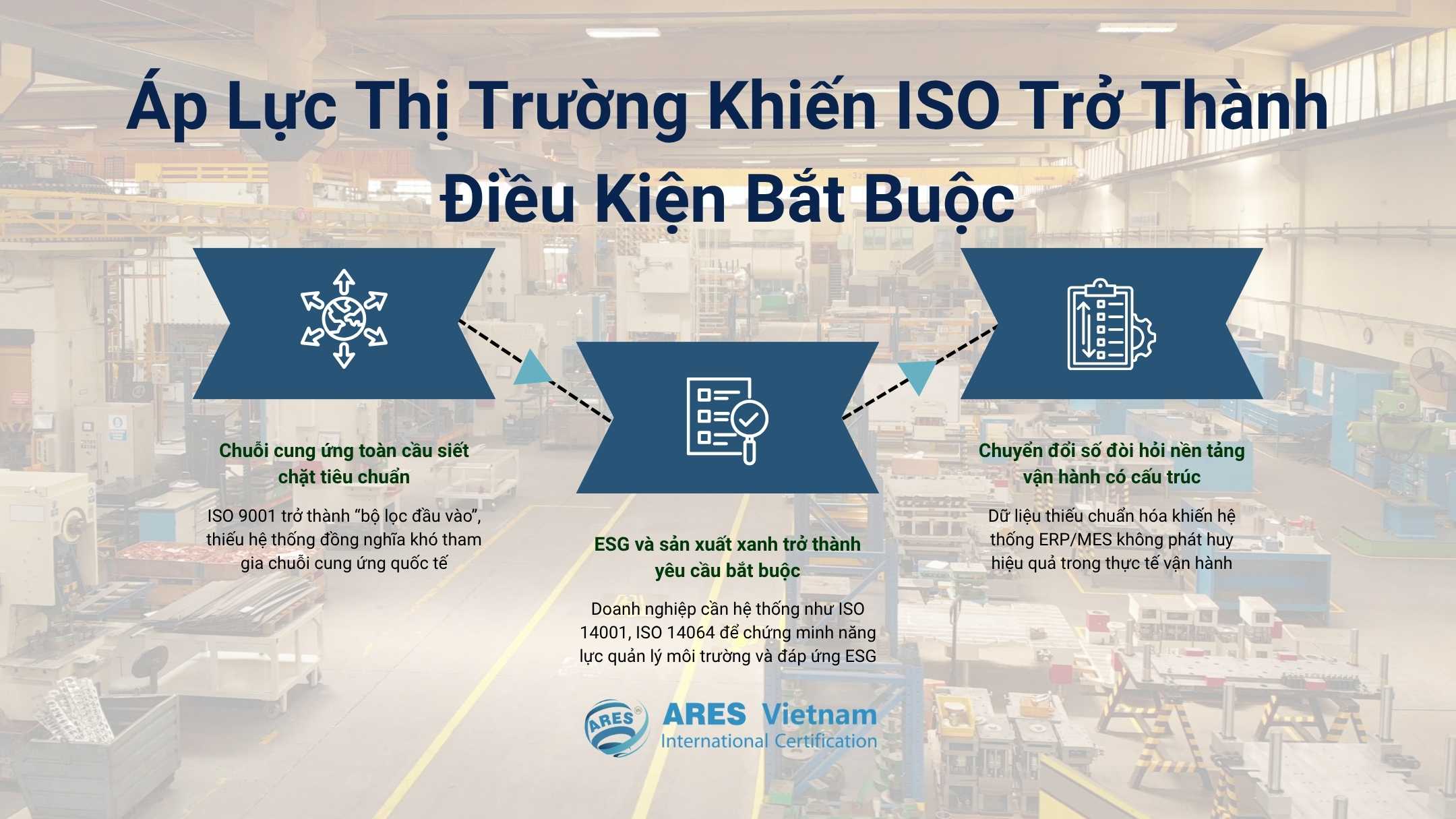
1. Global supply chains are tightening supplier standards
International corporations no longer focus only on final product quality. Instead, they place greater emphasis on process capability and operational consistency. Standards such as ISO 9001 are commonly used as initial screening criteria when selecting suppliers.
In many export and OEM industries, the absence of an ISO system often means the enterprise cannot pass the first evaluation stage.
2. ESG and green manufacturing are becoming essential requirements
Factors such as emissions, resource consumption, and environmental compliance now require clear system-based evidence rather than internal reporting alone.
Standards such as ISO 14001 and ISO 14064 help enterprises establish structured environmental governance frameworks, thereby creating a foundation for meeting ESG expectations within global supply chains.
3. Digital transformation requires a structured operational foundation
In practice, many digital transformation projects fail because operational processes lack standardization rather than because of technology limitations.
When data is recorded in inconsistent ways, information becomes fragmented and unreliable for analysis. Consequently, systems such as ERP or MES cannot deliver the expected effectiveness.
Only when processes are standardized and data is organized within a unified structure can enterprises fully realize the value of digital transformation.
From a market perspective, ISO is gradually becoming a default requirement in supplier evaluations. Without ISO, enterprises face reduced competitiveness and greater barriers when accessing business opportunities.
Market pressure is making ISO a required standard
What Is ISO in Manufacturing? (From a Management Perspective)
From a management perspective, ISO is not simply a collection of documents or isolated regulations. Instead, it is a method for organizing the entire production system within a clear and consistent operational structure.
ISO helps enterprises:
- Define how each process is performed and connected
- Reduce dependence on individual experience during operations
- Record data according to a unified structure for traceability and comparison
- Build a foundation for improvement based on actual data
The core value of ISO does not lie in creating immediate changes to products. Rather, it lies in reshaping how products are created — through methods that can be monitored, measured, and maintained consistently over time.
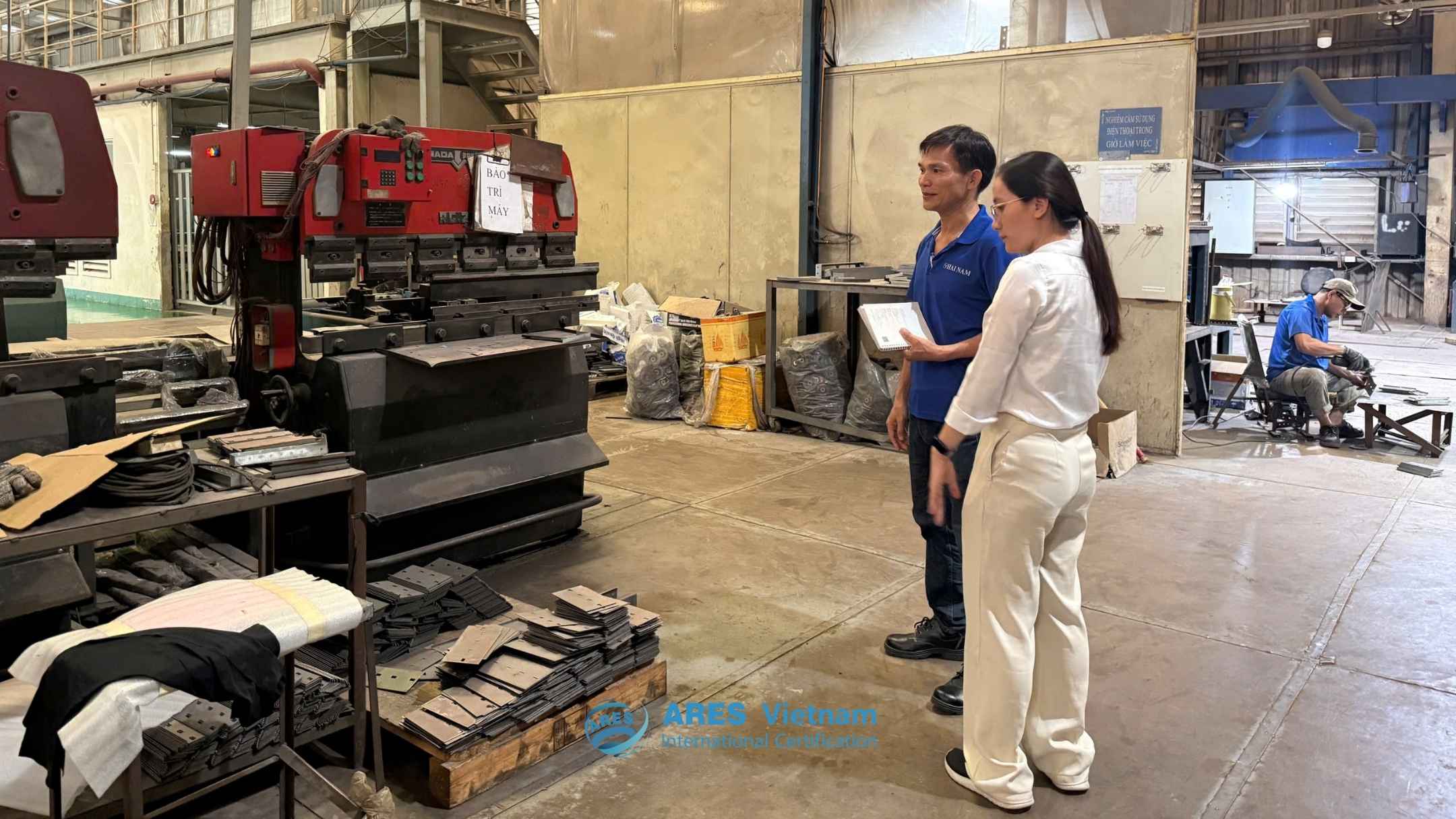
ISO Standards in manufacturing
How Does ISO Improve Manufacturing Management?
1. Standardizing processes and reducing dependence on individuals
ISO establishes clear procedures and work instructions (SOPs) for each stage, ensuring that operations are carried out consistently regardless of who performs them.
2. Strengthening quality assurance throughout the process
Quality is no longer checked only at the final stage. Instead, it is addressed throughout each production step. Deviations are identified at the point of occurrence, which helps reduce correction costs and minimize accumulated risks.
3. Establishing structured data and measurement systems
Data is recorded using a unified structure, enabling enterprises to build practical monitoring indicators such as KPIs and QC metrics. As a result, management decisions are based on data rather than intuition.
4. Applying a proactive approach to risk handling
ISO integrates preventive thinking directly into process design. Risks are identified early and addressed before they develop into operational issues.
5. Expanding opportunities within supply chains
ISO helps enterprises align with market evaluation methods, thereby increasing opportunities to participate in purchasing systems with high requirements such as FDI supply chains, retail networks, and export markets.
Differences Before and After ISO Implementation
| Before ISO Implementation | After ISO Implementation |
| Experience-based operations | Process-based operations |
| Reactive problem handling | Preventive risk approach |
| Fragmented data | Structured data |
| Difficult to monitor | Clear measurement systems |
| Dependence on individuals | Coordinated operations |
Common ISO Standards In Manufacturing
Each ISO standard is designed to address a specific group of management challenges. Therefore, selection should be based on industry characteristics and target market requirements rather than trends alone.
1. ISO 9001 – Quality Management System
Suitable for most manufacturing industries, including mechanical engineering, electronics, plastics, packaging, components, furniture, and consumer goods.
▶️ A fundamental requirement for enterprises aiming to participate in OEM production, cooperate with FDI companies, or expand operations.
2. ISO 14001 – Environmental Management System
Widely applied in industries with significant environmental impact, such as textiles, footwear, chemicals, construction materials, and metal processing.
▶️ Frequently required within export supply chains, especially in EU and US markets.
3. ISO 14064 – Greenhouse Gas Quantification and Management
Suitable for industries with high emissions, including energy, steel, cement, heavy manufacturing, and export-oriented businesses facing carbon footprint requirements.
▶️ Becoming a major advantage in markets with increasingly strict emission standards.
4. ISO 45001 – Occupational Health and Safety Management System
Applicable to workplaces with high labor risks, such as construction, mechanical manufacturing, heavy industry, logistics, and factories with complex production lines.
▶️ Helps reduce workplace accidents and meet legal requirements.
5. ISO 22000 – Food Safety Management System
Designed for businesses within the food supply chain, including agricultural processing, seafood, packaged food, and beverage production.
▶️ Almost essential for enterprises aiming to enter supermarkets or export markets.
Enterprises do not need to implement every ISO standard. However, selecting the right standard based on industry characteristics and development direction is essential for avoiding unnecessary resource allocation.
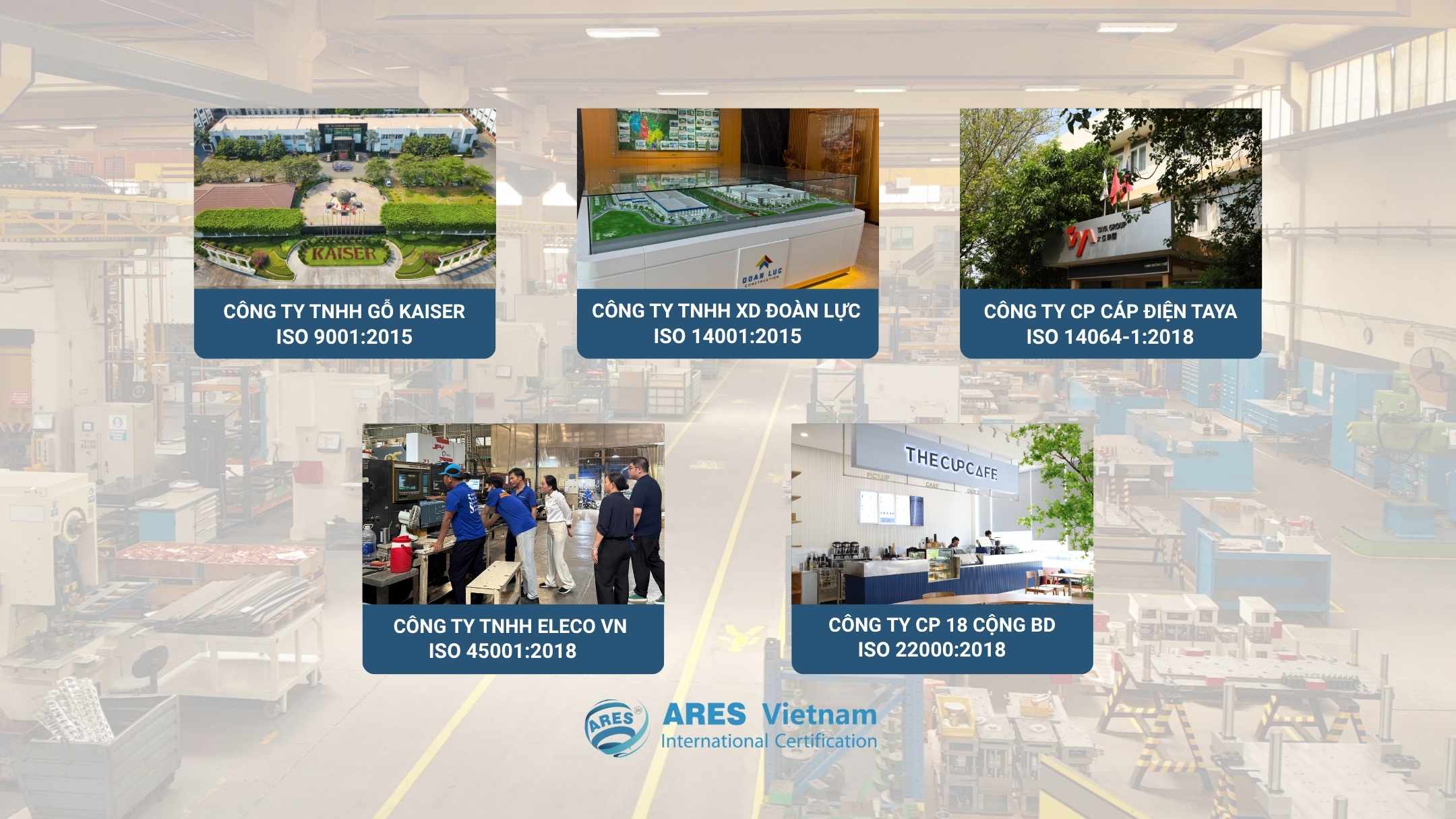
Outstanding enterprises certified to ISO standards
When Should Manufacturing Enterprises Implement ISO?
ISO may not be necessary at every stage of business development. However, it becomes essential when enterprises reach the following points:
- When expanding production scale
- When working with major customers or FDI companies
- When operational systems begin to lose consistency
- When recurring issues become difficult to trace
- When standardization is needed to support digital transformation
ISO may not be a priority during the early stage of development. However, it becomes a fundamental foundation once enterprises enter a growth phase.
Is ISO Implementation Expensive?
ISO implementation costs are visible and can be planned and controlled from the beginning. These costs typically include consulting, training, documentation development, and certification assessment. However, the costs caused by inefficient operations are often hidden and rarely measured comprehensively.
In practice, enterprises always operate with two parallel groups of costs:
- Costs for establishing and maintaining the system
- Costs caused by operational errors, including defective products, returned goods, production interruptions, incident handling, and lost business opportunities
The second group of costs is often significantly higher. However, because these costs are dispersed throughout daily operations, they are more difficult to identify and address.
ISO is not simply an expense for obtaining certification. Instead, it is an investment aimed at reducing operational losses, standardizing processes, and improving overall efficiency. When the system is implemented properly, enterprises strengthen operational oversight while significantly reducing unnecessary losses over time.
ISO Implementation Roadmap For Manufacturing Enterprises
Effective ISO implementation does not begin with selecting a standard. Instead, it starts with reviewing how the enterprise currently operates.
A suitable implementation roadmap typically includes:
- Conducting a comprehensive assessment of the existing management system and operational processes
- Identifying areas lacking consistency or difficult to monitor
- Selecting ISO standards that align with the industry and development objectives
- Developing a phased implementation plan, prioritizing critical operational areas
A roadmap-based approach helps enterprises minimize operational disruption while ensuring the system is built for practical application rather than certification purposes alone.
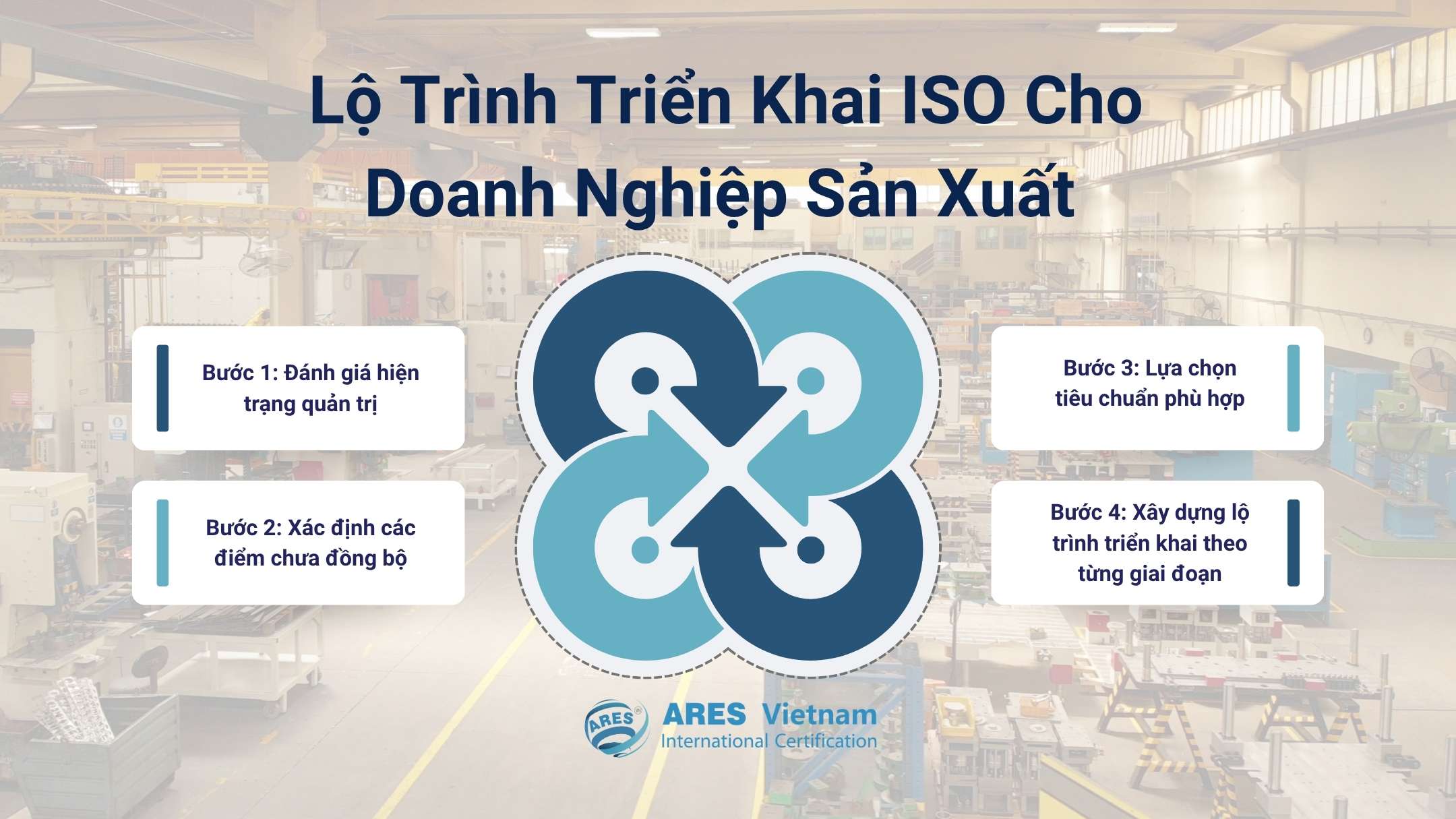
ISO implementation roadmap for manufacturing enterprises
ISO Is An Essential Management Foundation
ISO is not a standalone improvement tool. Instead, it is a foundation that helps enterprises restructure the entire way production activities are organized and supervised.
This transition becomes necessary when enterprises:
- Expand operations and need to maintain stability
- Participate more deeply in supply chains with higher requirements
- Strengthen management capability based on data rather than experience
As market standards become increasingly clear and demanding, ISO is no longer an additional advantage. Instead, it has become a necessary condition for maintaining long-term competitiveness.
For enterprises entering a growth stage or seeking to standardize operational systems, implementing ISO properly can significantly shorten the time required to adapt to market requirements.
ARES Vietnam supports enterprises in assessing current conditions, selecting suitable standards, and developing implementation roadmaps aligned with actual operational practices — rather than applying a single model to every business.
Related news

Circular 49/2026/TT-BCT Takes Effect Soon: Which Environmental Records Should Factories Review?
Read more

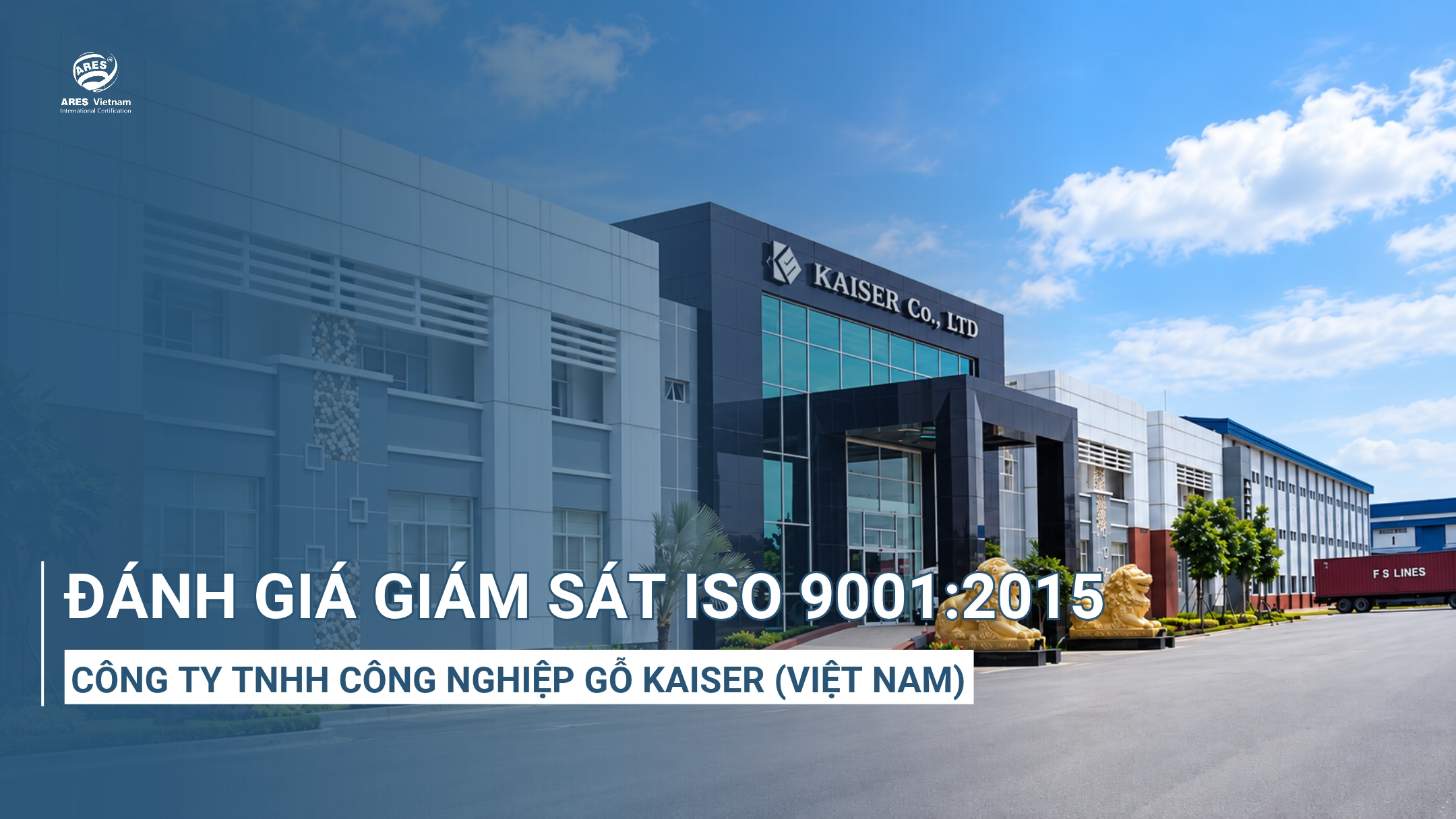
ARES Vietnam Conducts the Second ISO 9001:2015 Surveillance Audit at KAISER 1 & KAISER 2 (Vietnam)
Read more

National Single Window and ASEAN Single Window: What Documents Should Import–Export Businesses Prepare?
Read more
ARES Vietnam Awards ISO 9001:2015 Certification to Simona Leather Company Limited
Read more
ARES Vietnam Conducts ISO 9001:2015 Surveillance Audit at Simona Leather Company Limited
Read more