Greenhouse Gas Inventory 2026: Industries Required To Implement In Vietnam
Under Vietnam’s national emission reduction roadmap, greenhouse gas (GHG) inventory has officially become a mandatory obligation for facilities with significant emission levels. In practice, however, many enterprises remain at the stage of “being aware of the requirement,” while they have yet to clearly identify whether they fall under mandatory categories, define the appropriate inventory boundaries, or recognize potential data and compliance risks.
This gap in identification often results in inventory reports that lack focus and require multiple revisions. Consequently, additional costs arise, and compliance risks increase. For this reason, accurately identifying emission sectors and inventory pathways from the outset is a critical condition for enterprises to implement GHG inventories correctly, comprehensively, and effectively.
What Is A Greenhouse Gas Inventory? Understanding It Clearly To Implement It Properly
A greenhouse gas inventory is a systematic process of measuring, quantifying, and consolidating GHG emissions generated from the activities of a facility or organization within a defined period. This process is conducted in accordance with international standards such as ISO 14064-1 or the GHG Protocol, ensuring transparency and comparability of results.
Under international practice, emissions are classified into three scopes:
• Scope 1 – Direct emissions: Emissions arising from sources under the facility’s control, including boilers, fuel combustion equipment, internal vehicles, and refrigerant leakage.
• Scope 2 – Energy indirect emissions: Emissions primarily associated with purchased electricity, steam, or heat used for production and operations.
• Scope 3 – Value chain emissions: Emissions related to upstream and downstream activities, including raw materials, transportation, packaging, end-of-life treatment of products, and other supply chain activities.
The core of a GHG inventory lies not in estimation, but in the use of actual operational data converted into CO₂e. This approach establishes a reliable data foundation for internal management and statutory reporting obligations.

A clear understanding of greenhouse gas inventory
Legal Basis And Entities Subject To Mandatory Greenhouse Gas Inventory
According to current regulations, facilities with significant emission levels are subject to mandatory GHG inventory requirements, based on the following legal instruments:
- Decision No. 13/2024/QĐ-TTg on the list of facilities required to conduct greenhouse gas inventories;
- Decree No. 06/2022/NĐ-CP on greenhouse gas emission mitigation;
- Decree No. 119/2025/NĐ-CP and subsequent updated guiding documents;
- Sector-specific technical guidelines issued by relevant line ministries.
A consistent principle across these regulations is that inventory obligations are determined by actual emissions at each facility, rather than registered business sectors or capital size. Evaluation criteria focus on energy consumption levels, process characteristics, and emission sources, thereby ensuring accurate identification and avoiding a formalistic approach.
Emission Sectors Required To Conduct Greenhouse Gas Inventories
Greenhouse gas emissions do not originate from a single activity, but rather from various production and business operations. Therefore, emission sectors are categorized based on dominant sources, enabling enterprises to accurately assess their actual operating conditions.
1. Energy Sector
This is the largest and most common emission group, directly associated with fuel combustion and energy consumption. Typical entities include:
• Electricity and heat generation facilities;
• Industrial, commercial, and service facilities with high energy consumption;
• Coal, oil, and gas extraction and processing operations.
Important note: Inventory obligations apply not only to power plants, but also to any entity with high energy intensity, even when energy is not the primary output.
2. Transportation Sector
Emissions mainly result from fuel consumption during transportation activities. Commonly reviewed entities include:
• Transportation and logistics companies;
• Ports and logistics hubs with high vehicle frequency;
• Internal fleets supporting production and distribution, which are often overlooked at the initial identification stage.
Applicability is determined by fleet size and utilization intensity, regardless of whether transportation is a core or supporting business activity.
3. Construction Sector
Emission sources in construction include:
• Energy consumption during construction activities;
• Production of construction materials such as cement, steel, and finishing materials.
In practice, the majority of emissions are concentrated at material manufacturing facilities rather than individual construction sites. This is a key consideration when defining inventory boundaries.
4. Industrial Processes Sector
Unlike the sectors above, emissions here arise directly from chemical reactions within production processes, not solely from energy use. Representative industries include:
• Chemicals;
• Metallurgy;
• Electronics;
• Activities involving substitutes for ozone-depleting substances.
A common issue is focusing only on energy consumption while overlooking direct process-related emissions, which leads to incomplete inventory results.
5. Agriculture, Forestry And Land Use Sector
Emissions are closely linked to biological processes and land resource management, including:
• Livestock, crop production, and aquaculture;
• Forest management and land-use change.
This sector is characterized by dispersed and non-uniform data, requiring data collection that closely reflects site-specific conditions.
6. Waste Sector
Emissions from waste treatment are continuous and cumulative over time, primarily arising from:
• Landfills;
• Solid waste;
• Wastewater treatment systems.
In this sector, GHG emissions occur throughout the treatment lifecycle rather than at the point of waste generation. As a result, emissions may be underestimated if they are not assessed as an independent source.
How Can Enterprises Identify Their Applicable Emission Sectors?
During the initial review stage, instead of mechanically matching industry classifications, enterprises should examine the actual flows of energy, materials, and biological processes within their operations. Key guiding questions include:
• Is fuel combustion involved in operations (boilers, generators, internal vehicles, heating equipment)?
• Are there chemical processes or material transformations that alter the nature of inputs?
• Are waste generated, stored, or treated internally?
• Are biological factors involved, such as organic decomposition, agricultural by-products, or domestic wastewater?
The objective of this step is not to draw premature conclusions, but to accurately identify the emission structure, which forms the basis for subsequent inventory and reporting activities.
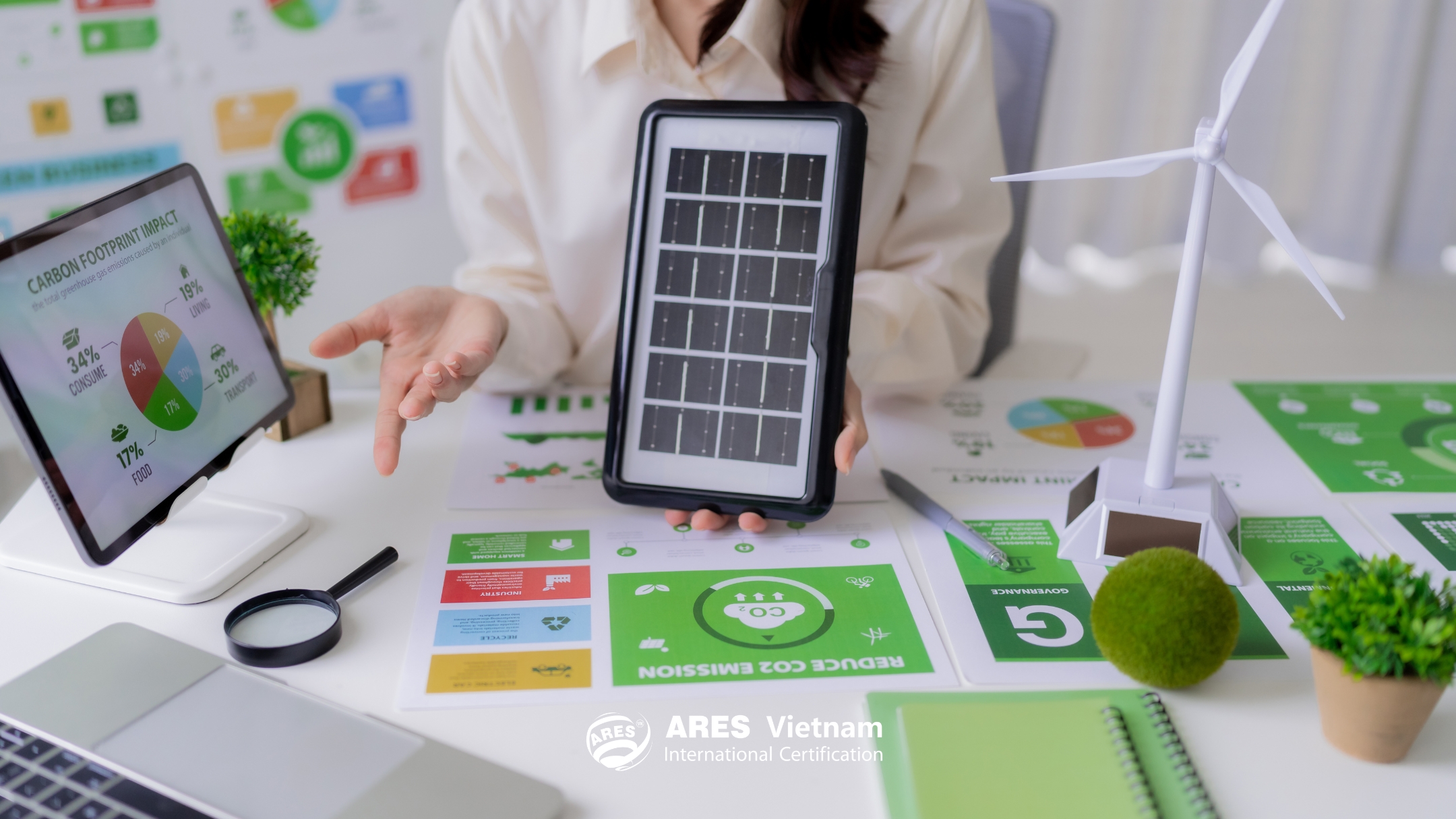
Identifying the greenhouse gas inventory sector applicable to an enterprise
Greenhouse Gas Inventory And Reporting Roadmap In Vietnam
According to current regulations, the inventory and reporting roadmap is implemented in two main phases:
2023–2025 Phase
• 2023: Data collection and development of the inventory plan;
• 2024: Facility-level inventory implementation and biennial reporting;
• 2025: Completion of inventory reports by 31 March 2025, and completion of facility-level emission mitigation plans by 31 December 2025.
2026–2030 Phase
• Biennial inventory implementation starting from 2026;
• Annual emission mitigation declarations from 2027;
• Gradual participation in the carbon market and emission trading mechanisms.
Greenhouse Gas Inventory: From Compliance Obligation To Strategic Management Tool
When positioned appropriately, a greenhouse gas inventory becomes more than a regulatory requirement. It provides a comprehensive view of an enterprise’s emission structure. By clearly quantifying emissions across energy use, processes, materials, and waste, management can accurately identify key drivers of cost and operational efficiency.
Building on this data foundation, emission reduction pathways can be integrated into investment planning, technology optimization, and market orientation. As a result, enterprises are better prepared to engage with frameworks such as ESG, CBAM, and carbon markets in a proactive manner.
With extensive experience supporting enterprises in greenhouse gas inventory and reporting activities, ARES Vietnam provides end-to-end assistance, from accurate identification of emission sources and data system development to compliant report implementation. This foundation enables enterprises not only to meet regulatory requirements, but also to transform greenhouse gas inventories into strategic management tools for sustainable growth.
REFERENCES
Related news

Circular 49/2026/TT-BCT Takes Effect Soon: Which Environmental Records Should Factories Review?
Read more


ARES Vietnam Conducts the Second ISO 9001:2015 Surveillance Audit at KAISER 1 & KAISER 2 (Vietnam)
Read more

National Single Window and ASEAN Single Window: What Documents Should Import–Export Businesses Prepare?
Read more

ARES Vietnam Awards ISO 9001:2015 Certification to Simona Leather Company Limited
Read more

ARES Vietnam Conducts ISO 9001:2015 Surveillance Audit at Simona Leather Company Limited
Read more