ISO And ESG In 2026: Why Businesses Cannot Stay Outside The Trend
The world is rapidly moving toward sustainable development, where ESG (Environmental – Social – Governance) and ISO standards have become key criteria in corporate governance.
From 2026, as numerous international sustainability reporting regulations come into effect, standardizing management systems according to ISO will be essential for meeting ESG requirements comprehensively and effectively.
ESG – From Voluntary Initiative To Global Mandatory Requirement
Previously, ESG was often viewed as a voluntary commitment. owever, in recent years, ESG has been integrated into the legal frameworks and assessment processes of many international organizations. Notable examples include:
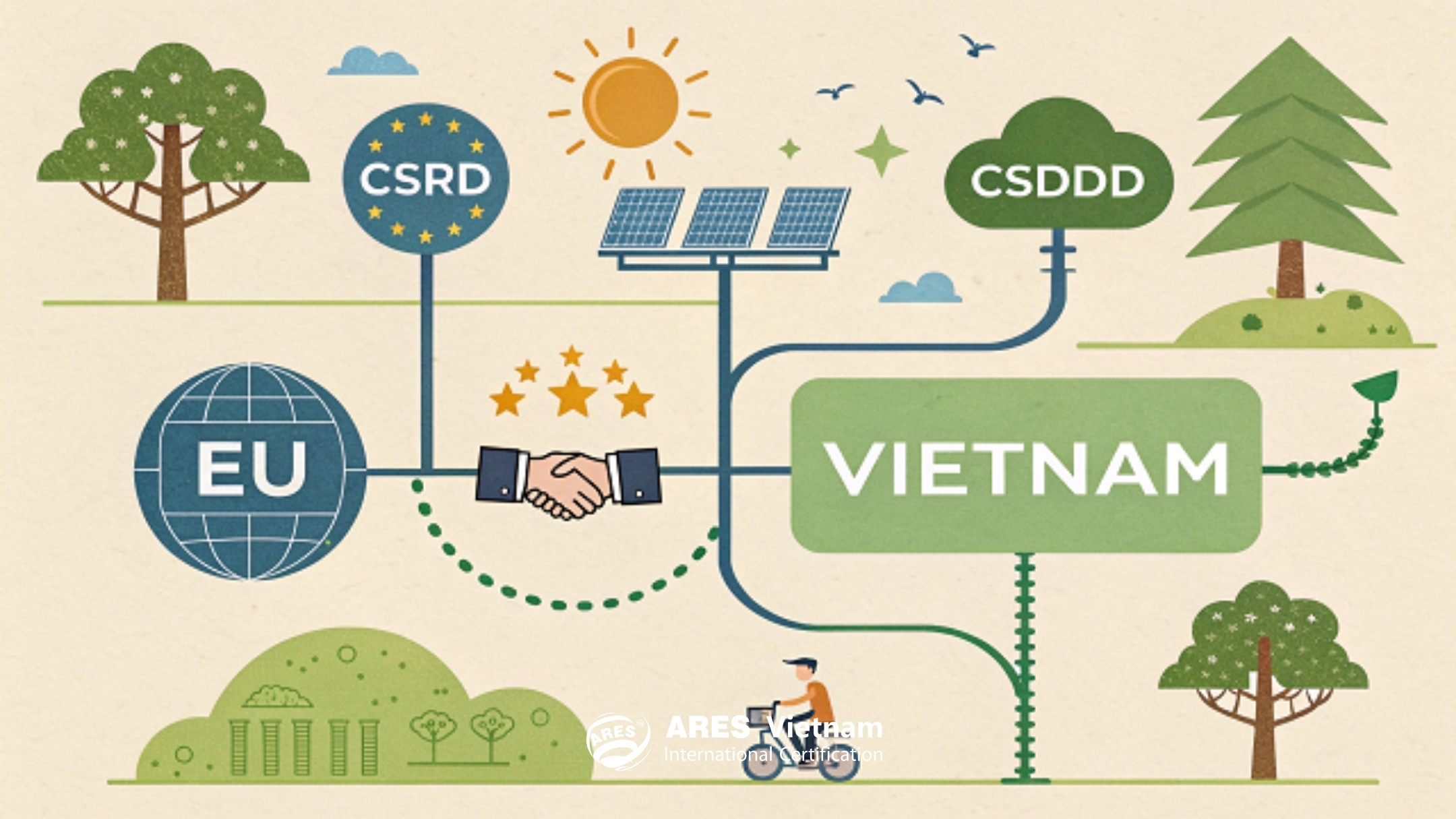
◾The European Union issued the Corporate Sustainability Reporting Directive (CSRD), requiring over 50,000 companies, including non-EU suppliers, to disclose ESG data from 2026 onward.
◾The International Financial Reporting Standards (IFRS) introduced IFRS S1 and S2 for climate risk and sustainability reporting.
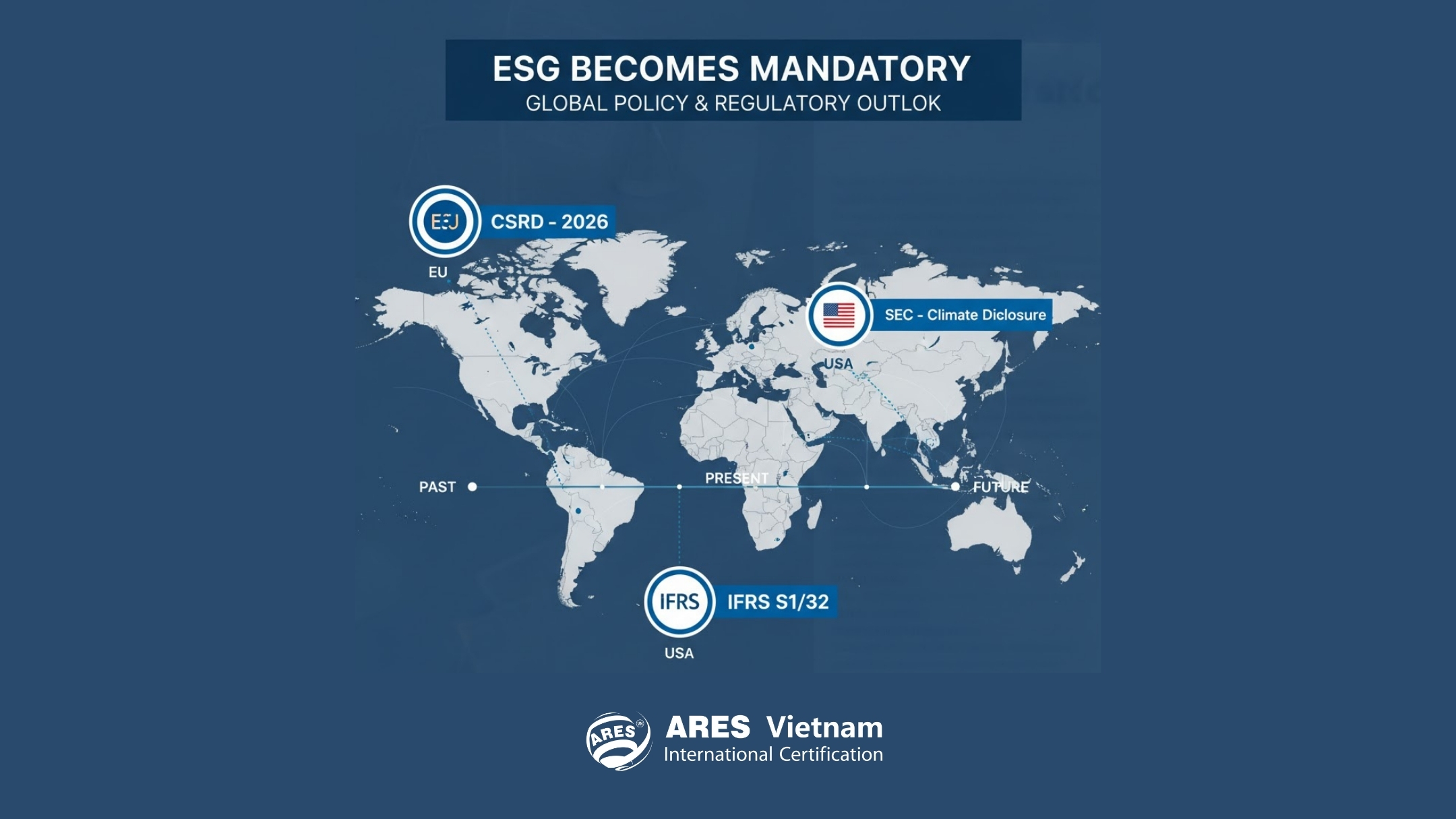
ESG criteria are gradually evolving from a trend into mandatory requirements worldwide
◾The U.S. Securities and Exchange Commission (SEC) has advanced climate-related disclosure requirements for listed companies.
◾Major multinationals (e.g., Apple, Nike, Toyota) have incorporated ESG criteria into requirements for suppliers in Vietnam.
ESG criteria are gradually evolving from a trend into mandatory requirements worldwide
As a result, ESG is no longer a formality; it has become a mandatory screening criterion across global value chains. Non-compliant companies risk exclusion from supply chains, limited access to capital, and reputational decline.
ISO – The Technical Foundation For Implementing ESG
Effective ESG implementation requires more than commitments or policies; companies need a clear system for data management, operational processes, and controls.
This is the foundation ISO standards have established and refined over more than half a century — enabling internal control, impact measurement, and transparent demonstration of governance capabilities.
In practice, ESG pillars (Environmental, Social, Governance) are closely linked to ISO standards. Each pillar has corresponding ISO standards that support companies in controlling risks and improving performance.
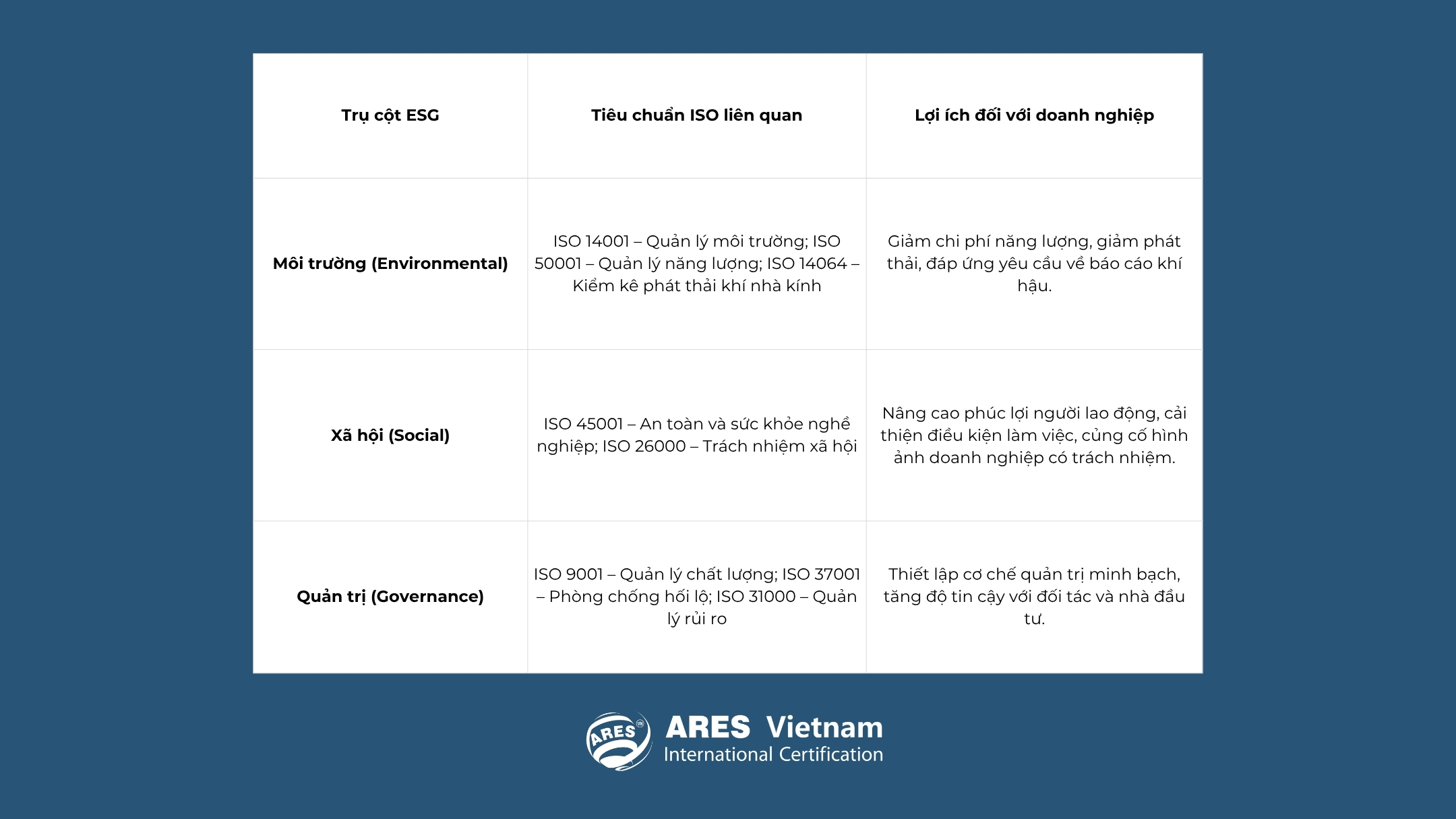
The relationship between ISO standards and the ESG pillars
Recognizing these links allows companies to extend existing ISO frameworks instead of building ESG from scratch. Companies with well-implemented ISO systems have already completed most foundational work.
The next step is to standardize data, supplement reports, and integrate indicators into a comprehensive ESG framework.
2026 – A Milestone For Corporate Action
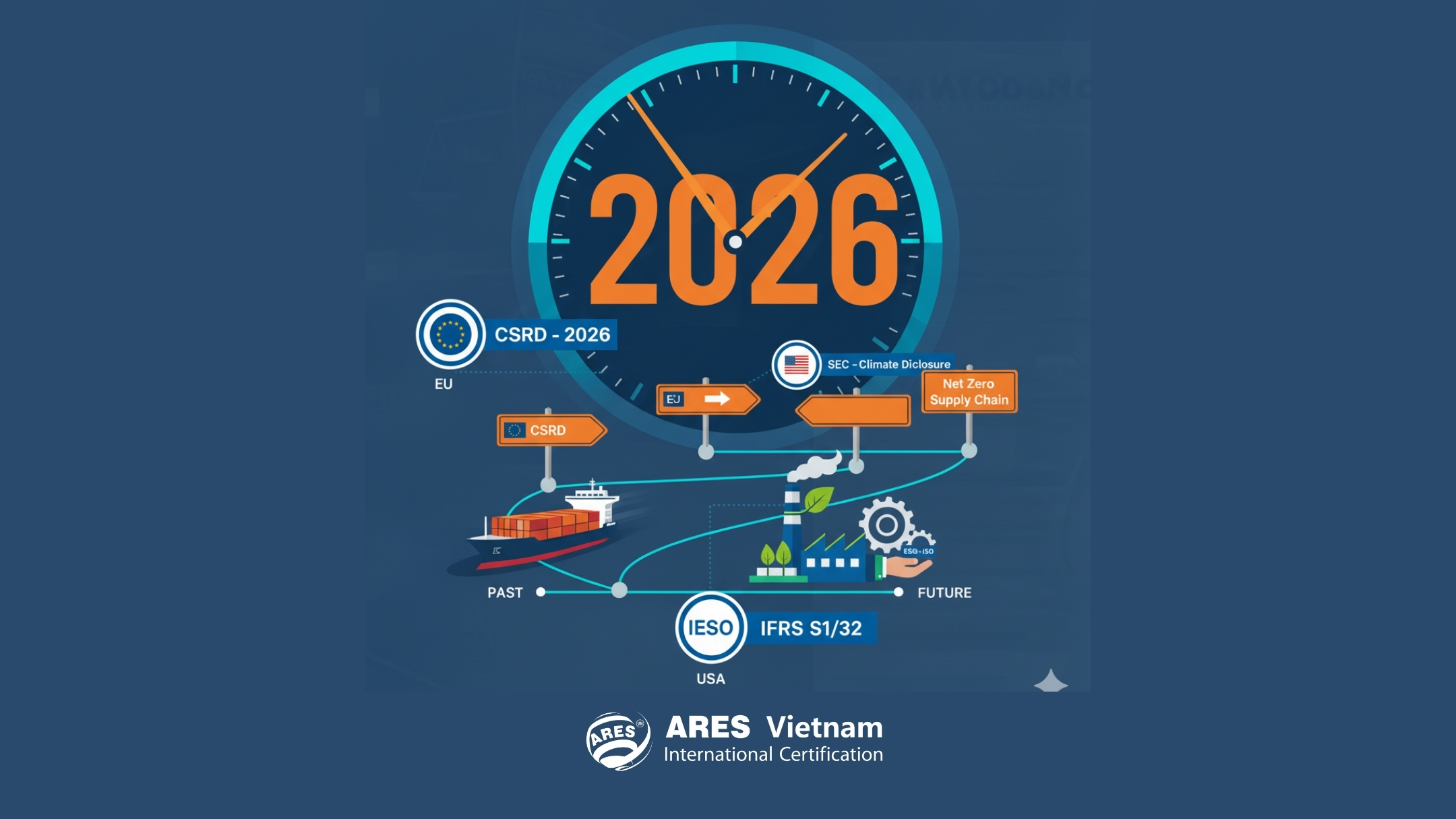
The year 2026 marks the official enforcement of global ESG regulations: the EU CSRD extends sustainability reporting to entire supply chains; the U.S. SEC Climate Disclosure requires companies to report climate risks; and many foreign-invested enterprises are implementing Net Zero Supply Chains in Vietnam.
2026 – The milestone for businesses to take action
These changes will directly affect Vietnamese companies, particularly manufacturers, exporters, and suppliers to multinational corporations.
Operational Insights:
◾Companies with ISO often possess established management frameworks, data, and monitoring systems, reducing the time and cost to transition to ESG reporting.
◾Companies without ISO must build management foundations from scratch, face data challenges, and carry higher compliance risks.
Actions Vietnamese Companies Should Take Today
To avoid being unprepared for mandatory ESG standards, companies should act immediately on four key priorities:
1. Assess current status
Review existing ISO certifications, evaluate social responsibility activities, and identify gaps against international ESG requirements.
2. Develop an integrated roadmap
Link ISO indicators with ESG objectives, implement emission and energy measurement tools, and establish monitoring and reporting mechanisms.
3. Enhance governance capacity and culture
Train management and operational teams, integrate ESG criteria into decision-making, supplier evaluation, and internal communication.
4. Engage professional expertise
Collaborate with professional consultants to design an appropriate roadmap, integrate ESG into existing ISO systems, and standardize reporting to meet international standards.
ARES Vietnam accompanies businesses on the journey toward sustainable standardization
ISO As The Foundation, ESG As The Vision
ISO provides the foundation; ESG represents the sustainable development vision. When standards become operational tools and reporting reflects actual capabilities, Vietnamese companies can strengthen their global market position. Early, methodical action with professional support will determine adaptability before 2026.
ARES Vietnam accompanies companies in integrating ISO and ESG, optimizing resources, and enhancing international competitiveness.
Related news

Circular 49/2026/TT-BCT Takes Effect Soon: Which Environmental Records Should Factories Review?
Read more

ARES Vietnam Conducts the Second ISO 9001:2015 Surveillance Audit at KAISER 1 & KAISER 2 (Vietnam)
Read more

National Single Window and ASEAN Single Window: What Documents Should Import–Export Businesses Prepare?
Read more

ARES Vietnam Awards ISO 9001:2015 Certification to Simona Leather Company Limited
Read more
ARES Vietnam Conducts ISO 9001:2015 Surveillance Audit at Simona Leather Company Limited
Read more