Which Businesses Need ISO 13485 Certification?
In the medical device industry, ISO 13485 is an important standard that helps organizations control quality, ensure traceability, and meet requirements related to product safety. However, not every company clearly understands whether it belongs to the group that should obtain this certification.
In practice, ISO 13485 is not only applicable to medical device manufacturers. It also relates to organizations involved in subcontracting, importing, distribution, packaging, sterilization, maintenance, and component supply within the medical device supply chain.
So, which organizations need ISO 13485 certification, and when should they implement it? The article below provides a clearer understanding.
What Is ISO 13485?
ISO 13485 is an international quality management system standard published by the International Organization for Standardization (ISO). It applies to organizations participating in the medical device supply chain.
ISO 13485 shares many quality management principles with ISO 9001. However, it is specifically developed for the medical device sector. Therefore, the standard establishes stricter requirements regarding risk management, product safety, traceability, document control, and compliance with relevant regulatory requirements.
Which Businesses Need ISO 13485 Certification?
ISO 13485 applies to organizations that are directly or indirectly involved in the medical device supply chain. Depending on their role within the process, the following groups are among those that should consider ISO 13485 certification.
1. Companies Designing and Manufacturing Complete Medical Devices
This group includes organizations involved in research, design, manufacturing, and final assembly before products are placed on the market.
Examples include manufacturers of diagnostic equipment, dental devices, rehabilitation equipment, health monitoring devices, medical instruments, medical machinery, and healthcare support devices.
2. Manufacturers of Medical Consumables
This category covers companies producing products that are frequently used in hospitals, clinics, laboratories, and healthcare facilities.
Typical examples include medical masks, medical gloves, syringes, infusion sets, cotton products, medical gauze, test tubes, laboratory consumables, and other single-use medical products.
3. OEM/ODM and Contract Manufacturing Companies
These organizations manufacture products according to the requirements of other brands or business partners. They may also perform specific stages within the medical device production process.
This group commonly includes OEM/ODM companies, contract manufacturing facilities, semi-finished product manufacturers, and organizations producing products based on customer drawings, technical specifications, and customized requirements.
4. Manufacturers of Medical Device Components and Accessories
A complete medical device is often made up of numerous components and accessories. Therefore, manufacturers supplying these parts should also consider ISO 13485 certification.
This group may include manufacturers of plastic components, metal parts, electronic components, sensors, tubing, assembly accessories, and specialized parts used in medical devices.
5. Companies Providing Packaging, Sterilization, and Storage Services
These organizations participate in post-production activities before products are delivered to the market or end users.
Examples include sterile packaging companies, sterilization service providers, warehousing operators, storage facilities, and organizations handling medical products under specialized conditions.
6. Medical Device Importers and Distributors
This group includes companies responsible for bringing medical devices and related products to the market. They distribute products to hospitals, clinics, dealers, pharmacies, and healthcare systems.
Medical device importers, distributors, and warehouse operators are also included in this category. Their activities may involve wholesale distribution or supplying end users. Whether ISO 13485 should be implemented depends on market requirements and partner expectations in each specific situation.
7. Installation, Maintenance, and Repair Service Providers
Certain medical devices require installation, calibration, maintenance, or repair during their lifecycle. Therefore, organizations providing related technical services should also consider ISO 13485.
Nhóm này bao gồm doanh nghiệp lắp đặt thiết bị, đơn vị bảo trì và sửa chữa máy móc y tế, hoạt động hiệu chuẩn thiết bị, cũng như các đơn vị cung cấp dịch vụ kỹ thuật sau bán hàng.
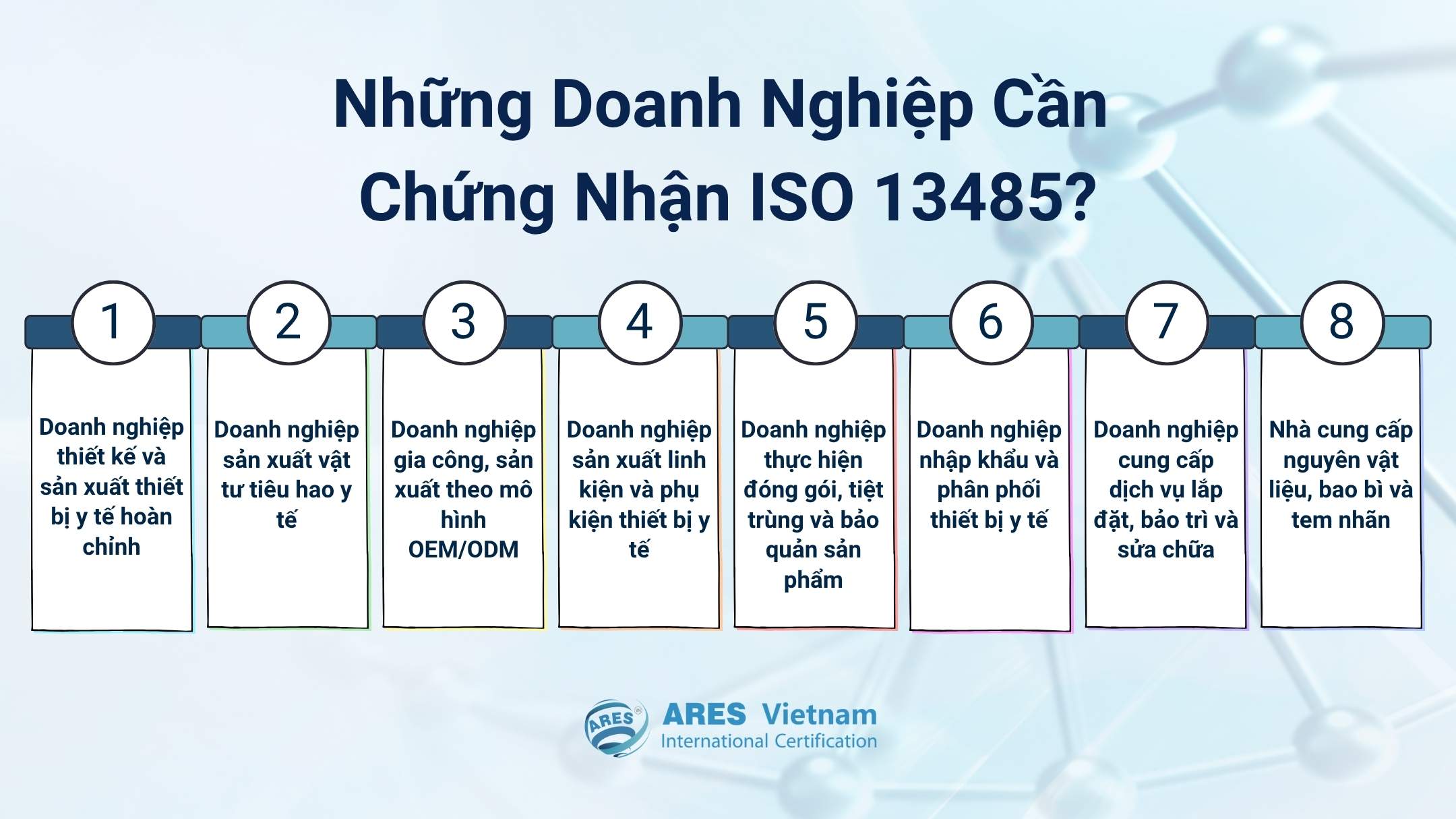
Businesses that need ISO 13485 certification
Is ISO 13485 Mandatory?
ISO 13485 is not mandatory for every organization operating in the medical device industry. In principle, implementation and certification are voluntary.
However, specific requirements depend on the target market, product characteristics, and stakeholder expectations. Therefore, companies should establish a quality management system that aligns with their actual operations.
In practice, ISO 13485 often becomes an important requirement when organizations register products, participate in tenders, supply hospitals, operate under OEM/ODM models, or expand into international markets.
As a result, many organizations proactively implement ISO 13485 to strengthen management capabilities, enhance credibility, and improve competitiveness within the medical device industry.
Benefits Of ISO 13485 Certification for Businesses
ISO 13485 certification not only helps businesses establish a quality management system but also delivers practical value throughout the manufacturing, supply, and management of medical devices.
Some key benefits include:
- Enhancing credibility and trust with customers, partners, and stakeholders.
- Reducing errors and minimizing additional costs during production, storage, and product distribution.
- Improving the ability to identify, control, and manage risks related to medical device quality and safety.
- Maintaining consistency across production batches and improving product stability.
- Supporting systematic management of records, documents, and product information.
- Ensuring traceability in the event of incidents, complaints, or product recalls.
- Strengthening management capabilities throughout the entire process, from design and manufacturing to supply and after-sales services.
When Should Businesses Implement ISO 13485?
Businesses do not necessarily need to wait until customers or the market require ISO 13485 before starting implementation. Early preparation helps establish a more structured quality management system. In addition, it reduces pressure when entering certification, registration, tendering, or market expansion stages.
Businesses should consider implementing ISO 13485 in the following situations:
1. When starting the production of medical devices or medical consumables
This is an ideal stage to establish procedures, control standards, quality records, and departmental responsibilities from the beginning. As a result, businesses can avoid having to redesign the system after operations have already stabilized.
2. When customers or partners require certification
In many cases, ISO 13485 certification is one of the conditions for cooperation, capability assessments, or participation in the medical device supply chain.
3. When preparing for tenders
For businesses supplying products, consumables, or services related to medical devices, a standardized quality management system helps strengthen their capability profile and improve competitiveness in bidding activities.
4. When registering products for market authorization
During product registration, businesses must manage product files, technical documents, and related information consistently. ISO 13485 helps organize these requirements and facilitates the preparation process.
5. When implementing OEM/ODM manufacturing models
Contract manufacturing often requires strict control of technical documents, design changes, customer requirements, and consistency between orders. Therefore, this is an appropriate time to adopt ISO 13485 to better meet partner expectations.
6. When planning to expand into international markets
If a business intends to export products or cooperate with overseas customers, ISO 13485 can serve as an important foundation for demonstrating quality management capabilities in the medical device sector.
7. When documentation and traceability systems are not yet stable
If a business frequently encounters difficulties in document management, production batch tracking, traceability, or complaint handling, implementing ISO 13485 can help standardize the system and improve internal control efficiency.
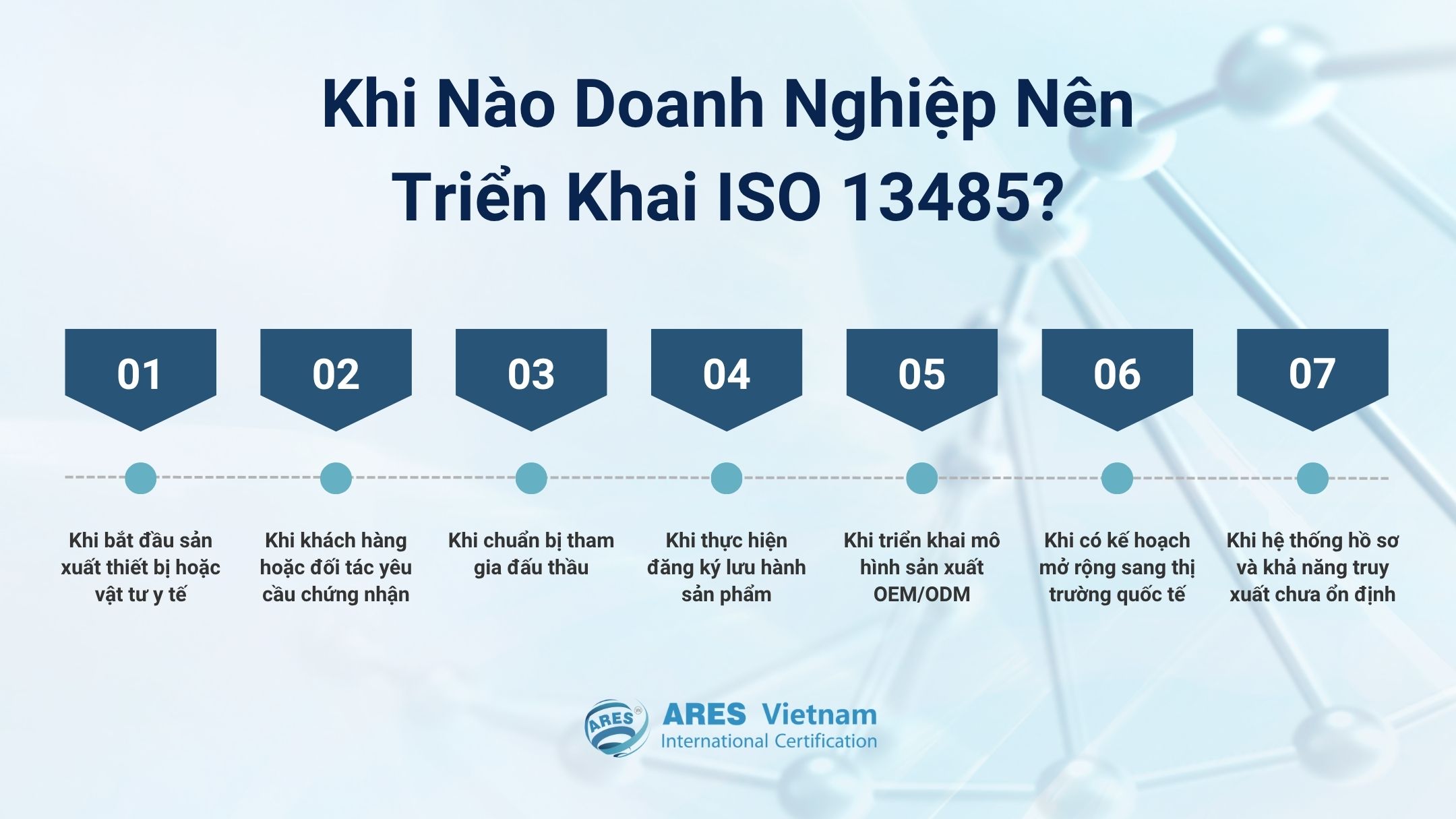
When should businesses implement ISO 13485?
▶️ Learn more about the ISO 13485 certification process at ARES Vietnam
What Should Businesses Prepare Before ISO 13485 Certification?
Before entering the ISO 13485 certification process, businesses should review the readiness of their quality management system to identify areas that require improvement or completion.
Important preparations include:
- Define the scope of certification: Clearly identify the products, services, departments, locations, and processes that will be included in the certification scope.
- Review the current system: Assess existing procedures, records, quality control methods, and traceability practices currently in use.
- Prepare responsible personnel: Assign implementation coordinators, provide training to relevant employees, and define responsibilities for each process.
- Improve control conditions: Review infrastructure, working environments, equipment, storage conditions, and other factors that may affect product quality.
- Develop the documentation system: Establish the procedures, forms, and records required by ISO 13485.
- Conduct internal audits before certification: Evaluate system conformity, identify nonconformities, and implement corrective actions before the official certification audit.
Proper preparation from the beginning helps shorten implementation time, reduce mistakes, and improve the organization’s ability to meet certification requirements.
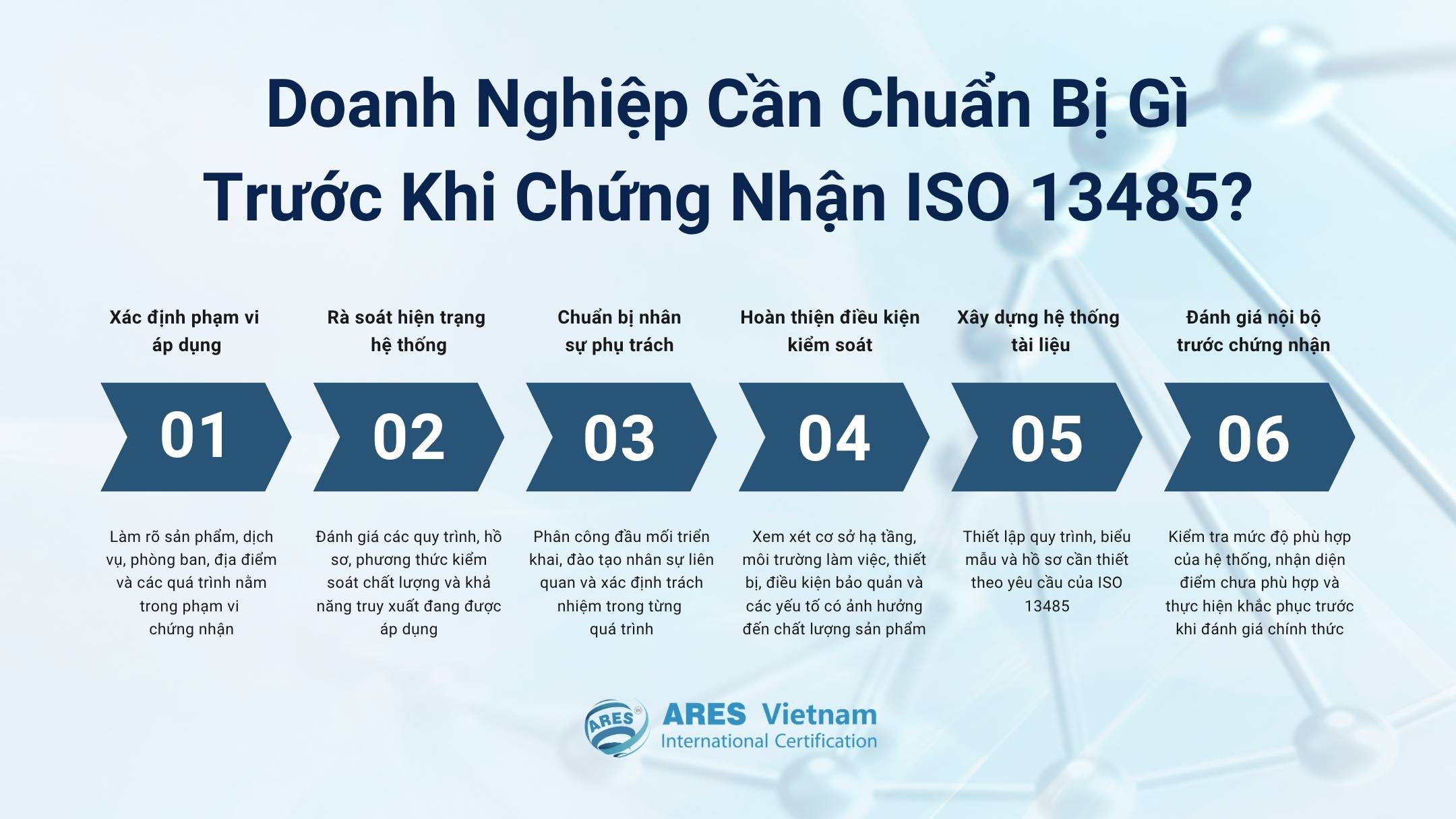
What should businesses prepare before ISO 13485 certification?
Frequently Asked Questions About ISO 13485 Certification (FAQ)
| Question | Answer |
| Is ISO 13485 mandatory? | ISO 13485 is not mandatory for all organizations in every situation. However, the standard is often required or preferred when companies register medical devices, participate in tenders, cooperate with major partners, operate under OEM/ODM models, or expand into international markets. |
| How long does it take to achieve ISO 13485 certification? | The implementation timeline depends on the size of the organization, the certification scope, and the readiness of the existing quality management system. Organizations with an established quality foundation can typically complete the process more quickly, while less mature systems may require additional preparation time. |
| How long is ISO 13485 certification valid? | ISO 13485 certification is generally valid for three years. During this period, periodic surveillance audits are conducted to ensure that the quality management system continues to be maintained and remains compliant with the standard requirements. |
| What factors affect the cost of ISO 13485 certification? | Certification costs vary depending on several factors, including company size, the number of personnel involved in the management system, the certification scope, the complexity of operations, and the number of sites that need to be audited. |
| Should small businesses implement ISO 13485? | Yes. The decision to implement ISO 13485 does not depend solely on company size. It also depends on the organization’s activities, its role within the medical device supply chain, and the target markets it intends to serve. |
| What is the difference between ISO 13485 and ISO 9001? | ISO 13485 is specifically designed for the medical device industry and focuses on regulatory compliance, product safety, and risk management. In contrast, ISO 9001 is a general quality management standard applicable to organizations across various industries. |
ISO 13485 – A Foundation for Standardizing Medical Device Quality Management Systems
ISO 13485 provides businesses in the medical device sector with a framework to standardize quality management systems, control risks, and improve their ability to meet customer, partner, and market requirements.
If your organization is exploring the ISO 13485 certification roadmap, determining the certification scope, or evaluating the readiness of its current system, ARES Vietnam can support your certification journey in accordance with international standards.
- Hotline: 085.3858.553
- Email: service@aresvietnam.vn
Related news

Circular 49/2026/TT-BCT Takes Effect Soon: Which Environmental Records Should Factories Review?
Read more

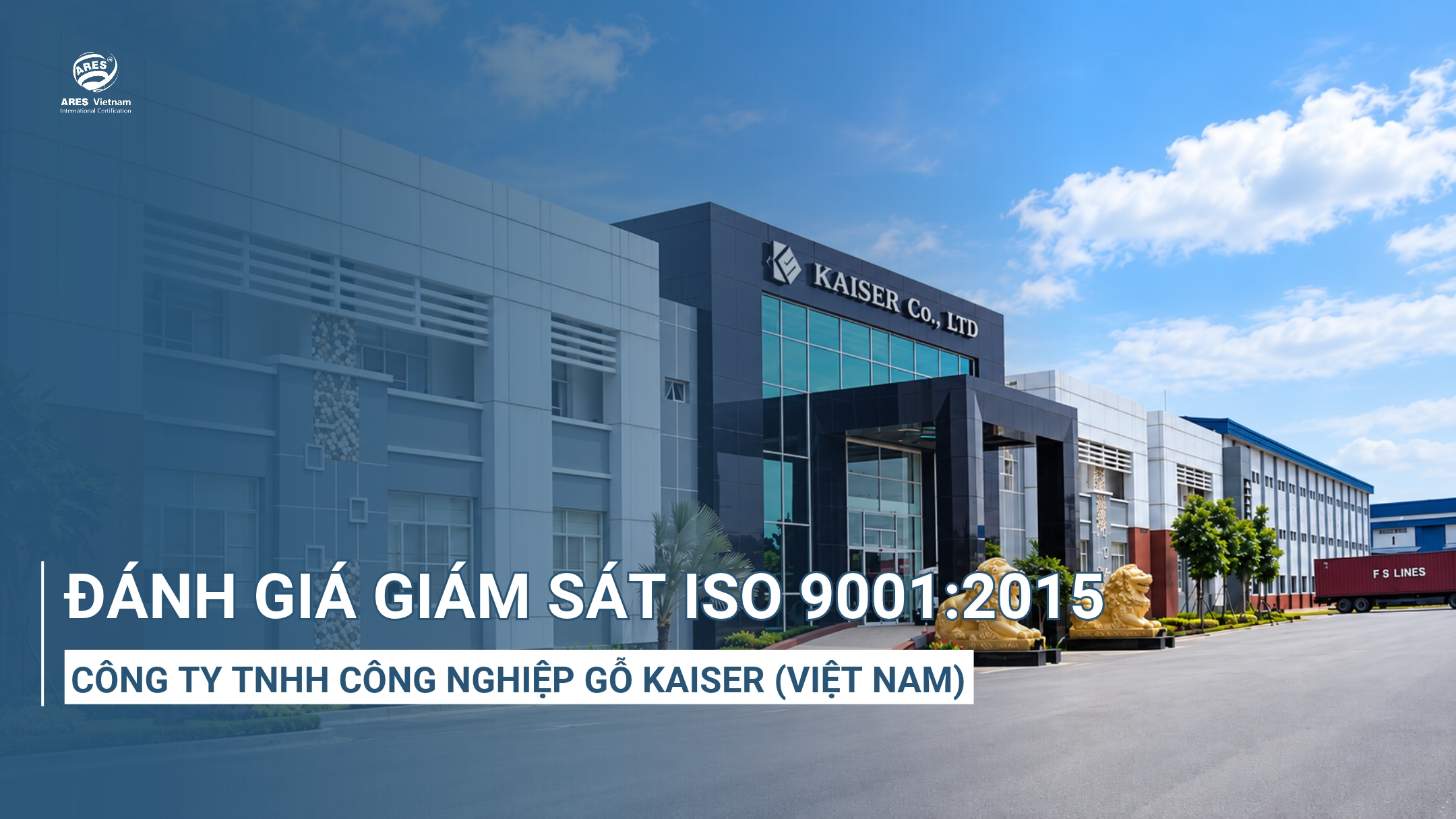
ARES Vietnam Conducts the Second ISO 9001:2015 Surveillance Audit at KAISER 1 & KAISER 2 (Vietnam)
Read more

National Single Window and ASEAN Single Window: What Documents Should Import–Export Businesses Prepare?
Read more
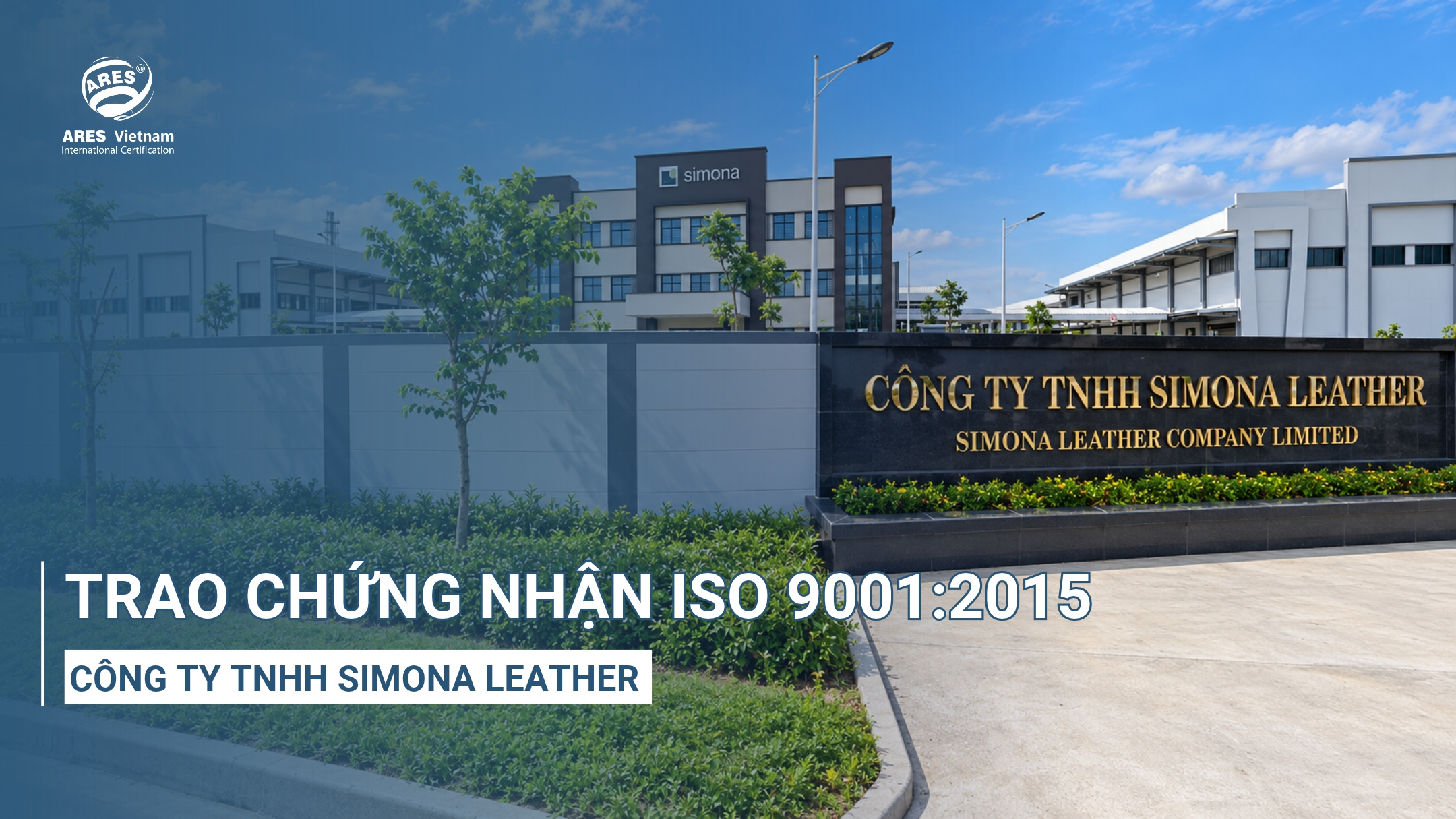
ARES Vietnam Awards ISO 9001:2015 Certification to Simona Leather Company Limited
Read more
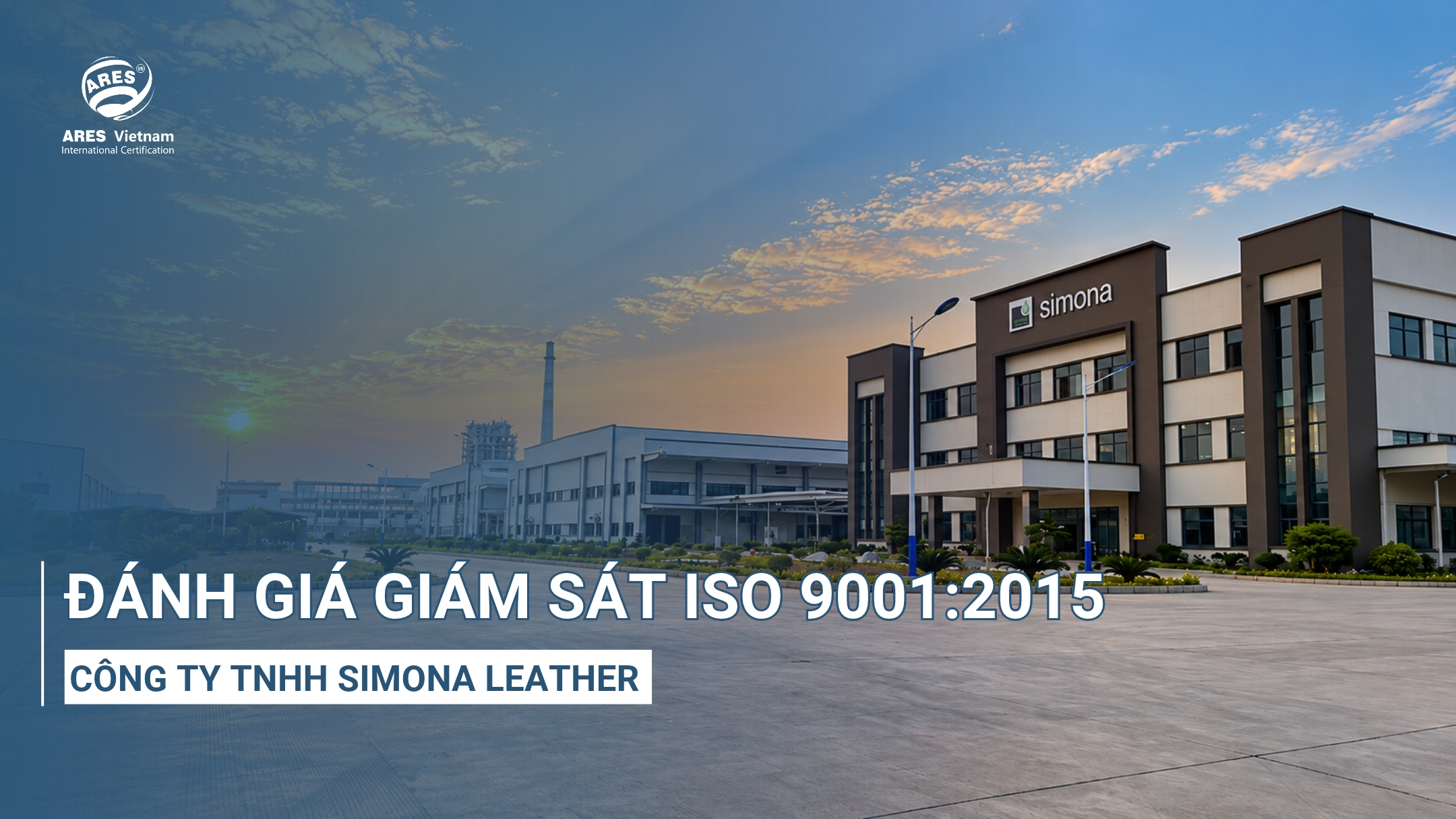
ARES Vietnam Conducts ISO 9001:2015 Surveillance Audit at Simona Leather Company Limited
Read more