Circular 49/2026/TT-BCT Takes Effect Soon: Which Environmental Records Should Factories Review?

On September 12, 2026, Vietnam’s Ministry of Industry and Trade (MOIT) issued Circular No. 49/2026/TT-BCT, which takes effect on November 2, 2026. The Circular amends and supplements several regulations on environmental protection in the industry and trade sector.
For factories subject to environmental data reporting requirements, identifying the applicable scope and reviewing existing information are essential steps toward accurate data management.
So, which factories are required to report environmental data? What records should they review, and how should they update the information?
What Changes Under Circular 49/2026/TT-BCT, and Which Factories Are Covered?
Circular 49/2026/TT-BCT amends Circular 24/2023/TT-BCT on tasks funded by environmental protection recurrent expenditures and Circular 42/2020/TT-BCT on the environmental database for the industry and trade sector.
For businesses, the key amendments concern the processing time for account issuance and termination, the continued use of existing accounts when company information changes, and the responsibility to update data in the system. The amendments focus on account and data management rather than introducing a general requirement for all factories to prepare environmental records again or resubmit their entire datasets.
Under Article 2 of Circular 42, facilities operating in sectors managed by the Ministry of Industry and Trade must report environmental data if their scale and capacity meet the thresholds specified in Appendix I. Meanwhile, businesses outside this category are encouraged to participate voluntarily.
Examples of capacity thresholds include:
| Industry / Sector | Scale and Capacity Based on Design or Investment Registration |
| Chemical and detergent manufacturing | 10,000 tonnes of products per year or more |
| Textile manufacturing involving dyeing | 100 million m² of fabric per year or more |
| Pig iron, steel and metallurgical production | 300,000 tonnes of products per year or more |
The table provides selected examples. Businesses should refer to Appendix I for the complete list.
To determine their reporting obligations, businesses should compare their industry, scale and capacity stated in design documents or investment registration records with Appendix I. This assessment should consider registered or designed capacity rather than relying solely on actual annual production output.
Which Environmental Records and Data Should Factories Review?
Under Article 5 and Appendix III of Circular 42/2020/TT-BCT, businesses subject to reporting requirements must provide relevant information on production activities and environmental management according to the applicable scope.
To verify data accuracy, factories can cross-check their information against the records and supporting documents listed below, depending on their actual operations. These documents serve as references for verification, while submission requirements are determined by the applicable reporting regulations.
| Data Category | Reference Records and Documents | Information to Verify |
| 1. Company information | Enterprise Registration Certificate, investment documents and current registration information | Company name, address, business activities, scale, capacity, legal representative, reporting personnel and contact details |
| 2. Production activities | Production output reports, production line diagrams and process descriptions | Main products, production output, reporting period, units of measurement and technologies currently in use |
| 3. Raw materials and energy | Raw material, fuel and chemical tracking records; warehouse issue slips, electricity bills and energy consumption reports | Material types, actual quantities used, energy consumption, units of measurement and reporting periods |
| 4. Environmental legal documents | Environmental permits, decisions approving the appraisal results of Environmental Impact Assessment (EIA) reports, and other existing environmental legal documents (where applicable) | Document types, reference numbers, issue dates, issuing authorities, scope and applicability to the facility |
| 5. Wastewater and air emissions | Treatment system documentation, operating logs, flow data and environmental monitoring results | Emission and discharge sources, treatment capacity and technology, flow rates, effluent and emission quality, and applicable technical regulations |
| 6. Solid waste and hazardous waste | Waste tracking records, waste transfer documents, and records and photographs of hazardous waste storage areas | Waste types, hazardous waste codes, quantities, collection and treatment methods, and storage area conditions |
When consolidating data, businesses should ensure consistency in reporting periods, units of measurement and the scope of each facility. For example, the quantity of raw materials received into inventory may differ from the amount actually used during the reporting period. Therefore, factories should refer to warehouse issue records and production documents to determine the appropriate reporting figures.
How Should Businesses Update and Report Environmental Data?
Under Article 4 of Circular 42/2020/TT-BCT, as amended and supplemented by Article 8 of Circular 49/2026/TT-BCT, businesses should first identify their account status and follow the corresponding procedures.
| Account Status | Required Actions |
| No existing account | Member enterprises should request an account through their Group or General Corporation. Other businesses should submit requests through the provincial Department of Industry and Trade where their head office is registered. |
| Existing account with updated company information | Businesses may continue using their accounts if they remain within the categories specified in Clause 1 or Clause 4, Article 2. They must promptly update the system or notify the relevant management authority. |
| Review the applicable conditions and complete account termination procedures as required. Businesses wishing to continue voluntary reporting should clarify the requirements with the relevant management authority. | Operations discontinued or capacity reduced below Appendix I thresholds |
| Additional account required | Submit an account addition request through the relevant Group, General Corporation or provincial Department of Industry and Trade, as applicable. |
Four steps for environmental data reporting:
1. Review previously reported information: Identify information that requires additions or updates.
2. Verify data accuracy: Cross-check reported figures against source records, reporting periods and corresponding units of measurement.
3. Resolve discrepancies: Verify missing or inconsistent information and assign responsible personnel to address the issues.
4. Complete the reporting process: Access the Industry and Trade Environmental Database System, log in using the assigned account, submit or update the required information, and retain evidence of completion.
Two important deadlines to remember:
7 working days: The maximum processing time for the Industrial Safety Engineering and Environment Agency to issue or terminate an account. This period begins upon receipt of a written request from the relevant Group, General Corporation or provincial Department of Industry and Trade, as specified in Article 8 of Circular 49.
Before January 31 of the following year: The deadline for completing annual environmental data reporting under Article 5 of Circular 42. This is an existing reporting deadline, separate from the amendments introduced by Circular 49.
Important: November 2, 2026, marks the effective date of Circular 49. Factories should follow the specific deadlines applicable to their environmental documentation and reporting obligations.
How Does ISO 14001 Help Businesses Manage Environmental Records?
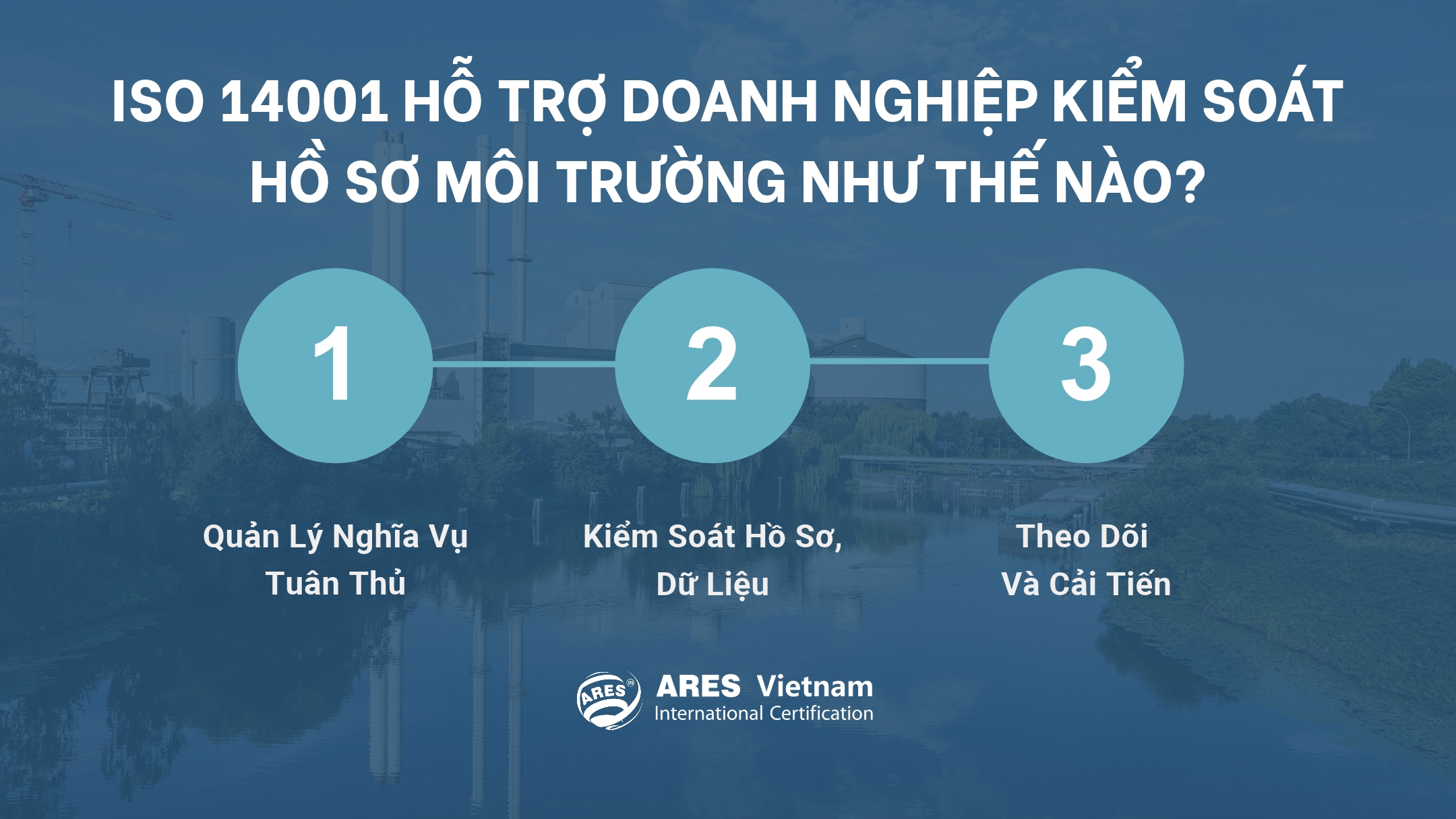
To manage environmental records and data systematically, businesses can implement ISO 14001 with a focus on three key areas:
- Compliance obligation management: Identify, update and evaluate compliance with environmental legal requirements relevant to factory operations.
- Record and data control: Assign responsibilities, manage documented information, and maintain and retrieve monitoring and measurement results.
- Monitoring and improvement: Periodically evaluate control activities, identify discrepancies and implement corrective actions when necessary.
ARES Vietnam provides ISO 14001 environmental management system audit and certification services. Businesses seeking certification can contact ARES Vietnam to discuss their operational scope and develop a suitable audit plan.
ISO 14001 certification complements environmental management practices, while environmental permits, reporting obligations and other applicable legal requirements remain independently enforceable.

Related news

ARES Vietnam Conducts the Second ISO 9001:2015 Surveillance Audit at KAISER 1 & KAISER 2 (Vietnam)
Read more


National Single Window and ASEAN Single Window: What Documents Should Import–Export Businesses Prepare?
Read more

ARES Vietnam Awards ISO 9001:2015 Certification to Simona Leather Company Limited
Read more

ARES Vietnam Conducts ISO 9001:2015 Surveillance Audit at Simona Leather Company Limited
Read more

Emissions Data & CBAM: 5 Practical Questions from Factory Operations
Read more