Mandatory Energy Management for Key Energy-Using Facilities: What Should Businesses Prepare?
Amid fluctuating energy costs, increasingly stringent emission reduction requirements, and a stronger legal framework for energy efficiency, energy management is no longer a voluntary option for businesses. For key energy-using facilities, establishing an energy management system is becoming a mandatory requirement directly linked to regulatory compliance, cost control, and sustainable development.
However, many organizations still manage energy in a fragmented manner. They may monitor electricity bills, prepare reports only when required, or conduct periodic energy audits without having a system in place to sustain continual improvement. Today, regulatory expectations go beyond simply maintaining records. Businesses are expected to establish clear energy data, responsible personnel, objectives, and control mechanisms.
So, how are key energy-using facilities identified? What should affected businesses prepare? And how can ISO 50001 support this process?
How Are Key Energy-Using Facilities Identified?
A key energy-using facility is an organization whose annual energy consumption reaches the threshold specified by law. The determination is not based on brand size, number of employees, or internal perception. Instead, it is based on actual energy consumption converted into TOE (Tonnes of Oil Equivalent).
TOE is a unit used to convert different forms of energy into a common measurement. Therefore, businesses should not only consider electricity consumption but also review other energy sources such as fuel oil, coal, gas, LPG, steam, and fuels used in production, operations, and transportation.
According to Decree No. 30/2026/ND-CP, key energy-using facilities are classified into two main groups:
- Group 1: Industrial and agricultural production facilities, as well as transportation units, with annual energy consumption of 1,000 TOE or more.
- Group 2: Buildings, offices, hotels, supermarkets, restaurants, educational institutions, healthcare facilities, and similar establishments with annual energy consumption of 500 TOE or more.
Regarding the phrase “100% of key facilities” in current policies, businesses should understand that this does not apply to every enterprise. Rather, it refers to all facilities that have already been identified as key energy users or that meet the specified thresholds. Under the action plan implementing Directive 09/CT-TTg, key facilities are encouraged to conduct energy audits, implement energy management systems, and strive to achieve electricity savings of approximately 3% per year.
Since the list of key energy-using facilities is reviewed and issued annually, organizations expanding factories, increasing capacity, adding production lines, developing cold storage systems, enlarging transport fleets, or investing in large operational infrastructure should proactively monitor their energy consumption from an early stage.
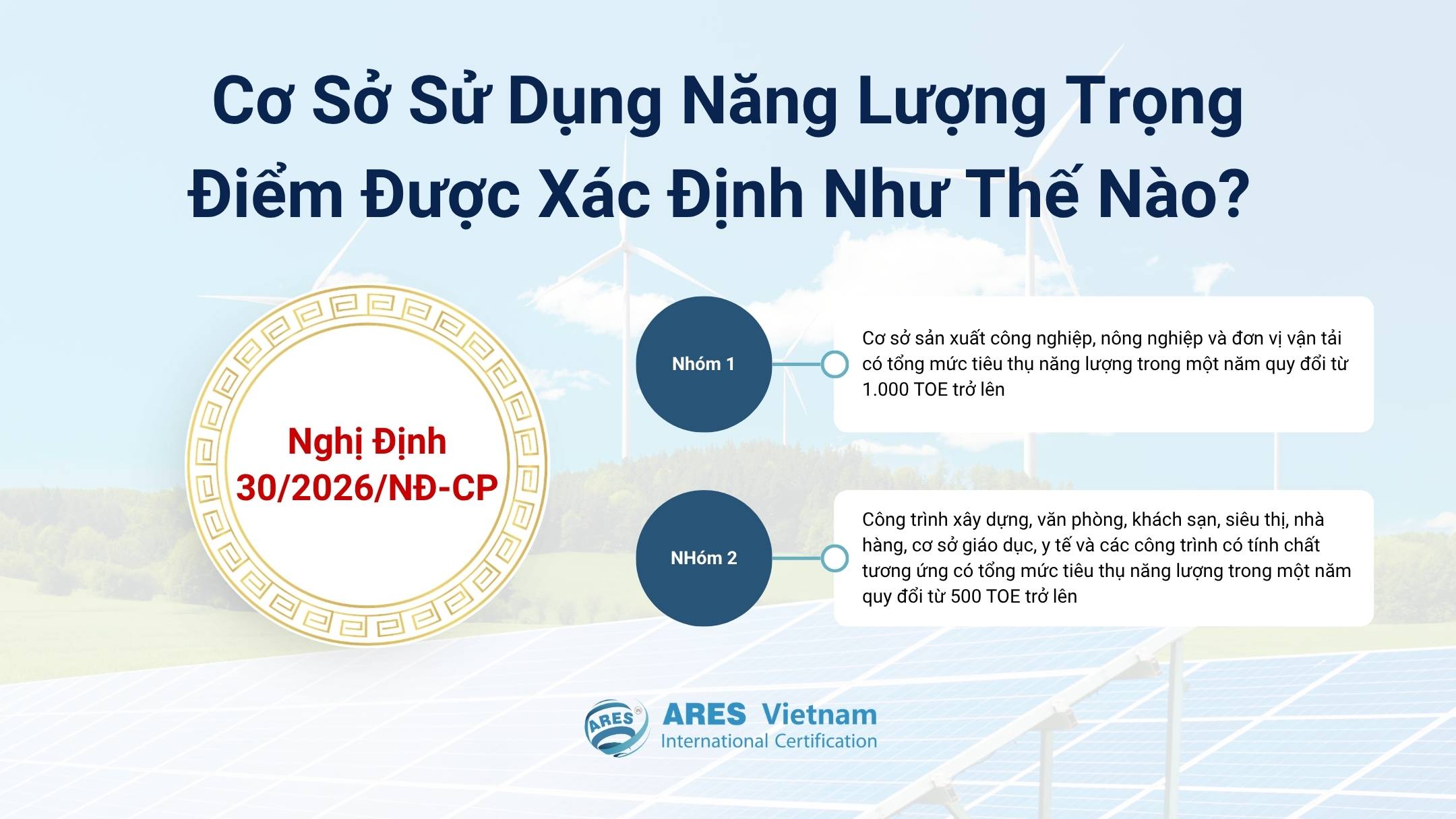
How are key energy users identified?
What Obligations Must Key Energy-Using Facilities Fulfill?
Once classified as a key energy-using facility, a business becomes subject to the Law on Economical and Efficient Use of Energy, amendments to the Law, and related implementing regulations. These obligations should not be viewed as isolated administrative tasks. Instead, they should be integrated into a unified management mechanism.
Businesses should focus on the following key responsibilities:
▶️Develop energy utilization plans: Establish annual and long-term plans with objectives, targets, actions, resources, and assigned responsibilities.
▶️Appoint an energy manager: Designate qualified personnel responsible for monitoring data, coordinating internal activities, preparing documentation, reporting, and supporting energy audits.
▶️Conduct periodic energy audits: Assess current energy consumption, identify significant energy users, detect losses, and recommend efficiency improvement measures.
▶️Comply with reporting requirements: Prepare and submit reports, plans, and related information as required by authorities. At the same time, maintain records of electricity and fuel consumption, production output, operating hours, audit results, and improvement evidence.
▶️Establish energy management activities within the facility: Create mechanisms for monitoring, measurement, responsibility assignment, and continual improvement so that legal requirements operate as an integrated system rather than separate tasks.
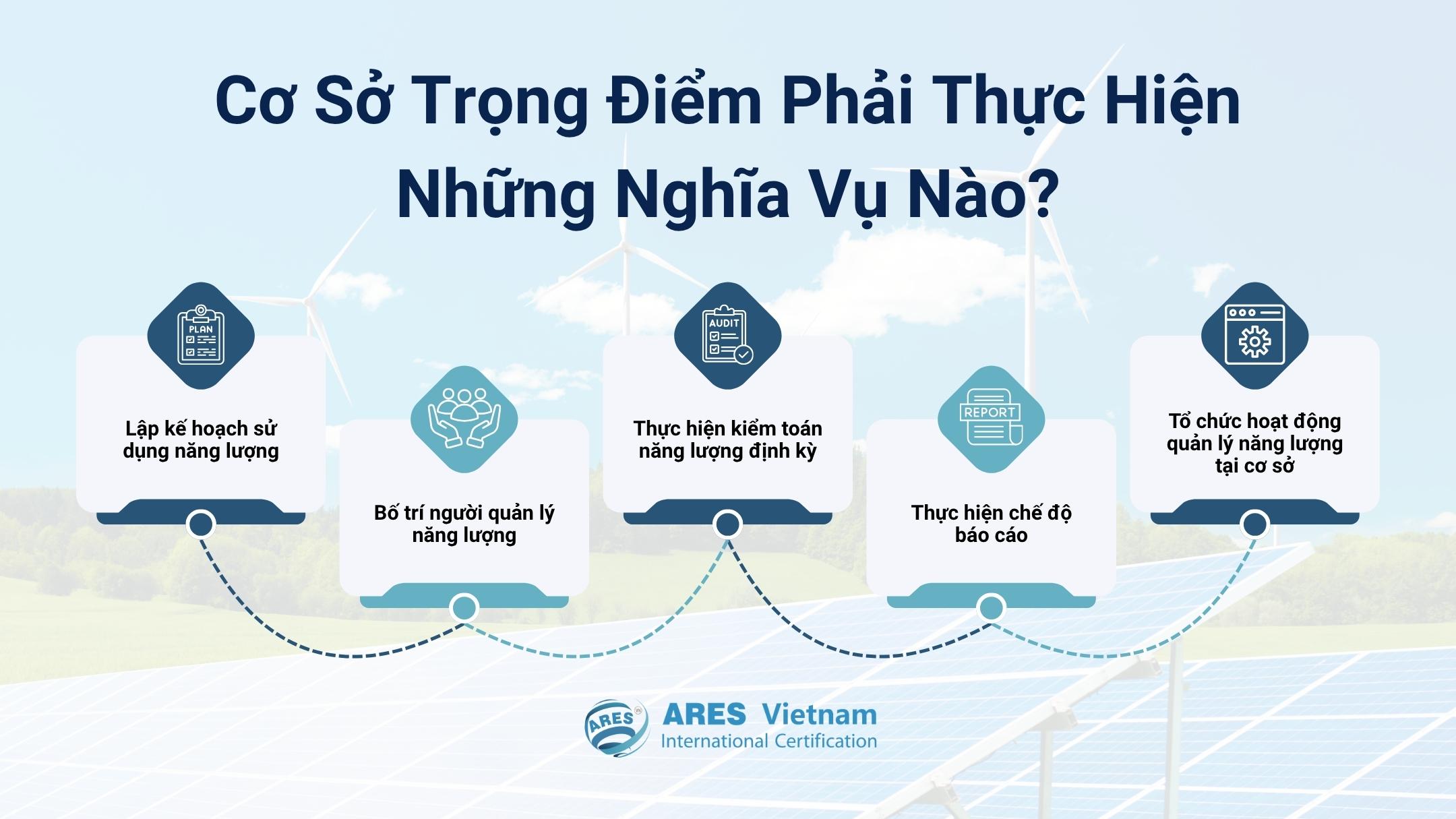
What obligations must key establishments fulfill?
What Should Businesses Prepare to Avoid Being Reactive?
To comply with energy management requirements, businesses should not start by asking, “What documents do we need?” Instead, they should begin by strengthening their ability to control and manage energy data. Documentation demonstrates compliance, but data provides the foundation for identifying waste, evaluating performance, and developing evidence-based improvement plans.
Businesses should prioritize the following activities:
▶️Review total energy consumption: Consolidate electricity, fuel oil, coal, gas, LPG, steam, and other relevant energy sources, then convert them into TOE to determine whether the facility falls within the key energy user category.
▶️Identify significant energy uses: Determine systems with high consumption or strong improvement potential, such as compressed air systems, boilers, refrigeration systems, HVAC, production lines, cold storage, lighting systems, and transportation fleets.
▶️Standardize energy data: Monitor consumption by factory, workshop, production line, equipment, or major consumption area to understand the causes of energy usage rather than relying solely on overall electricity bills.
▶️Establish energy indicators and baselines: Develop indicators such as kWh per ton of product, kWh per square meter, liters of fuel per kilometer, or kilograms of steam per ton of product. In addition, establish reference baselines for measuring improvement results.
▶️Assign responsibilities and track improvements: Clearly define the roles of energy managers, technical teams, production departments, maintenance personnel, accounting staff, and purchasing teams. Audit findings should then be converted into prioritized improvement plans with deadlines and measurable outcomes.
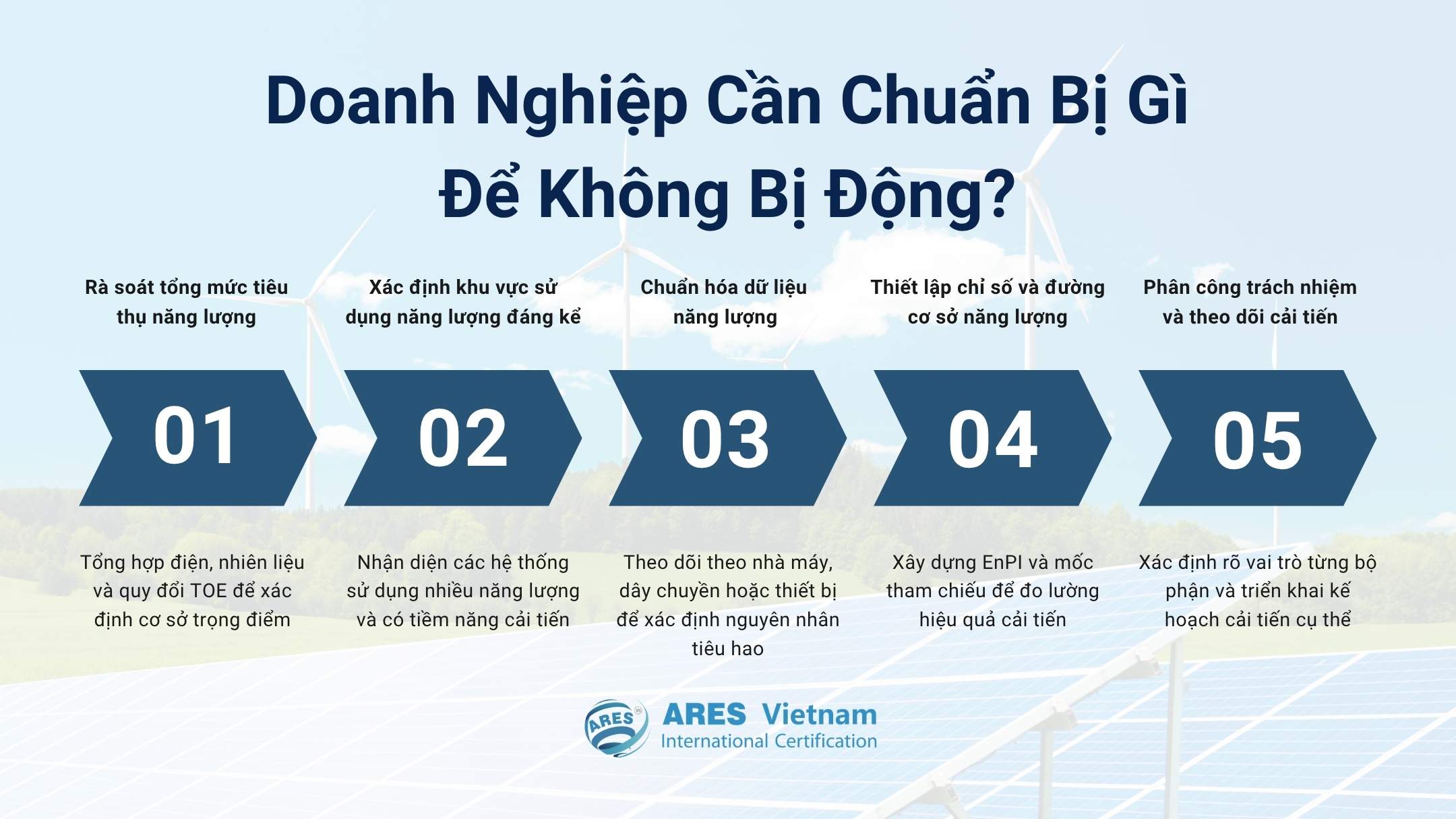
What do businesses need to prepare to avoid being passive?
How Does ISO 50001 Support Energy Management?
ISO 50001 is an international standard for energy management systems. It does not replace legal obligations such as energy audits, periodic reporting, appointing energy managers, or preparing energy utilization plans. Instead, ISO 50001 helps businesses organize these activities within a structured, consistent, and continually improving management system.
Under ISO 50001, organizations are required to conduct energy reviews, identify significant energy uses, establish energy performance indicators, define energy baselines, set energy objectives, and implement action plans. This approach enables businesses not only to understand how much energy they consume, but also where energy is used, which factors influence consumption, and how improvements can be demonstrated through data.
As a result, energy audits are no longer isolated reports, consumption data is no longer collected solely for reporting purposes, and energy-saving objectives move beyond general commitments. Instead, all activities become part of a continuous management cycle: Measure → Analyze → Act → Evaluate → Improve
For key energy-using facilities, ISO 50001 helps organizations move beyond compliance and establish a more systematic approach to energy management. With well-controlled energy data, businesses are better positioned to optimize costs, improve operational efficiency, and support related initiatives such as ISO 14001, greenhouse gas inventories, ESG programs, and supply chain requirements.
ISO 50001 – Energy management systems
Proactive Energy Management to Reduce Compliance Risks And Optimize Operations
For key energy-using facilities, energy management is not only a legal obligation but also an important component of operational governance. The earlier a business standardizes its data, personnel, monitoring indicators, and improvement plans, the lower the risk of facing difficulties during inspections, reporting activities, or energy audits.
In the long term, ISO 50001 can help organizations establish a more systematic energy management framework that links compliance requirements with cost control, performance improvement, and sustainable development goals.
If your organization is reviewing obligations applicable to key energy-using facilities or is interested in ISO 50001, ARES Vietnam can support you by providing information on the standard, applicability, preparation roadmap, and certification assessment processes based on international practices.
- Hotline: 085.3858.553
- Email: Service@aresvietnam.vn

Related news

Circular 49/2026/TT-BCT Takes Effect Soon: Which Environmental Records Should Factories Review?
Read more


ARES Vietnam Conducts the Second ISO 9001:2015 Surveillance Audit at KAISER 1 & KAISER 2 (Vietnam)
Read more

National Single Window and ASEAN Single Window: What Documents Should Import–Export Businesses Prepare?
Read more

ARES Vietnam Awards ISO 9001:2015 Certification to Simona Leather Company Limited
Read more

ARES Vietnam Conducts ISO 9001:2015 Surveillance Audit at Simona Leather Company Limited
Read more