Three New Circulars on Product and Goods Management: Key Considerations for Manufacturers and Importers
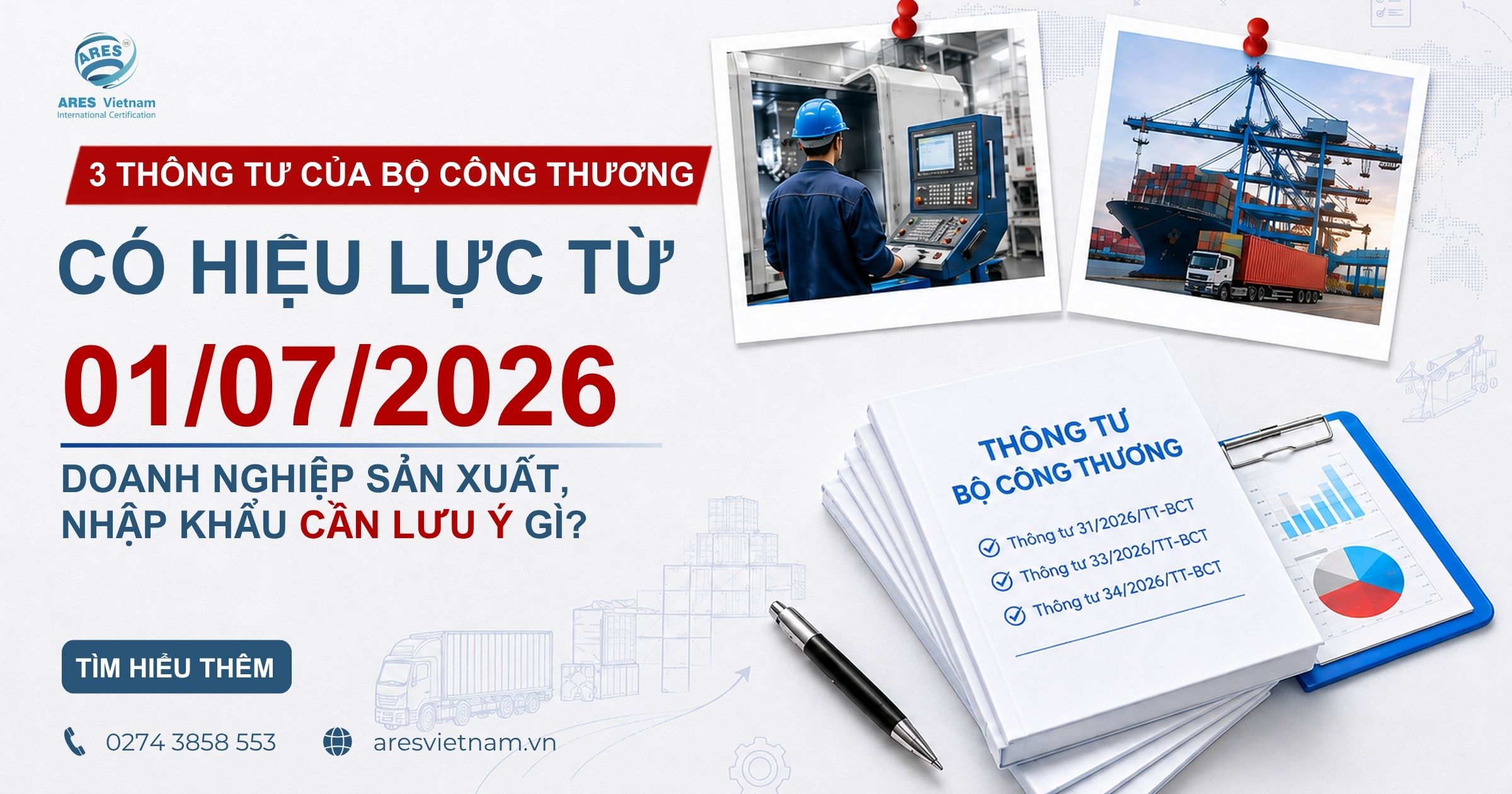
From 1 July 2026, Circulars 31/2026/TT-BCT, 33/2026/TT-BCT and 34/2026/TT-BCT issued by the Ministry of Industry and Trade take effect. They regulate product traceability, risk-based product and goods lists, and product and goods quality management.
For manufacturers and importers, the simultaneous implementation of these three Circulars requires a review of product lists, quality records and information management practices during business operations.
What do these three Circulars regulate, and what should manufacturers and importers consider in practice? Explore the details with ARES Vietnam in the article below.
What Do the Three New Circulars Regulate for Product and Goods Management?
The three Circulars regulate different aspects of product and goods management within the Ministry of Industry and Trade’s management scope. Businesses should compare each Circular with their products and roles in the supply chain to identify the requirements they need to fulfil.
Regulates quality management, labelling, safety assessments for new products, conformity assessment body designation and quality inspections.
| Circular | Main role during implementation |
| Circular 33/2026/TT-BCT | Identifies products and goods included in the medium-risk or high-risk list. |
| Circular 34/2026/TT-BCT | |
| Circular 31/2026/TT-BCT | Regulates the identification, creation, management and connection of traceability data. |
1. Circular 33/2026/TT-BCT Issues a Risk-Based List of Products and Goods
Circular 33/2026/TT-BCT issues the list of medium-risk and high-risk products and goods under the Ministry of Industry and Trade’s state management responsibility.
When the Circular takes effect, Part B of the list does not specify particular high-risk products or goods. Businesses should therefore prioritise reviewing Part A, which covers medium-risk product groups, while monitoring future updates to the list.
Under the transitional provisions of Circular 33, conformity certificates and conformity marks issued before the Circular takes effect remain valid until their expiry dates. Organisations and individuals that submitted conformity declarations before this date do not need to register those declarations again.
2. Circular 34/2026/TT-BCT Regulates Product and Goods Quality Management
Circular 34/2026/TT-BCT regulates quality management for products and goods within the Ministry of Industry and Trade’s management scope. Its provisions cover labelling, safety assessments for new products, conformity assessment body designation and quality inspections.
One important requirement concerns safety assessments for certain new products or products entering Vietnam for the first time. Medium-risk or high-risk products with new characteristics not covered by QCVNs must undergo safety assessments before market placement. This requirement also applies to products that first appear in Vietnam and may pose safety risks. Importers must demonstrate safety when their goods fall within equivalent cases under the regulations.
3. Circular 31/2026/TT-BCT Regulates Product and Goods Traceability
Circular 31/2026/TT-BCT regulates traceability for high-risk products and goods within the Ministry of Industry and Trade’s management scope. Traders may apply traceability voluntarily to goods outside the mandatory scope.
For traders whose products or goods require mandatory traceability, the implementation roadmap includes two stages:
- From 1 July 2026: Register an account, obtain product identification codes and verify information as instructed.
- From 1 January 2027: Complete all traceability requirements before placing products and goods on the market.
The Circular also regulates traceability codes, required declarations, internal traceability systems, and data connection and sharing with the Ministry of Industry and Trade’s Goods Traceability System.
Traders that begin manufacturing or trading mandatory-traceability products from 1 January 2027 must meet all traceability requirements from the start of their operations.
What Should Manufacturers and Importers Control?
Businesses should apply the three Circulars according to their product types, relevant management requirements and operating characteristics.
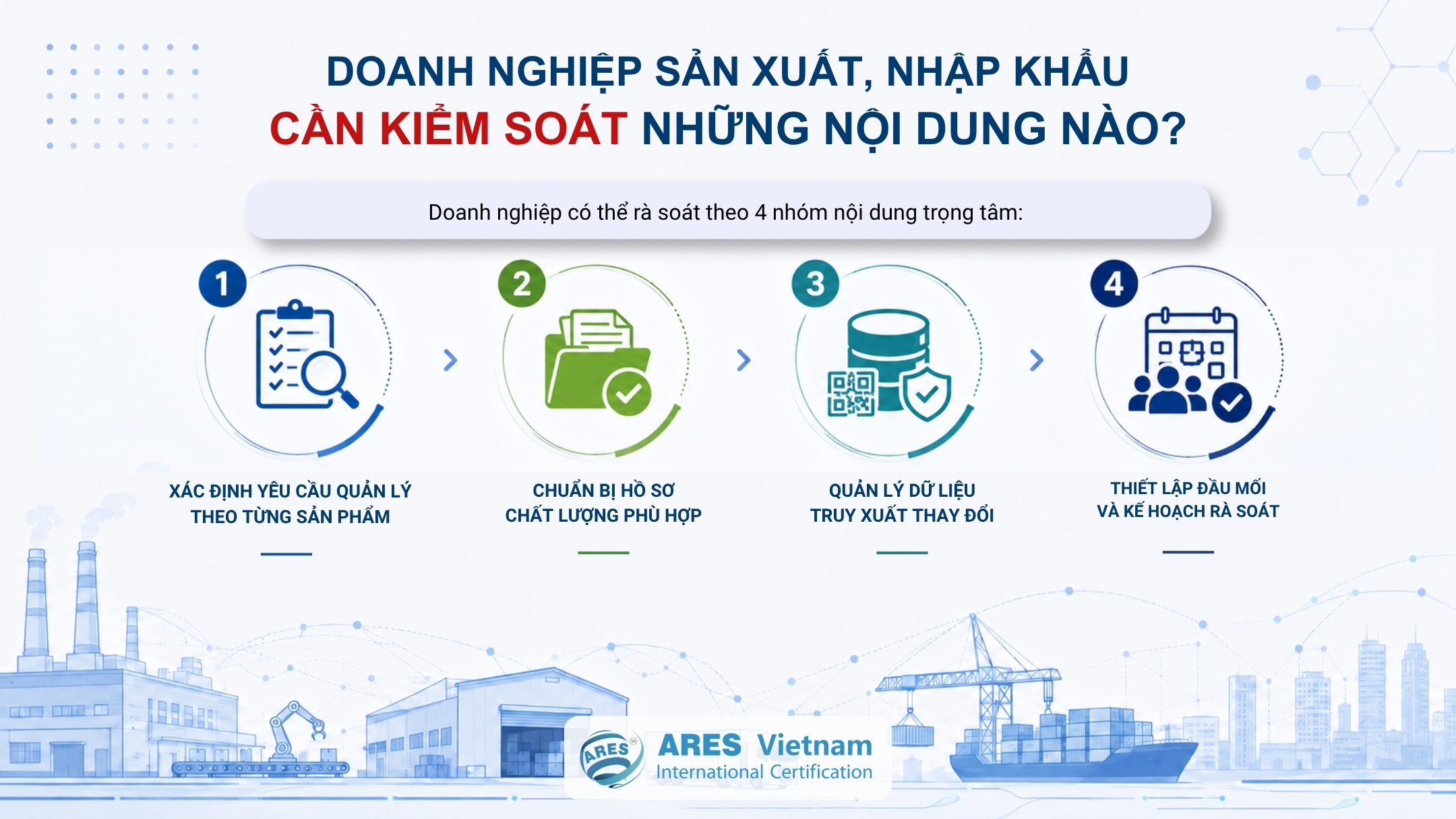
Although both fall within the same regulatory scope, manufacturers and importers create records and data differently. They also use different methods to control goods. Businesses can therefore review the following four areas.
1. Identify Management Requirements for Each Product
The first step involves identifying the product’s risk category and any applicable QCVNs or sector-specific management requirements. Correct classification helps businesses identify the appropriate quality management measures before manufacturing, importing or placing products on the market.
| Product group | What businesses should review | Recommended action |
| Medium-risk products and goods | Product name, HS code, description, referenced QCVNs and listed management requirements | Compare quality management measures and required records with applicable QCVNs and relevant sector-specific regulations. |
| High-risk products and goods | The list and updates relating to high-risk product groups | Monitor applicable requirements and prepare traceability data under Circular 31/2026/TT-BCT when required. |
| Products outside the list | Sector-specific legal regulations and relevant technical requirements | Do not assume that no management requirements apply. Continue reviewing applicable sector-specific regulations. |
Manufacturers should complete this review before mass production, new product launches or changes to designs, specifications or materials. For products requiring safety assessments, businesses should review the relevant requirements before placing them on the market.
Importers should conduct this comparison before signing contracts, placing orders or completing import procedures. They should compare manufacturer information with HS codes, technical specifications, QCVNs and relevant risk categories. This helps them identify the required records and quality management measures.
2. Prepare Records That Demonstrate Product Quality and Conformity
After identifying applicable product requirements, businesses should review their records based on one principle: the information must remain complete, consistent and traceable to the actual product or shipment. Businesses should not only retain records; they should also show the basis for manufacturing or importing the goods.
For manufacturers, records should demonstrate:
- The product’s technical basis: applicable standards, designs, technical specifications, instructions for use and related documents.
- The production process: information about materials, suppliers, controlled stages and relevant inspection results.
- Evidence of finished-product quality: test results, conformity assessment documents where applicable, product codes, batch codes or serial numbers, labels and dispatch records.
For importers, records should connect:
- Documents provided by manufacturers: technical specifications, instructions for use, product labels, identification details and quality evidence where applicable.
- Product identification information: manufacturer names, product codes, batch codes or serial numbers, and matching information on the actual goods.
- Documents for each shipment: contracts, invoices, bills of lading, customs declarations, goods receipt notes and related documents.
Organising records by product or shipment helps businesses demonstrate technical bases, document origins and quality control results when explanations are required. These records should remain consistent with the actual goods throughout manufacturing, importation and market distribution.
3. Manage Traceability Data and Control Changes
Applying a traceability code only displays information. More importantly, the data behind that code must connect the product’s origin, quality, distribution process and relevant parties.
Products, specifications, manufacturers, shipments, warehouses or distributors
| Control area | Manufacturers | Importers |
| Data chain to connect | Materials → suppliers → production → inspection → finished products → dispatch | Manufacturers → import shipments → warehouses → distributors |
| Information to update after changes | Materials, designs, specifications, processes or suppliers | |
| Control objective | Connect finished-product data with materials and production processes | Connect manufacturer records with each shipment distributed in Vietnam |
Businesses that already use product codes, batch codes or ERP software can review their existing data structures before investing in new solutions. They should ensure that the data remains connected, searchable and updated when products, suppliers or shipments change.
4. Assign Responsible Contacts and Establish a Review Plan
The three Circulars involve several departments, including engineering, procurement, production, QA/QC, import-export, warehousing and sales. Businesses should appoint a responsible coordinator to consolidate applicable requirements for each product group. They should also clearly assign responsibilities for providing, checking and approving information.
Rather than reviewing the entire product portfolio at once, businesses can prioritise new products, changed designs, supplier changes, incomplete records and products requiring QCVN reviews. This approach helps businesses manage progress proactively and reduce the risk of omissions.
How Can ISO 9001:2015 Help Businesses Standardise Quality Management Activities?
ISO 9001:2015 does not replace legal obligations for product classification, conformity assessment, labelling, quality inspection or traceability. However, the standard can help businesses organise related activities more consistently.
1. Managing Product Requirements and Related Records
ISO 9001:2015 helps businesses identify product-related requirements before placing products on the market. It also supports the creation, updating and retention of technical records, applicable standards, inspection results and manufacturer documents.
2. Controlling Suppliers and Externally Provided Inputs
The standard helps businesses establish criteria for selecting, evaluating and monitoring suppliers of materials, components, outsourced services or overseas-manufactured goods. This provides a basis for businesses to request and verify required information before using inputs or accepting goods.
3. Controlling Processes, Changes and Nonconforming Outputs
Businesses can define control criteria for each process stage and assess the impact of changes to materials, suppliers, designs or product specifications. ISO 9001:2015 also helps businesses control nonconforming products and goods, reducing the risk of unintended market placement.
4. Assigning Responsibilities, Conducting Internal Audits and Improving
By defining responsibilities, conducting internal audits and addressing nonconformities, ISO 9001:2015 helps businesses review quality management processes regularly. When products, suppliers or applicable requirements change, businesses can assess the impact and update their controls accordingly.
Build a Consistent Management Foundation for New Requirements
The simultaneous implementation of the three Circulars from 1 July 2026 shows that product and goods management increasingly depends on effective information control.
Rather than gathering records only when a requirement arises, businesses should maintain data and documents for each product or shipment. They should ensure that information remains searchable, comparable and ready for updates. This creates a stronger basis for responding to changes in requirements, products or supply chains.
ARES Vietnam provides ISO 9001:2015 assessment and certification services within the relevant standard scope. Businesses seeking quality management system assessment can contact ARES Vietnam for information about suitable assessment scopes and certification processes.
Frequently Asked Questions (FAQ)
No. Circular 31/2026/TT-BCT requires traceability for high-risk products and goods. Businesses may apply it voluntarily to other products.
No. Valid conformity certificates and conformity marks remain usable until expiry. Businesses do not need to register existing conformity declarations again.
| Question | Answer |
| Must all products and goods meet traceability requirements from 1 July 2026? | |
| When must businesses fully implement traceability under Circular 31/2026/TT-BCT? | From 1 January 2027, traders with products under the mandatory scope must complete traceability before market placement. |
| Must businesses renew conformity certificates and conformity declarations issued before 1 July 2026? | |
| Do these three Circulars replace all sector-specific product and goods quality regulations? | No. Businesses must still review applicable QCVNs and sector-specific regulations for each product or goods category. |
| Must businesses revise every product record when the list or a QCVN changes? | Not necessarily. Businesses should identify affected products and update relevant records, labels or management measures. |
Related news

Circular 49/2026/TT-BCT Takes Effect Soon: Which Environmental Records Should Factories Review?
Read more

ARES Vietnam Conducts the Second ISO 9001:2015 Surveillance Audit at KAISER 1 & KAISER 2 (Vietnam)
Read more

National Single Window and ASEAN Single Window: What Documents Should Import–Export Businesses Prepare?
Read more

ARES Vietnam Awards ISO 9001:2015 Certification to Simona Leather Company Limited
Read more
ARES Vietnam Conducts ISO 9001:2015 Surveillance Audit at Simona Leather Company Limited
Read more