ISO 9001:2026 and ISO 14001:2026 Are Being Updated: What Should Organizations with Integrated Management Systems Consider?
ISO 9001:2026 and ISO 14001:2026 are being updated within a relatively short time frame, making 2026 an important transition period for organizations that have implemented an integrated management system. While ISO 14001:2026 has already been published, the new edition of ISO 9001 is also approaching its official release.
Because the two standards are being updated within a relatively short time frame, organizations face a broader challenge than transitioning to each standard separately. Shared processes, standard-specific requirements, and implementation plans must be coordinated carefully. Otherwise, organizations may end up making fragmented system changes, increasing workloads, placing additional pressure on resources, and creating inconsistencies across the integrated management system.
So, what should organizations currently operating an integrated management system review? More importantly, how should they structure their transition roadmap? In this article, ARES Vietnam explains the key areas organizations should consider.
What Stage Are ISO 9001:2026 and ISO 14001:2026 Currently In?
Before determining the scope of the review, organizations should first understand the publication status of each standard. This provides a basis for distinguishing between actions that can be taken immediately and areas that should, for now, remain under review while resources are being prepared.
| Standard | Current Status | What Organizations Should Consider |
| ISO 14001:2026 | Officially published on April 15, 2026 | Organizations can begin reviewing the new edition, conducting a gap analysis, and developing a transition plan based on the officially published requirements. |
| ISO 9001:2026 | In the final publication stage and expected to be released in September 2026 | Organizations can prepare resources, review the foundations of their current management system, and monitor official updates. However, they should not revise the system based on documents that have not yet been formally published. |
For ISO 14001:2026, many of the core elements of the 2015 edition remain in place. However, the revised standard provides greater clarity on the relationship between environmental context, leadership responsibilities, governance activities, and measurable environmental performance.
By contrast, ISO 9001:2026 has not yet been officially released. Therefore, any information published before the final release should be used only to guide early preparation. It should not be treated as a formal basis for updating the entire quality management system.
Related Articles:
Has ISO 9001:2026 Been Released? Latest Progress Update
What’s New in ISO 14001:2026? Key Updates and Implementation Guidance
How ISO 9001:2026 and ISO 14001:2026 Affect Integrated Management Systems?
Many organizations assume that transitioning to the new editions of ISO 9001 and ISO 14001 simply involves updating two separate sets of requirements. However, for an integrated management system, the scope of impact is often much broader.
Changes to the standards may affect how an organization designs its processes, evaluates risks, allocates resources, and controls its operations. Therefore, before revising any documents, the organization should first identify which areas of the management system may be affected.
Some of the key impacts include:
- Several shared management processes may need to be reviewed at the same time, including organizational context, interested parties, risks and opportunities, control of documented information, internal audits, and management reviews.
- A single operational change may affect multiple areas of the management system. As a result, its impact should be evaluated from quality, environmental, and other relevant management perspectives.
- Organizations must strike a balance between integration and the control of standard-specific requirements. Not every element should be combined. Only processes that serve the same management purpose should be integrated, while the specific requirements of each standard must still be clearly identified and controlled.
- Organizations must strike a balance between integration and the control of standard-specific requirements. Not every element should be combined. Only processes that serve the same management purpose should be integrated, while the specific requirements of each standard must still be clearly identified and controlled.
Five Areas Organizations Should Review Together
Reviewing ISO 9001 and ISO 14001 clause by clause may not provide a clear picture of the transition’s actual impact. An integrated management system is typically structured around management processes, many of which already address requirements from both standards at the same time.
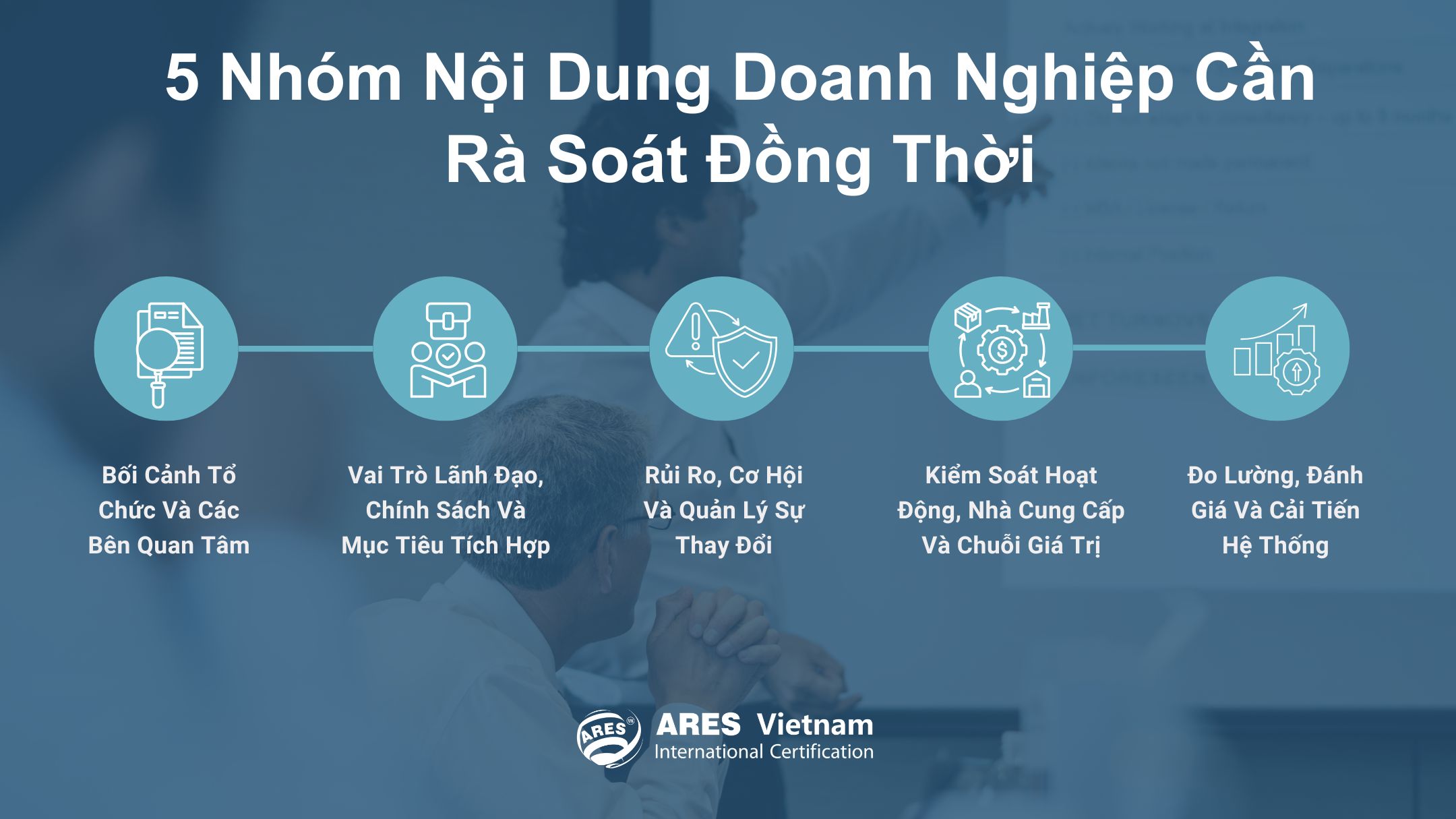
Therefore, rather than reviewing each clause separately, organizations should prioritize the five areas outlined below. This process-based approach makes it easier to identify what truly needs to be updated while reducing overlapping revisions throughout the transition.
1. Organizational Context and Interested Parties
Planning an effective management system begins with a thorough understanding of the organization’s operating context and the factors that may influence its performance. As the business environment evolves, the organization should reassess its risks, objectives, and management approach to ensure the system continues to reflect operational realities.
Organizations should review the following:
- Market conditions, technological developments, and the supply chain;
- Environmental conditions, climate change, and resource availability;
- Customer expectations, applicable legal requirements, and the needs of interested parties;
- Internal changes involving the organizational structure, products, facilities, or operating methods.
It is important to recognize that many external factors do not affect only quality or environmental performance in isolation. For example, disruptions in raw material supply or resource shortages may simultaneously impact product quality, delivery performance, production costs, and environmental outcomes.
Therefore, the organization’s context should be evaluated from the perspective of the integrated management system as a whole rather than separately for each standard.
2. Leadership, Integrated Policy, and Management Objectives
While the organizational context helps identify changes in the external environment, leadership determines how the organization responds to those changes. An integrated management system can deliver meaningful results only when its policies, objectives, and resources are aligned at the strategic management level.
Organizations should review the alignment between:
- Quality and environmental policies;
- Strategic direction;
- Business objectives;
- Quality objectives;
- Environmental objectives;
- Leadership responsibilities;
- Allocated resources.
This review should go beyond the wording of policies and objectives. Organizations should determine whether these commitments have been translated into management decisions, operational priorities, and appropriate resource allocation.
When the management system is aligned with the organization’s business strategy, the transition becomes more than a certification exercise. Instead, it provides an opportunity to strengthen governance, improve operational effectiveness, and support long-term business performance.
3. Risks, Opportunities, and Change Management
Change is inevitable in any organization. However, the value of a management system lies not in preventing change but in identifying potential risks early, assessing their impact thoroughly, and implementing appropriate controls before changes are put into operation.
Organizations should review whether:
- The methods used to assess quality and environmental risks are aligned and consistently applied;
- Quality and environmental risks are evaluated in relation to one another;
- Changes involving raw materials, equipment, technology, suppliers, or production volumes are assessed comprehensively;
- The effectiveness of corrective and control measures is monitored after implementation.
For example, when introducing a new raw material, organizations should evaluate more than its ability to meet product specifications. They should also consider the waste it may generate, the chemicals involved, resource consumption, and any applicable compliance obligations.
By performing a comprehensive assessment during the change management process, organizations can reduce operational risks, improve decision-making, and minimize the need for corrective actions after implementation.
4. Operational Control, Suppliers, and the Value Chain
In manufacturing organizations, many of the changes that significantly affect an integrated management system originate from day-to-day operations. These may include changes to raw materials, suppliers, production technologies, or outsourced processes.
A new material, a new supplier, or an outsourced operation can influence much more than product quality alone. As a result, this area often has the most direct impact on the effectiveness of the integrated management system.
Organizations should review the following together:
- Technical requirements for raw materials;
- Supplier selection criteria;
- Environmental requirements for suppliers;
- Controls over outsourced processes;
- Scrap and waste management;
- Changes to operational inputs;
- Packaging, transportation, and distribution;
- Life cycle considerations.
For example, a supplier may fully satisfy technical specifications while failing to meet the environmental requirements established by the organization, its customers, or applicable regulations. If the evaluation focuses only on quality criteria, the organization may overlook risks related to chemicals, packaging, transportation, waste management, or regulatory compliance.
Therefore, suppliers and value chain activities should be managed from a holistic perspective. Both quality and environmental requirements should be evaluated together from the outset, rather than being addressed separately after issues have already occurred.
5. Monitoring, Measurement, Performance Evaluation, and Improvement
Updating procedures, forms, or documented information does not, by itself, demonstrate a successful transition to the new editions of the standards. Organizations must be able to show that the changes have been implemented in practice, are producing measurable results, and are contributing to a more effective management system.
To evaluate the effectiveness of the transition, organizations should review the following together:
- Quality and environmental performance indicators, as well as data reliability;
- Achievement of established objectives;
- Internal audits and compliance evaluations;
- Management reviews;
- Nonconformities, corrective actions, and continual improvement.
Performance indicators should accurately reflect how the management system is operating and be supported by complete, consistent, and verifiable data. This provides a reliable basis for evaluating the achievement of objectives, identifying performance trends, and making evidence-based decisions for continual improvement.
Which Requirements Can Be Integrated and Which Should Be Managed Separately?
Although ISO 9001 and ISO 14001 are implemented within the same management system, each standard includes requirements that are specific to its intended purpose. Therefore, before beginning the transition, organizations should clearly determine which management activities can be integrated and which should remain independently controlled.
| Management Area | Can Be Managed Through a Common Approach | Standard-Specific Requirements That Should Remain Separate |
| Planning | Organizational context, interested parties, risks, and opportunities | Customer, product, and service requirements; environmental aspects; compliance obligations |
| Leadership and Objectives | Policies, assignment of responsibilities, and mechanisms for monitoring objectives | Quality objectives and performance indicators; environmental objectives and performance indicators |
| Support | Competence, awareness, communication, and control of documented information | Technical competencies and discipline-specific requirements for each management system |
| Operation | Change management, supplier management, and control of externally provided processes | Control of products, services, and nonconforming outputs; environmental controls, life cycle perspective, and emergency preparedness and response |
| Performance Evaluation and Improvement | Internal audits, management reviews, and corrective actions | Customer satisfaction and quality performance; environmental performance and compliance evaluation |
Important: An integrated management system does not mean combining every requirement into a single procedure or form. Organizations may share management methods, resources, or governance mechanisms where appropriate. However, they must continue to identify, implement, and evaluate the specific requirements of ISO 9001 and ISO 14001 independently whenever necessary.
A Streamlined Transition Roadmap for an Integrated Management System
Once the organization has identified the areas affected by the revisions and distinguished between shared management processes and standard-specific requirements, the next step is to translate those findings into an implementation plan with clearly defined responsibilities, timelines, and expected deliverables.
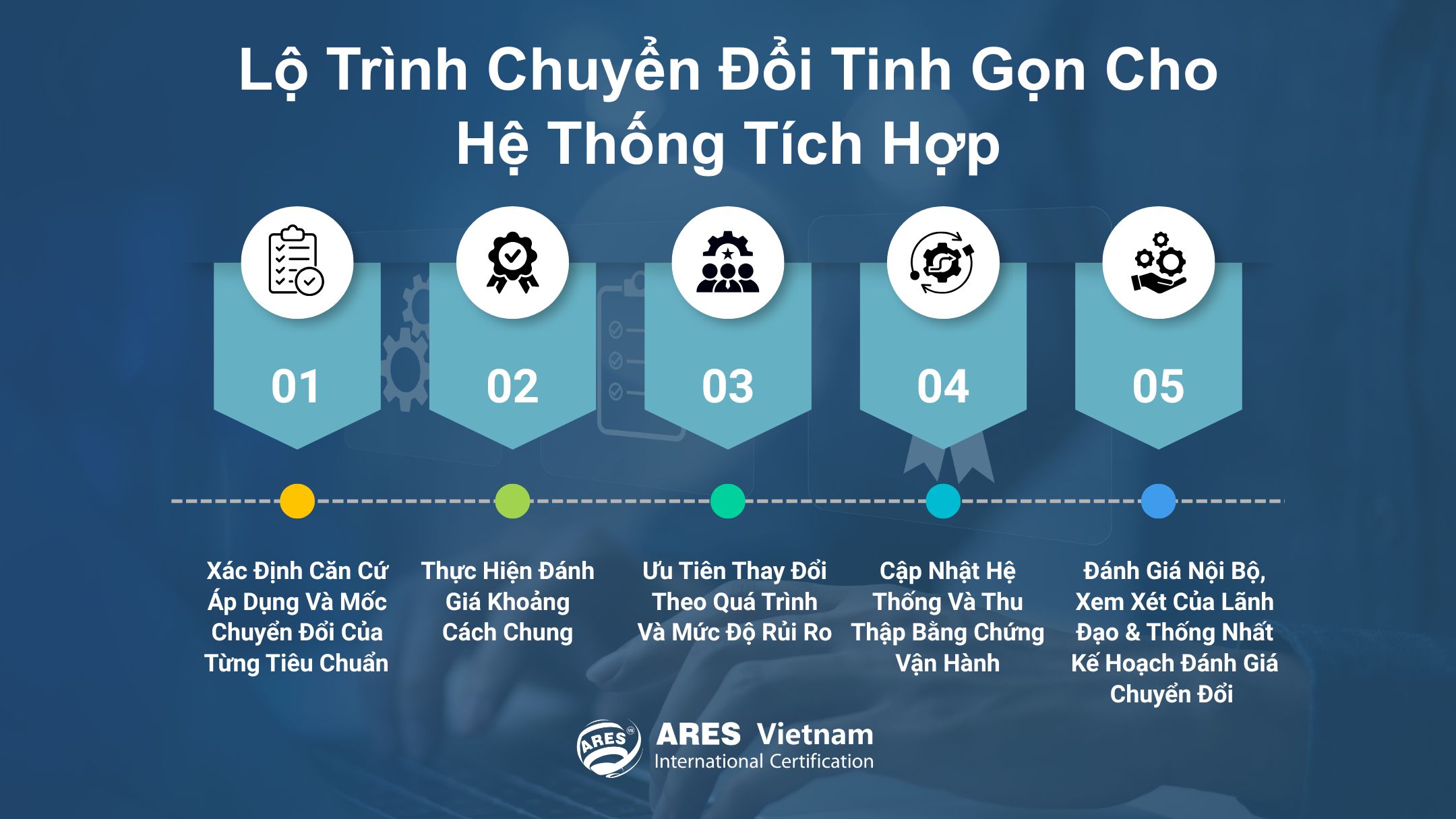
The transition can be carried out through the following five steps.
Step 1. Identify the Applicable Requirements and Transition Timeline for Each Standard
Organizations should obtain updates from ISO, their certification body, or other official sources to stay informed about publication progress, transition timelines, and implementation guidance for each standard.
A clear understanding of the current status of ISO 9001 and ISO 14001 enables organizations to determine which activities can begin immediately while avoiding changes based on information that has not yet been officially confirmed.
Step 2. Conduct an Integrated Gap Assessment
Organizations should develop a single gap assessment matrix to identify the requirements that need to be reviewed across the integrated management system.
The matrix should clearly distinguish:
- Common management system requirements;
- ISO 9001-specific requirements;
- ISO 14001-specific requirements;
- Processes affected by the revisions;
- Identified gaps;
- Planned actions;
- Responsible departments or personnel;
- Target completion dates;
- Required evidence or expected deliverables.
Step 3. Prioritize Changes Based on Processes and Risk
Not every change needs to be implemented at the same time. Organizations should prioritize processes that have the greatest impact on product quality, environmental performance, compliance obligations, or business operations.
This risk-based approach allows resources to be used more effectively while reducing the need for repeated revisions throughout the transition.
Step 4. Update the Management System and Collect Objective Evidence
Organizations should focus on revising only those documents and processes that are genuinely affected, rather than rewriting the entire management system. Once updates have been completed, the revised processes should be implemented, monitored, and supported with objective evidence demonstrating that they are functioning effectively.
This evidence will also serve as the basis for verifying the effectiveness of the changes before the transition audit takes place.
Step 5. Conduct Internal Audits, Perform Management Review, and Finalize the Transition Audit Plan
Before applying for a transition audit, organizations should complete internal audits covering the updated requirements and conduct a management review to evaluate the overall readiness of the management system.
A transition audit should be scheduled only after sufficient objective evidence demonstrates that the revised requirements have been effectively implemented and that the management system continues to operate as intended.
Prepare for the Transition Proactively
The near-simultaneous updates to ISO 9001:2026 and ISO 14001:2026 provide organizations with an opportunity to review and strengthen their integrated management systems, making them more aligned, efficient, and responsive to today’s operating environment.
Rather than concentrating solely on revising documents clause by clause, organizations should first assess the overall impact of the revisions, identify the management areas that require attention, and develop a transition roadmap that reflects their actual operations. This approach not only helps streamline the transition process but also enhances the long-term effectiveness of the management system after the new standards are implemented.
If your organization is preparing to transition to ISO 9001:2026 or ISO 14001:2026, ARES Vietnam’s team of experts is ready to support you throughout the assessment and certification process in accordance with the latest standard requirements.
Frequently Asked Questions (FAQ)
| Question | Short Answer |
| Can organizations transition to ISO 9001:2026 and ISO 14001:2026 during the same audit? | In principle, yes. This is possible if both standards have officially entered the transition phase, the management system is adequately prepared, and the certification body can accommodate an appropriate audit scope. Organizations should agree in advance on the audit timing, duration, and transition plan. |
| Can organizations with multiple sites or facilities transition at different times? | Yes. The approach depends on the certification structure and the level of integration between sites. However, if all locations are covered under a single multi-site certificate, the transition should be managed through a coordinated plan to ensure consistent implementation and objective evidence across all sites. |
| Is it necessary to retrain all employees when the two standards are updated? | Not necessarily. Organizations should first identify the personnel directly affected by the revisions, such as top management, management system coordinators, internal auditors, and process owners. Training should then be tailored to the responsibilities of each group. |
| Can the transition be combined with an expansion of the certification scope? | Yes. However, the transition and scope expansion should be evaluated separately in terms of resource requirements and organizational readiness. Expanding the certification scope often increases the number of processes, locations, or activities to be audited. Therefore, organizations should ensure the revised management system has been operating long enough to generate sufficient objective evidence before applying for certification. |
| Will the transition affect a scheduled surveillance audit? | It may, particularly if the organization does not coordinate with its certification body early in the planning process. Organizations should clarify whether the upcoming audit will be conducted against the current edition of the standard, combined with transition activities, or scheduled as a separate transition audit. |
Related news

Circular 49/2026/TT-BCT Takes Effect Soon: Which Environmental Records Should Factories Review?
Read more

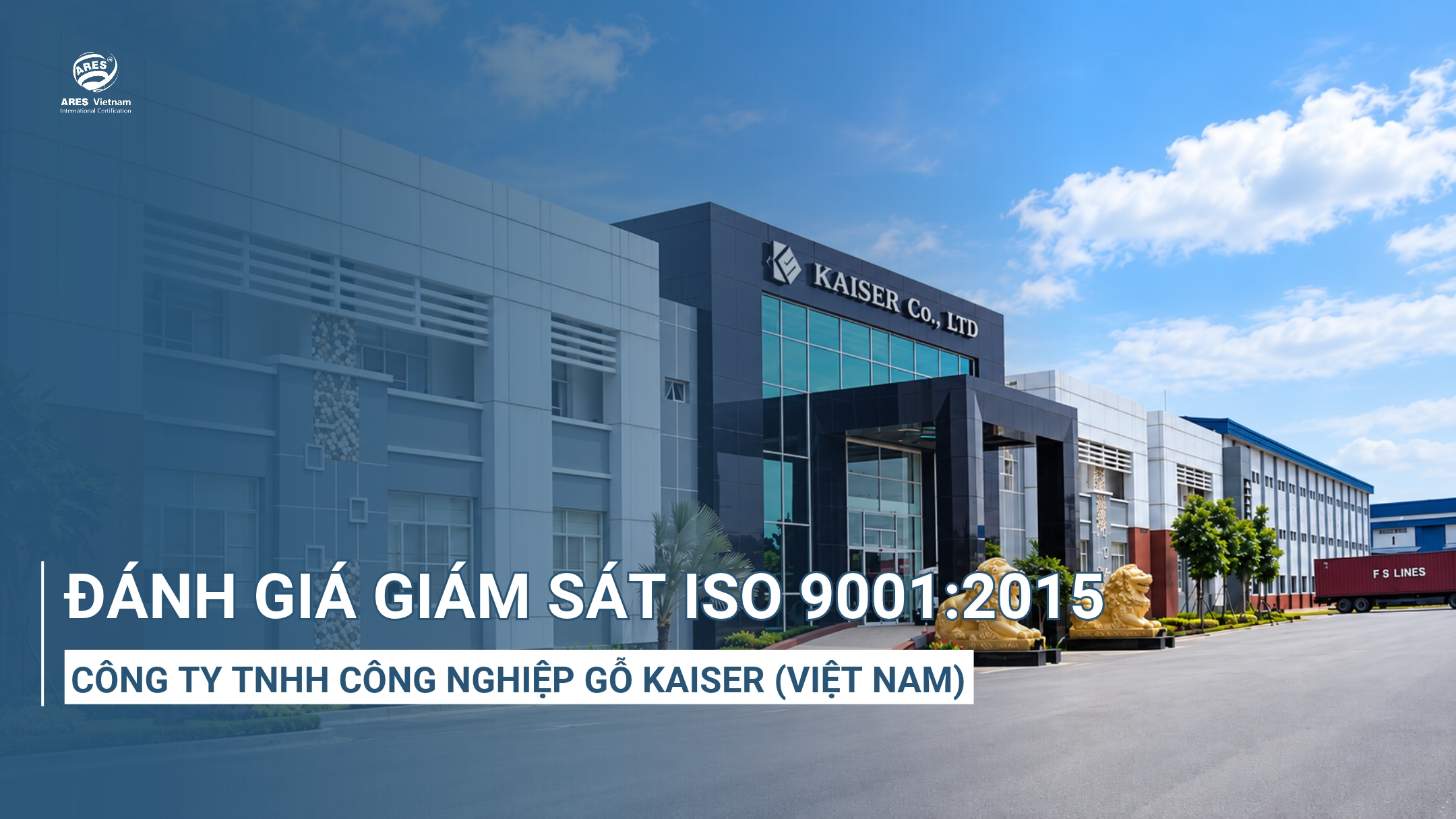
ARES Vietnam Conducts the Second ISO 9001:2015 Surveillance Audit at KAISER 1 & KAISER 2 (Vietnam)
Read more

National Single Window and ASEAN Single Window: What Documents Should Import–Export Businesses Prepare?
Read more

ARES Vietnam Awards ISO 9001:2015 Certification to Simona Leather Company Limited
Read more

ARES Vietnam Conducts ISO 9001:2015 Surveillance Audit at Simona Leather Company Limited
Read more