What Are Supplier Evaluation Criteria? A Practical Checklist for Businesses
In manufacturing and operational activities, suppliers directly affect input quality, delivery performance, and the overall stability of the supply chain. Even a single unstable supply link can result in defective products, delayed schedules, or production disruptions.
However, many companies still evaluate suppliers based on experience or individual situations rather than using a consistent set of criteria. As a result, supplier selection and monitoring often lack consistency and become difficult to control over the long term.
Therefore, establishing clear evaluation criteria and a practical checklist is an important step in improving quality control, maintaining delivery performance, and reducing supply chain risks. In this article, ARES Vietnam summarizes the most important supplier evaluation criteria and provides a checklist that businesses can apply in practice.
Why Do Businesses Need to Evaluate Suppliers?
As supply chains become increasingly complex, companies can no longer select suppliers based solely on price or previous cooperation experience. A supplier with unstable quality, delayed deliveries, or inadequate control capabilities can directly affect production plans, operating costs, and downstream delivery schedules.
Moreover, for exporters and companies participating in international supply chains, supplier evaluation is an important requirement to ensure compliance with customer expectations, regulatory requirements, and international management systems.
A well-structured evaluation process helps businesses:
- Control the quality of incoming materials and services
- Reduce the risk of production interruptions
- Maintain stable delivery schedules
- Optimize operating costs in the long term
- Strengthen control over supply activities
- Meet customer requirements and international standards
In addition, supplier evaluation is a requirement in many management systems, including ISO 9001, particularly regarding the control and assessment of external providers.
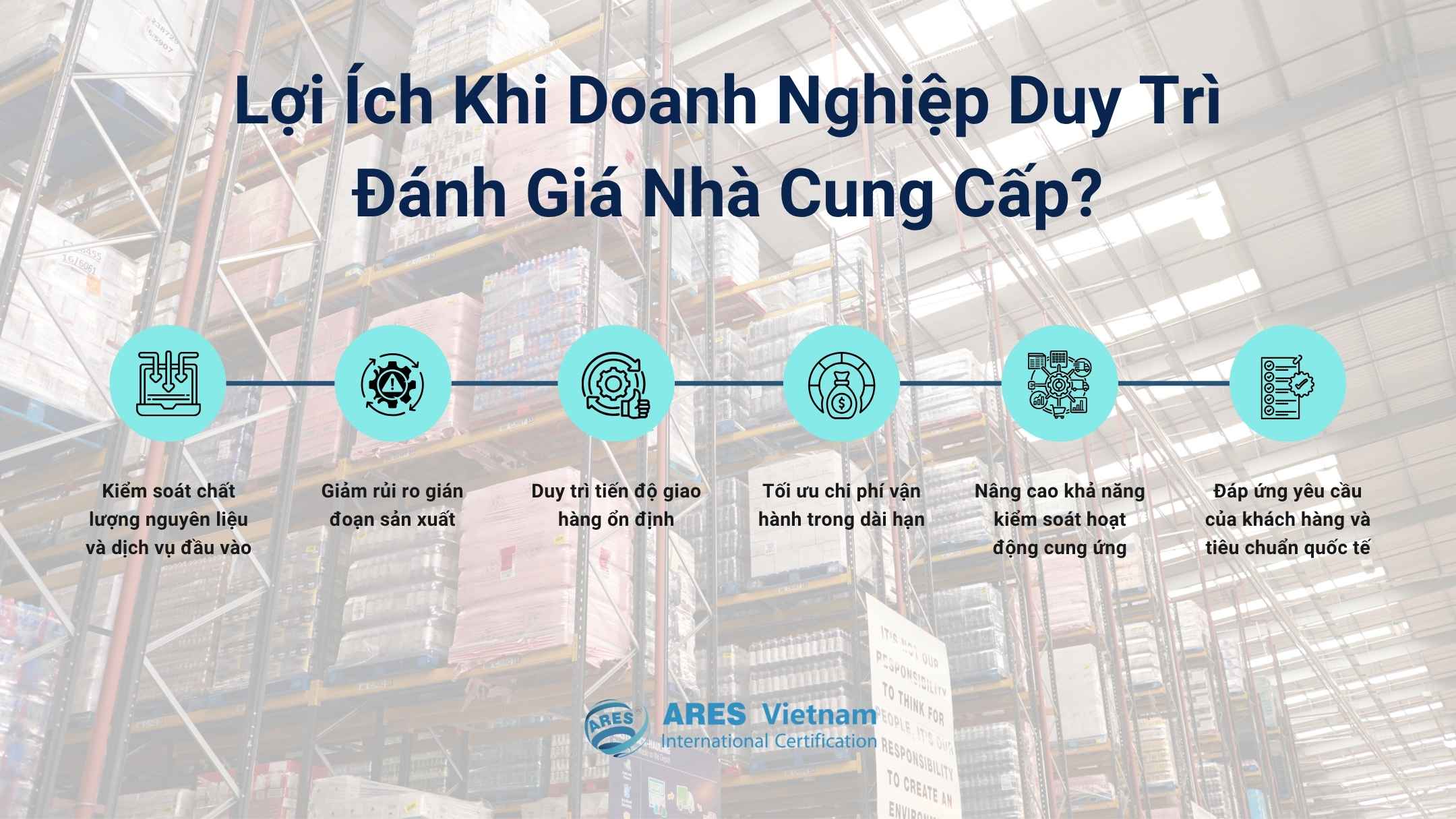
Benefits when businesses evaluate suppliers
The 8 Most Important Supplier Evaluation Criteria
Businesses should not evaluate suppliers based on a single factor. Instead, multiple aspects related to quality, delivery, operational capability, and compliance should be considered simultaneously. Depending on the industry, the priority assigned to each criterion may vary. Nevertheless, the following categories are widely used in most supplier evaluation models.
1. Quality Management
Quality is always one of the highest priorities when selecting and evaluating suppliers. A supplier may perform well initially, but quality can fluctuate when production volumes increase or raw materials change. In such cases, the impact goes beyond defective products and may also lead to additional inspection activities, complaint handling, and production delays.
Businesses typically evaluate:
- Defect rates across delivery periods
- Consistency between production batches
- Capability to control incoming and outgoing quality
- Traceability and root cause analysis mechanisms
- Quality monitoring and continuous improvement activities
2. Delivery Performance and Schedule Reliability
In manufacturing environments, on-time delivery is just as important as product quality. Even a single delay can result in line stoppages, material shortages, or disruptions to downstream delivery plans.
Common evaluation items include:
- On-time delivery rate
- Consistency of delivery lead times
- Ability to handle urgent or unexpected orders
- Response speed when delivery schedules change
- Capacity to maintain supply during peak seasons
3. Supply Capability and Production Capacity
Some suppliers perform well at a small scale but encounter difficulties when demand increases rapidly or during peak periods. Therefore, businesses should assess not only current capacity but also the supplier’s ability to maintain supply in the long run.
Key factors often reviewed include:
- Actual production capacity
- Availability and control of raw materials
- Machinery systems and workforce resources
- Ability to expand production when demand grows
- Dependence on a single major customer or raw material source
4. Management System and Process Control
Many operational problems are caused not by technology or machinery, but by inadequate process control and lack of standardization. As a result, companies today carefully assess a supplier’s management system before establishing long-term partnerships.
Common evaluation items include:
- Whether work processes are standardized and regularly updated
- Clear allocation of responsibilities among departments
- Proper storage of production and quality records
- Mechanisms for corrective and preventive actions
- Implementation of relevant management systems or standards
5. Pricing and Total Cost of Cooperation
The initial purchase price reflects only part of the actual cooperation efficiency. In many cases, selecting a low-cost supplier with unstable quality or delivery performance can significantly increase operating costs later.
Businesses generally consider:
- Price competitiveness compared with the market
- Costs arising from defects or returns
- Inspection, transportation, and incident-handling costs
- Long-term price stability
- Support policies and complaint-handling mechanisms
6. Financial Capability and Business Stability
For long-term partnerships, financial capability is a key concern for many businesses, especially FDI enterprises. Suppliers with unstable financial conditions may create risks related to supply interruptions or reduced responsiveness during market fluctuations.
Common assessment factors include:
- Financial stability
- Business history and operational experience
- Ability to sustain long-term operations
- Dependence on a limited number of major customers
- Risks related to cash flow and receivables
7. Communication and Problem-Solving Capability
In practice, the issue is not whether problems occur, but how suppliers respond and cooperate when they do. A slow response or lack of transparency can prolong resolution time and negatively affect downstream operations.
Businesses often focus on:
- Response time when issues arise
- Level of technical support during problem resolution
- Transparency in communication
- Approaches to handling incidents or complaints
- Cooperative attitude during daily operations
8. Legal Compliance and Reputation in the Supply Chain
Besides operational capability, companies increasingly pay attention to legal compliance, environmental requirements, occupational safety, and social responsibility. These factors are becoming more important for exporters and businesses participating in global supply chains.
Typical evaluation items include:
- Legal documents and required licenses
- Environmental and occupational safety requirements
- Social responsibility and working conditions
- History of serious violations or complaints
- Compliance with customer requirements and export market expectations
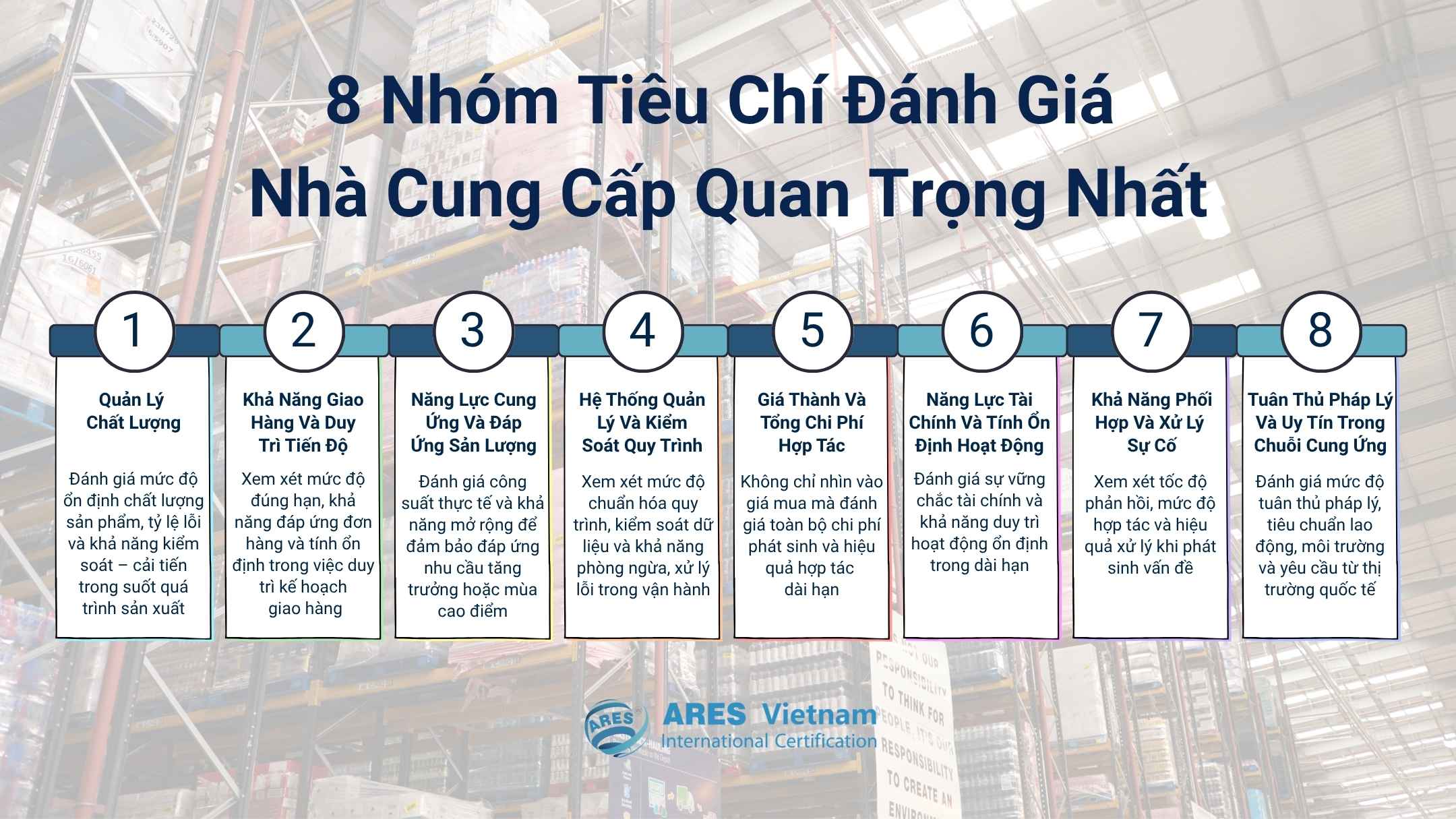
8 most important groups of supplier evaluation criteria
Practical Supplier Evaluation Form Template
After identifying the appropriate evaluation criteria, businesses should convert them into a standardized assessment form so that different departments can apply the same approach when selecting and monitoring suppliers.
Instead of relying on subjective judgments, the checklist should be supported by specific data, clearly defined criteria, and a proper record retention mechanism for future reference.
Businesses can design supplier evaluation forms based on the following categories:
| Evaluation Category | Monitoring Items | Evaluation Method |
| Quality | Defect rate and consistency between batches | Score / Pass-Fail |
| Delivery | On-time delivery performance and ability to handle urgent orders | Score / KPI |
| Supply Capability | Production capacity and scalability | On-site assessment |
| Management System | Procedures, records, and control capability | Audit / Documentation review |
| Cost of Cooperation | Additional costs and price stability | Periodic monitoring |
| Compliance | Legal requirements, environmental aspects, and certifications | Supporting documents |
The checklist should be adjusted according to the industry, risk level, and specific requirements of each business. In many cases, different criteria are assigned different weightings depending on operational priorities.
Common Mistakes In Supplier Evaluation
Many businesses have established supplier evaluation criteria and checklists. However, the actual implementation often lacks consistency and effectiveness. In most cases, the issue is not the absence of forms, but rather inconsistent application and maintenance across departments.
Some common mistakes include:
- Evaluating suppliers only at the initial stage without conducting periodic reviews
- Using different criteria among departments, leading to inconsistent results
- Performing evaluations merely as a formality without comparing actual performance data
- Failing to retain records for long-term monitoring
- Focusing excessively on price while overlooking quality and supply stability
When evaluation activities are not maintained regularly and data is not kept up to date, businesses will find it difficult to accurately monitor supplier performance and stability over time.
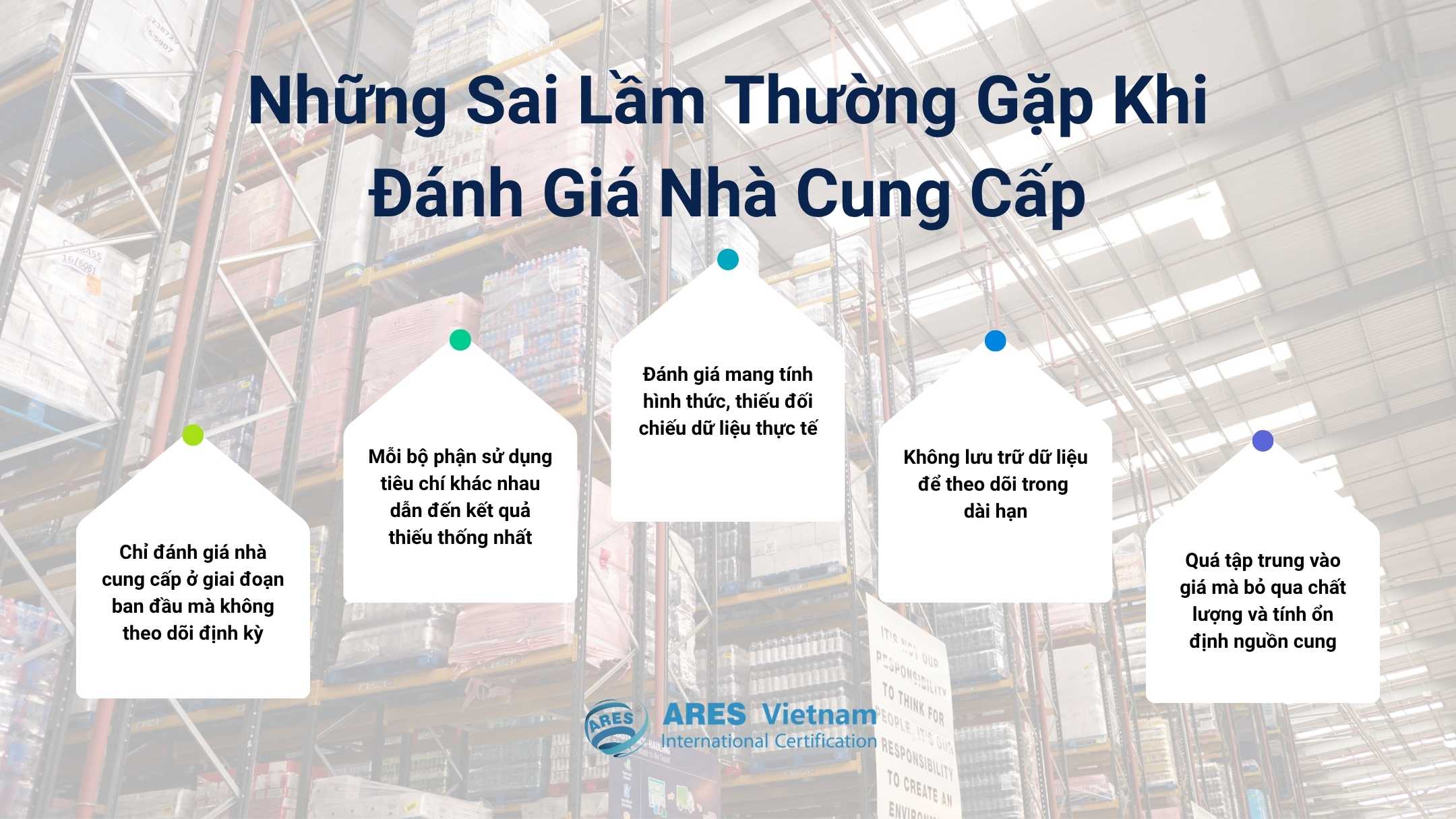
Common mistakes when evaluating suppliers
Effective Supplier Control Starts with a Clear Evaluation System
Supplier evaluation is not only intended for initial supplier selection. More importantly, it serves as a management tool that helps businesses control incoming quality, maintain operational schedules, and reduce supply-related risks.
A well-defined evaluation system with specific criteria and an appropriate checklist enables businesses to monitor supplier performance more effectively, identify issues at an early stage, and make better operational decisions. Furthermore, this approach provides an important foundation for meeting the requirements of management systems such as ISO 9001 and other international standards related to supply chain management.
Hopefully, the information above will provide businesses with a useful reference for developing and improving supplier evaluation processes that are suitable for their actual operations.
If your organization requires support in establishing a supplier evaluation system or implementing appropriate ISO standards, please contact ARES Vietnam for further assistance: Hotline: 085.3858.553 or Email: Service@aresvietnam.vn
Related news

Circular 49/2026/TT-BCT Takes Effect Soon: Which Environmental Records Should Factories Review?
Read more


ARES Vietnam Conducts the Second ISO 9001:2015 Surveillance Audit at KAISER 1 & KAISER 2 (Vietnam)
Read more

National Single Window and ASEAN Single Window: What Documents Should Import–Export Businesses Prepare?
Read more

ARES Vietnam Awards ISO 9001:2015 Certification to Simona Leather Company Limited
Read more

ARES Vietnam Conducts ISO 9001:2015 Surveillance Audit at Simona Leather Company Limited
Read more