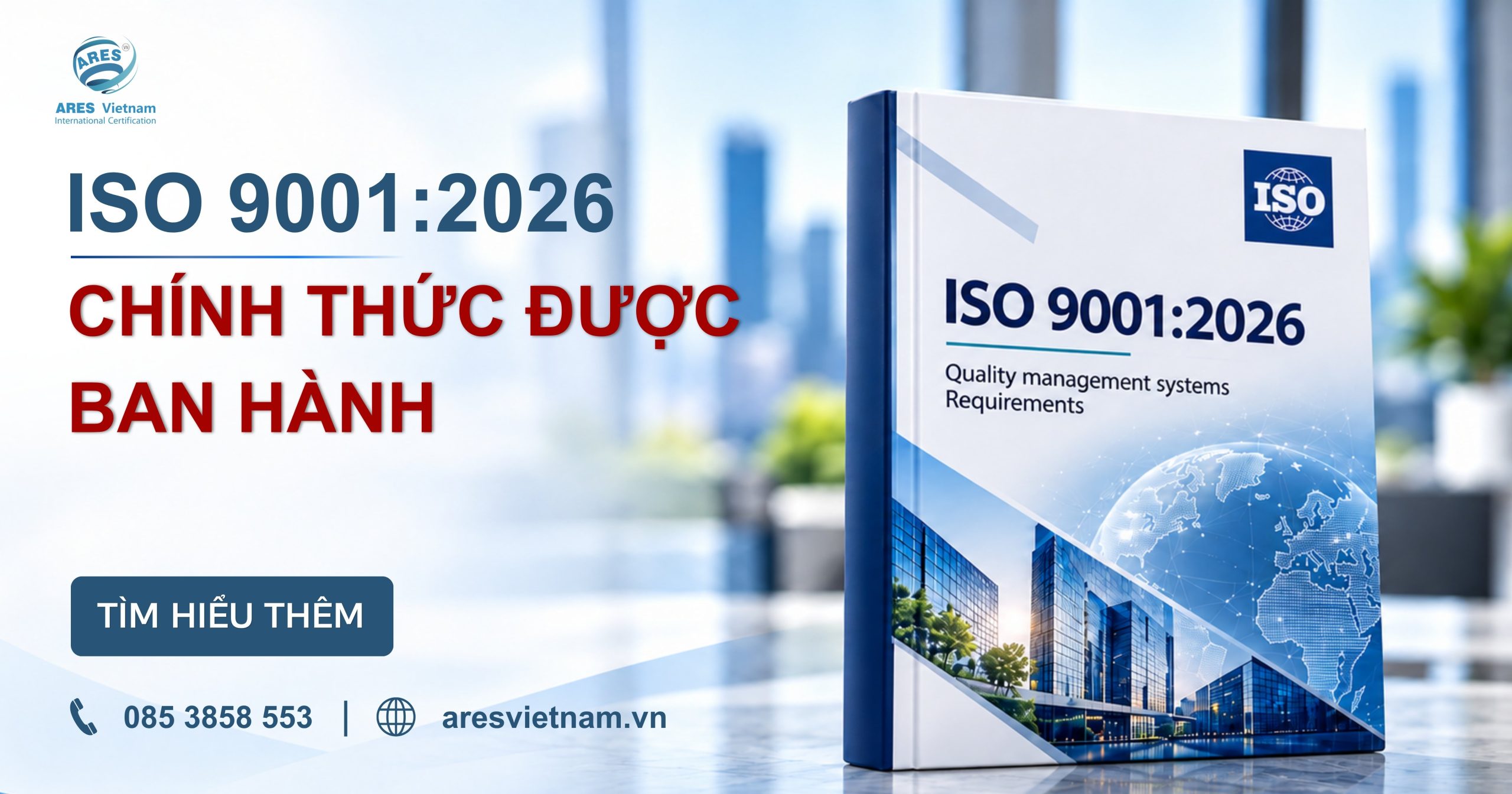
ISO 9001:2026 Update Coming Soon: What Should Businesses Prepare?
Nearly a decade after ISO 9001:2015, the International Organization for Standardization (ISO) is finalizing ISO 9001:2026—the world’s most widely adopted quality management system. Expected to be released in 2026, this new version reflects major shifts of the era, including digital transformation, sustainability, and data-driven governance.
In this context, the key question is not only “How will ISO 9001:2026 change?” but also “What must businesses do to avoid being left behind?” This article explains why ISO 9001 is being revised and outlines essential preparation steps for the upcoming transition.

The ISO 9001 standard will be issued in a new version in 2026
What Is Driving the ISO 9001:2026 Revision?
Each ISO update mirrors real-world management challenges. ISO 9001:2026 follows this pattern and is driven by three main factors:
1️⃣ Changing customer and market expectations
Quality is no longer defined solely by compliant products. Today, customers expect transparency, accountability, and responsible management. When a QMS focuses only on documentation, businesses struggle to sustain trust and long-term brand credibility.
2️⃣ Global disruptions exposing governance gaps
The pandemic, energy crises, and geopolitical conflicts have revealed weaknesses in business resilience and risk management. Without robust continuity planning, operations are easily disrupted and costs escalate rapidly.
3️⃣ Technology reshaping management capability
AI, IoT, and data analytics introduce new ways to measure performance, monitor processes, and support decision-making. However, without digital foundations and real-time data flows, organizations cannot respond quickly when issues arise.
As a result, ISO 9001 is being upgraded into a more integrated management framework—where quality and technology become the shared language of modern business.

ISO 9001 updates are based on real-world management practices
Key Changes in ISO 9001:2026 Compared with ISO 9001:2015
Draft versions (CD/DIS) indicate that ISO 9001:2026 expands both the scope and depth of governance. It goes beyond editorial adjustments and reinforces the strategic role of the QMS:
◾Climate change and organizational context: These elements are incorporated into the QMS to enhance environmental risk responsiveness and align with ESG expectations.
◾Quality culture and ethics: Leadership is expected to foster a culture rooted in ethical values, with reference to ISO 10010, to strengthen trust among employees and customers.
◾Integrated risk and opportunity management: Risk-based thinking is reinforced to improve foresight and operational agility.
◾Practical quality objectives: Objectives must be realistic and closely linked to measurable KPIs, ensuring that improvement delivers tangible value.
◾Remote work and digital infrastructure: Hybrid working environments and digital platforms are formally integrated into the QMS to optimize performance, connectivity, and data security.
◾Validation of measurement software: Any software used for measurement within the QMS must be validated to ensure data accuracy and reliability for management decisions.
◾Expanded customer communication channels: Digital platforms such as websites, social media, and FAQs are recognized as official communication channels, ensuring information consistency and improving customer experience.
◾Continuous improvement as a core element: Improvement becomes a central component, creating closed feedback loops and driving ongoing system enhancement.

Key changes in ISO 9001:2026 compared with ISO 9001:2015
How Should Businesses Prepare for ISO 9001:2026?
ISO 9001:2026 marks a shift from traditional quality control to value-driven operational management. To adapt proactively and optimize the transition, businesses should prioritize the following steps:
1️⃣ Review the current management system
Conduct a comprehensive analysis of the existing QMS—from objectives and processes to risks and business trends. This helps identify gaps against new requirements and define appropriate adjustment strategies.
2️⃣ Strengthen organizational competence through training
Equip employees with management knowledge, operational skills, and digital tool capabilities. A well-informed organization is essential for effective operation and sustainable improvement.
3️⃣ Review and align documentation and processes
Update context analysis, software validation methods, internal audit tools, and management review reports. When data is managed consistently and accurately, deviations are reduced and transparency improves significantly.
4️⃣ Establish a structured transition roadmap
Develop a detailed 2025–2026 transition plan. Register early with certification bodies and consider integrating related standards such as ISO 14001, ISO 45001, or ESG frameworks. A clear roadmap ensures a smooth transition while saving time and cost.

ARES Vietnam’s roadmap for transitioning to ISO 9001:2026
ARES Vietnam – Your Partner in the ISO 9001:2026 Transition
With over 20 years of cross-industry ISO implementation experience, ARES Vietnam closely follows updates from ISO/TC 176/SC 2. We provide gap analysis, transition consulting, and ISO 9001:2026 training for leadership teams.
This is the right time for organizations currently certified to ISO 9001:2015 to review and restandardize their systems. It is also an opportunity for new organizations to build ISO 9001 based on the 2026 framework—ensuring efficiency, simplicity, and alignment with long-term strategic direction.
Related news
Circular 49/2026/TT-BCT Takes Effect Soon: Which Environmental Records Should Factories Review?
Read more

ARES Vietnam Conducts the Second ISO 9001:2015 Surveillance Audit at KAISER 1 & KAISER 2 (Vietnam)
Read more

National Single Window and ASEAN Single Window: What Documents Should Import–Export Businesses Prepare?
Read more

ARES Vietnam Awards ISO 9001:2015 Certification to Simona Leather Company Limited
Read more

ARES Vietnam Conducts ISO 9001:2015 Surveillance Audit at Simona Leather Company Limited
Read more