ISO 45001 for the Leather and Footwear Industry: What Should Businesses Prepare Before Certification?
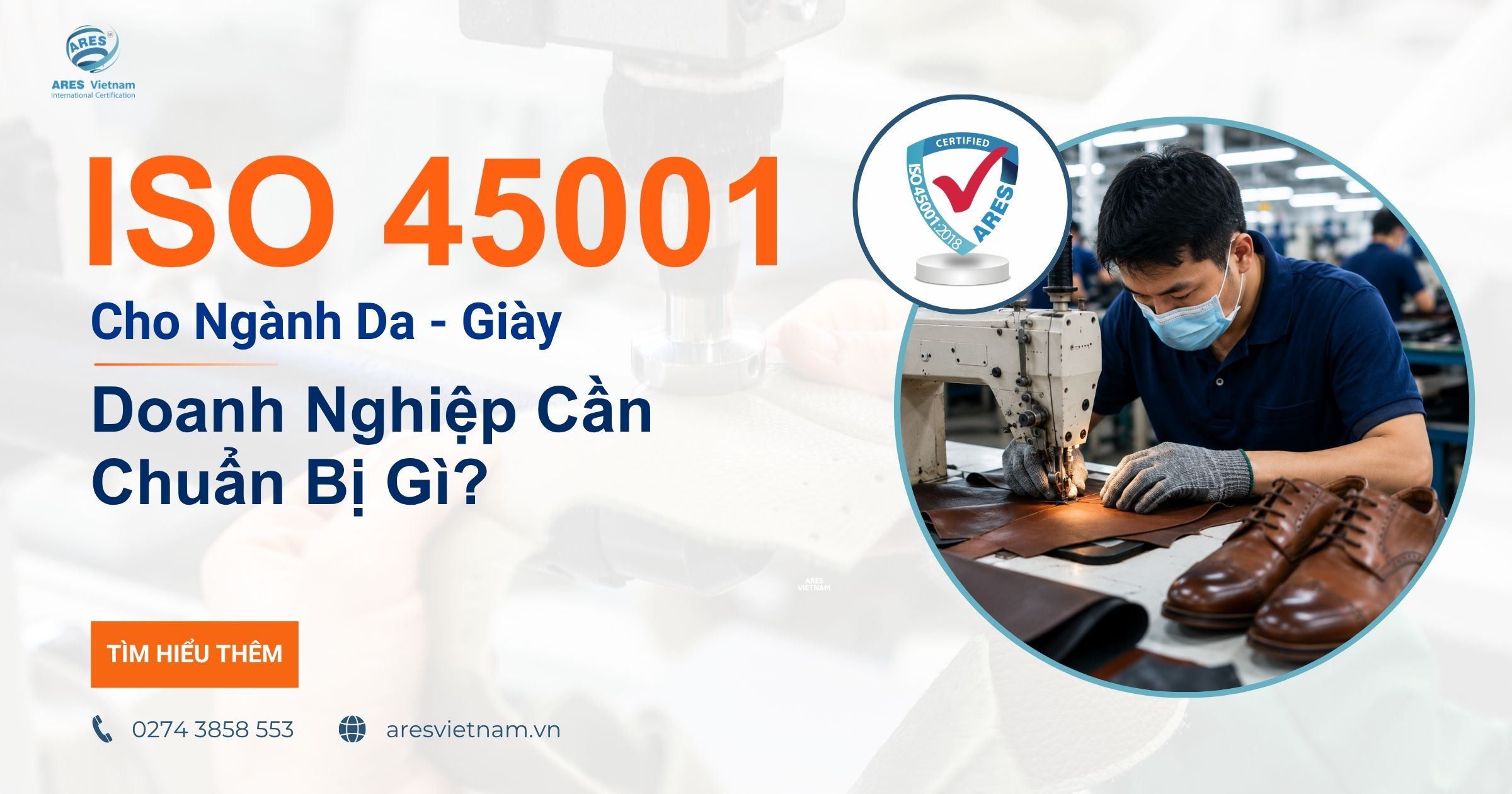
ISO 45001 for the Leather and Footwear Industry provides a structured framework for identifying hazards, assessing occupational risks and improving workplace safety across production processes. Before applying for certification, leather and footwear manufacturers need to prepare their management system, operational controls, documented information and evidence of effective implementation.
What should businesses prepare before applying for ISO 45001 certification? This article explains the key requirements, from hazard identification and chemical control to internal audits and certification assessment.
Why Is ISO 45001 Particularly Important for the Leather and Footwear Industry?
Manage risks across the entire manufacturing process: Leather and footwear manufacturing involves multiple production stages with different working conditions. Managing each area independently may result in inconsistent controls or overlooked hazards. ISO 45001 integrates hazard identification, risk assessment, implementation of control measures and performance monitoring into a single management system.
Meet customer and business partner requirements: Occupational health and safety management capability is often considered during supplier evaluations conducted by customers, parent companies or business partners. Implementing ISO 45001 enhances business credibility and strengthens an organization’s competitiveness within the supply chain.
Support compliance with legal and regulatory requirements: Although ISO 45001 does not replace legal obligations, it helps organizations identify applicable requirements, assign responsibilities, monitor implementation and periodically evaluate compliance.
8 Key Areas to Prepare Before Implementing ISO 45001
The implementation sequence may vary depending on the size of the organization, product types, manufacturing processes and level of occupational risk. However, before applying for ISO 45001 certification, businesses should ensure that the following eight key areas have been adequately addressed.
1. Define the Scope of the Occupational Health and Safety Management System
The scope of the Occupational Health and Safety Management System (OHSMS) should accurately reflect the locations, products, processes and activities under the organization’s control, as well as those that may influence occupational health and safety performance.
The organization should clearly define:
- Manufacturing facilities and locations included within the certification scope;
- Products and production processes covered by the management system;
- Raw material warehouses, chemical storage areas, maintenance workshops and supporting facilities;
- Outsourced activities that may affect the effectiveness of the management system.
The scope should accurately reflect actual operations. It should not be described too broadly or exclude areas and processes where occupational hazards may arise.
2. Identify Applicable Legal and Other Requirements
In addition to the requirements of ISO 45001, organizations should identify all legal, regulatory and other obligations applicable to their operations.
Typical areas for review include:
- Occupational safety and hygiene;
- Chemical management;
- Fire prevention, firefighting, rescue and emergency response;
- Machinery and equipment subject to specific safety regulations;
- Workplace environmental monitoring;
- Occupational health surveillance;
- Personal Protective Equipment (PPE);
- Requirements specified by customers, parent companies, industrial parks or contractual agreements.
The register of applicable requirements should be updated whenever changes occur, and compliance should be evaluated on a regular basis. Relevant records, control measures and objective evidence should be maintained in accordance with the obligations applicable to each facility.
3. Identify Hazards Throughout the Manufacturing Process
Hazard identification should not be limited to departments or general work areas. Organizations should identify hazards by considering each production process, piece of equipment and actual work activity to ensure risks are assessed comprehensively.
| Production Process | Hazards to Consider |
| Raw Material Storage | Manual material handling, forklift operations, falling materials, fire hazards, obstructed walkways |
| Cutting and Die Cutting | Cutting blades, die presses, pinch and entanglement points, noise, vibration, repetitive movements |
| Stitching | Sewing machine needles, moving machine parts, noise, lighting conditions, prolonged sitting posture |
| Grinding and Sole Buffing | Dust, noise, flying particles, entanglement hazards, vibration |
| Adhesive Application and Surface Treatment | Solvent vapours, volatile organic compounds (VOCs), skin exposure to chemicals, inhalation of chemical vapours, fire and explosion hazards |
| Sole Pressing and Bonding | High temperatures, pinch points on pressing machines, chemicals, prolonged standing, repetitive movements |
| Packaging | Cutting tools, manual lifting, material stacking, fire hazards and emergency exits |
| Chemical Storage | Chemical leaks, spills, chemical reactions, inadequate labelling, insufficient ventilation |
| Maintenance | Electrical hazards, stored energy, working at height, welding and cutting operations, contractor activities |
Hazard identification should also take into account:
- Routine and non-routine activities;
- Normal, abnormal and emergency operating conditions;
- Maintenance, repair and cleaning activities;
- Changes to machinery, raw materials or production processes;
- Individuals performing work or who may be affected by workplace activities, including permanent employees, temporary workers, contractors and visitors;
- Groups of people who may be particularly vulnerable to specific hazards.
4. Conduct Risk Assessments and Determine Appropriate Control Measures
After hazards have been identified, organizations should conduct risk assessments to determine which risks require priority action.
The risk assessment methodology should be applied consistently and take into consideration factors such as:
- Severity of potential consequences;
- Likelihood of occurrence;
- Existing control measures;
- Residual risk;
- Priority for risk treatment.
Risk assessment results should be reviewed and updated whenever there are changes to machinery, materials or production processes, or following an incident or accident.
When selecting control measures, organizations should follow the hierarchy of controls:
1/ Eliminate the hazard;
2/ Substitute with less hazardous materials, chemicals or work methods;
3/ Implement engineering controls;
4/ Implement administrative controls;
5/ Use Personal Protective Equipment (PPE) as the last line of defence, in combination with other appropriate control measures.
5. Control of Chemicals, Adhesives and Solvents
Adhesives, solvents and surface treatment chemicals are widely used throughout leather and footwear manufacturing processes. If not properly controlled, these substances may increase the risk of chemical exposure, fire, explosion and adverse health effects on workers.
| Area | What the Organization Should Prepare |
| Chemical Management | A chemical inventory, Safety Data Sheets (SDS), appropriate chemical labels and records maintained in accordance with applicable regulations |
| Storage and Handling | Suitable storage conditions, chemical segregation, and documented procedures for safe transfer and handling |
| Engineering Controls | Adequate ventilation systems, local exhaust ventilation where required, designated storage areas and spill response equipment |
| Workers | Safe work instructions, task-specific training and appropriate Personal Protective Equipment (PPE) based on the level of risk |
Chemical management requirements may vary from one organization to another. The applicable obligations depend on the types of chemicals used, storage quantities, operational scale and the legal requirements applicable to each facility.
6. Establish Roles, Responsibilities and Personnel Competence
Top management should demonstrate leadership and commitment by establishing the occupational health and safety policy, setting objectives, providing adequate resources and assigning clear roles and responsibilities throughout the management system.
Responsibilities should be clearly defined for:
- Top management and line managers;
- The HSE function and supporting departments such as Human Resources and Maintenance;
- Supervisors responsible for warehouses and high-risk work areas;
- Người lao động, nhà thầu và đơn vị cung ứng dịch vụ làm việc tại cơ sở.
Personnel involved in the Occupational Health and Safety Management System should receive appropriate training and demonstrate competence for their assigned responsibilities. Records may include:
- Documents defining roles and responsibilities;
- Training records, competency assessments and qualification records;
- Nội quy, hướng dẫn công việc và hồ sơ phổ biến cho người lao động, nhà thầu.
In addition to assigning responsibilities, organizations should encourage worker participation in hazard identification, incident reporting, raising concerns about unsafe conditions and contributing to the development of control measures. ISO 45001 is not solely the responsibility of the HSE department; its effective implementation requires active participation from all levels and functions of the organization.
7. Establish Operational Controls and Emergency Preparedness
After identifying risks and assigning responsibilities, the organization should establish operational controls to manage activities under both normal operating conditions and emergency situations.
Operational controls typically cover the following areas:
- Machinery, equipment, electrical safety and maintenance activities;
- Chemical management, warehousing and material handling operations;
- Contractor management and high-risk work activities;
- Changes to machinery, raw materials and production processes;
- Provision and proper use of Personal Protective Equipment (PPE).
Organizations should also identify potential emergency situations that may occur at the facility, including:
- Fires and explosions;
- Chemical leaks, spills or exposure incidents;
- Serious occupational accidents and situations requiring first aid or emergency medical response;
- Failures involving electrical systems, machinery, ventilation or local exhaust systems;
- Natural disasters and other relevant emergency situations.
Emergency response procedures should be communicated, supported through training, tested and, where appropriate, practised through drills according to a planned schedule. Following each drill, actual emergency or significant operational change, the organization should review and update its emergency response arrangements as necessary.
8. Verify System Effectiveness Before Certification Assessment
Before applying for certification assessment, organizations should review the entire management system to ensure that all applicable requirements have been implemented and that objective evidence demonstrates the system is operating effectively.
The review should include, but is not limited to:
- Monitoring occupational health and safety objectives and conducting workplace inspections;
- Workplace environmental monitoring and occupational health surveillance, where applicable;
- Reporting and investigating accidents, incidents and near misses, together with the implementation of corrective actions;
- Evaluating compliance with applicable legal and other requirements;
- Conducting internal audits and management reviews;
- Monitoring the effectiveness of implemented control measures.
Having complete documentation does not necessarily demonstrate that the management system is effective. During the certification assessment, the certification body will evaluate documented information, on-site implementation, worker awareness and objective evidence that the system is being consistently maintained in practice.

ISO 45001 Implementation and Certification Roadmap for Leather and Footwear Manufacturers
| Step | Description |
| Step 1 | Conduct an initial assessment and define the scope of the Occupational Health and Safety Management System |
| Step 2 | Perform a gap analysis against the requirements of ISO 45001 |
| Step 3 | Develop and implement the management system, establish the required documented information and introduce appropriate control measures |
| Step 4 | Provide training and implement the management system throughout the organization |
| Step 5 | Conduct internal audits, implement corrective actions and perform management reviews |
| Step 6 | Undergo Stage 1 and Stage 2 certification assessments conducted by the certification body |
The time required for implementation varies from one organization to another, depending on factors such as facility size, workforce, production complexity, the types of chemicals used and the maturity of the existing management system. Organizations should apply for certification only after the necessary requirements have been implemented, verified and supported by objective evidence demonstrating effective operation.
Read more: ISO 45001:2018 Certification Process at ARES Vietnam.
Proactively Manage Occupational Risks with ISO 45001
ISO 45001 is not intended solely to develop documentation for certification purposes. More importantly, it provides organizations with a structured framework to proactively identify and control occupational hazards throughout their operations.
In the leather and footwear industry, the effectiveness of the Occupational Health and Safety Management System depends on accurately identifying hazards at each production stage, implementing control measures based on the hierarchy of controls, and maintaining the active involvement of top management, functional departments and workers.
When these requirements are implemented consistently across the organization, businesses can improve workplace conditions, reduce the likelihood of operational disruptions and strengthen their overall management capability throughout the supply chain.
For leather and footwear manufacturers seeking ISO 45001 certification, ARES Vietnam conducts independent assessments of the conformity and effectiveness of Occupational Health and Safety Management Systems in accordance with the requirements of ISO 45001, while upholding the principles of independence, impartiality and transparency.
Hotline: 085.3858.553
Email: service@aresvietnam.vn
Frequently Asked Questions (FAQ)
| Short Answer | Question |
| Is ISO 45001 Mandatory for Leather and Footwear Manufacturers? | ISO 45001 is a voluntary international standard. However, certification may be required by customers, parent companies or business partners as part of supplier qualification and evaluation processes. |
| Can ISO 45001 Be Integrated with ISO 9001 or ISO 14001? | Yes. Because ISO management system standards share many common requirements, organizations can integrate elements such as documented information control, training, internal audits, management reviews and corrective actions into a single Integrated Management System (IMS). |
| What Are the Stages of ISO 45001 Certification Assessment? | The initial certification assessment normally consists of Stage 1 and Stage 2 audits. Once the organization has demonstrated conformity with the standard and addressed any identified nonconformities, the certification body will determine whether certification can be granted. |
Related news

Circular 49/2026/TT-BCT Takes Effect Soon: Which Environmental Records Should Factories Review?
Read more


ARES Vietnam Conducts the Second ISO 9001:2015 Surveillance Audit at KAISER 1 & KAISER 2 (Vietnam)
Read more

National Single Window and ASEAN Single Window: What Documents Should Import–Export Businesses Prepare?
Read more

ARES Vietnam Awards ISO 9001:2015 Certification to Simona Leather Company Limited
Read more

ARES Vietnam Conducts ISO 9001:2015 Surveillance Audit at Simona Leather Company Limited
Read more