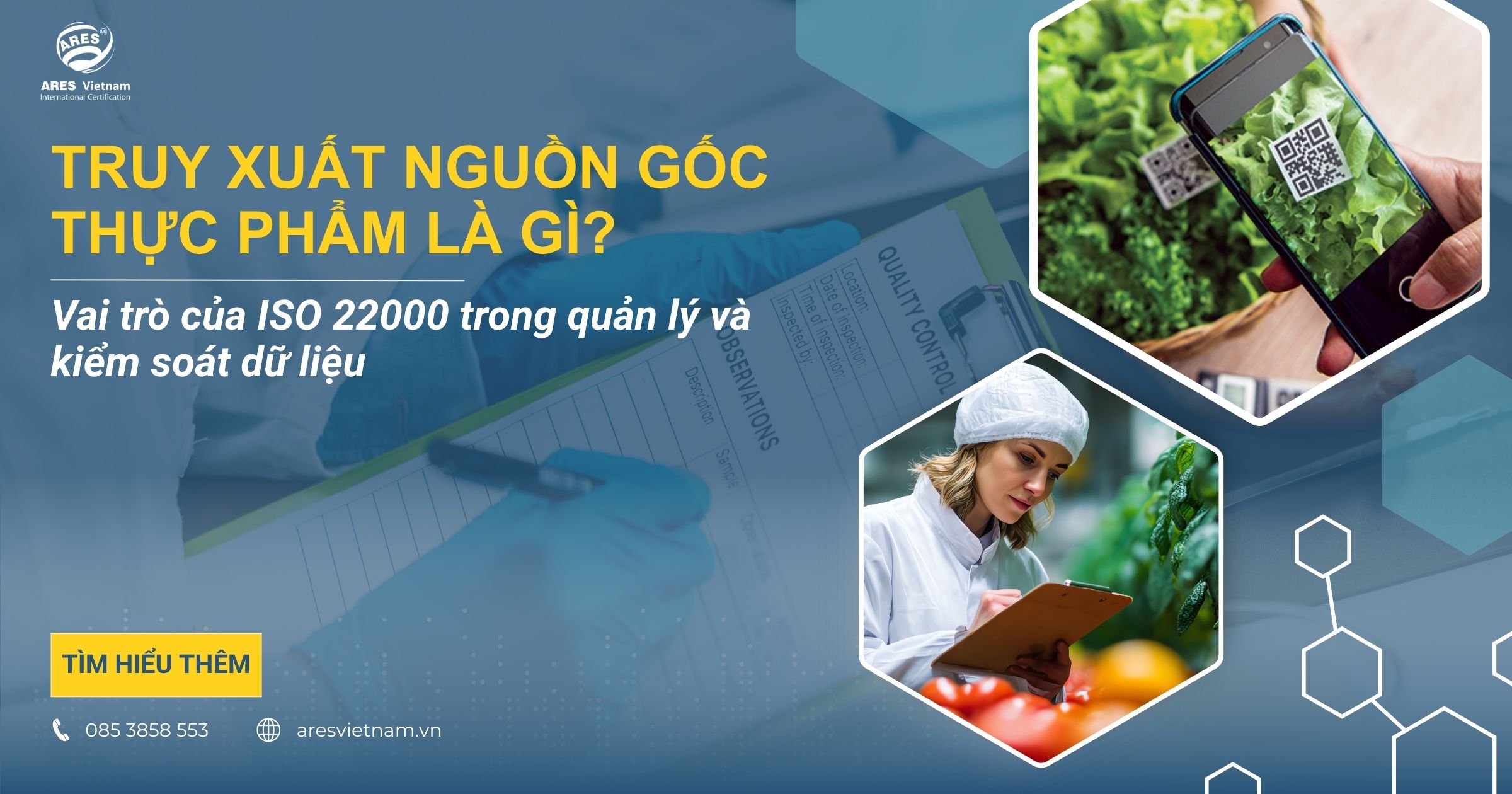
What is Food Traceability? The Role of ISO 22000 in Data Management
In the event of a food safety incident, the ability to rapidly identify the root cause and the extent of the impact is critical for organizations to mitigate losses in costs, reputation, and legal liability. To achieve this, organizations must establish an effective food traceability system, ensuring that data is comprehensively recorded, tightly linked, and retrievable upon demand.
Given the increasing demands for information transparency, many organizations choose to implement ISO 22000 to establish a systematic Food Safety Management System (FSMS), while enhancing data management capabilities for traceability purposes.
So, what is food traceability? And how does ISO 22000 support organizations in data management? Let’s explore this in the article below.
What is Food Traceability?
Food traceability is the ability to track and trace the history of food or raw materials throughout the entire supply chain. This activity involves recording, maintaining, linking, and retrieving information from the stages of raw material reception, production, processing, storage, and transport to product distribution.
In practice, traceability systems are typically implemented in two directions:
- Forward tracing: Tracking the movement of raw materials or product batches from production to distribution points and end customers.
- Backward tracing: Tracing from finished products back to input materials, suppliers, or production stages to identify the origin of a specific product lot.
Why is Traceability Important for Food Businesses?
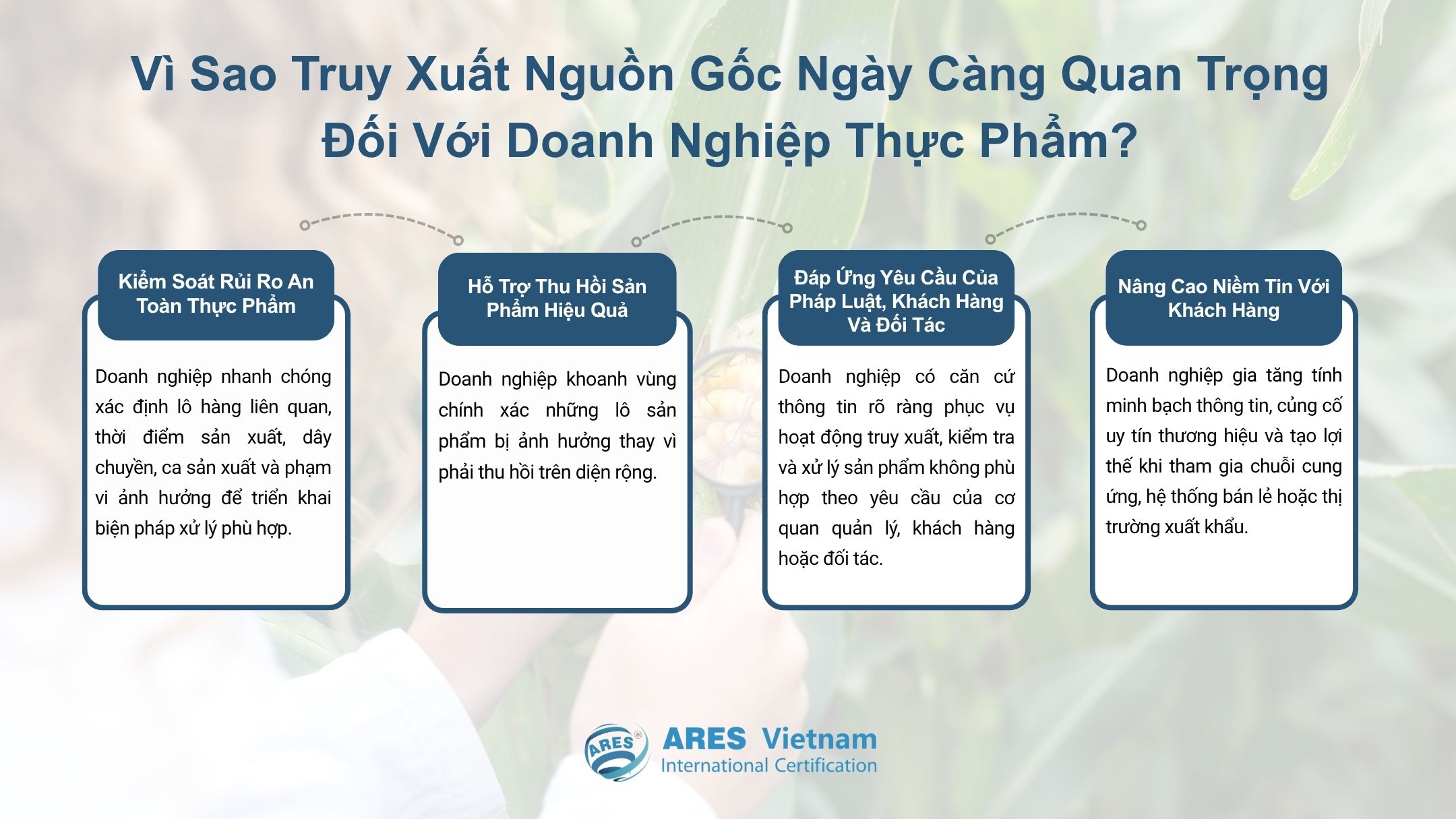
1. Control of Food Safety Hazards
Upon detecting non-conforming raw materials, semi-finished, or finished products, organizations can quickly identify the relevant batch, production time, line, shift, and scope of impact to implement appropriate corrective actions.
2. Supporting Effective Product Recall
A well-managed data system allows organizations to precisely isolate affected product batches instead of conducting wide-scale recalls. This contributes to reducing costs, minimizing waste, and decreasing the impact on products that still meet requirements.
3. Meeting Legal, Customer, and Partner Requirements
In the food safety sector, organizations must be prepared to provide information for traceability, inspection, and the handling of non-conforming products as required by regulatory authorities, customers, or partners.
4. Enhancing Customer Trust
The ability to verify the origin of materials, production processes, and control activities helps organizations increase transparency, strengthen brand reputation, and create a competitive advantage when participating in supply chains, retail systems, or export markets.
What Data Must Organizations Manage for Traceability?
To ensure effective traceability, organizations must systematically manage various data groups.
| Data Group | Information to be managed |
| Input information | Supplier, batch code, receipt date, incoming inspection results |
| Production process | Formula, production line, equipment, shift, responsible personnel |
| Product quality | Test results, quality specifications, control records |
| Storage and distribution | Storage conditions, dispatch records, receiving customers or agents |
| Post-sales | Complaints, alerts, product recall records (if any) |
This data must be linked via batch codes or appropriate identification methods so that the organization can perform forward and backward tracing rapidly.
For instance, when a supplier notifies of a non-conforming additive lot, the organization must immediately identify which products used that additive, the production time, current inventory levels, distribution scope, and whether a recall is required.
This is only feasible when data is managed consistently and linked throughout the entire process. To ensure information is recorded consistently and readily available for traceability, organizations must build an appropriate management system. This is a key requirement of ISO 22000 implementation.
See more: What is ISO 22000? Learn about ARES Vietnam’s ISO 22000 assessment and certification services.
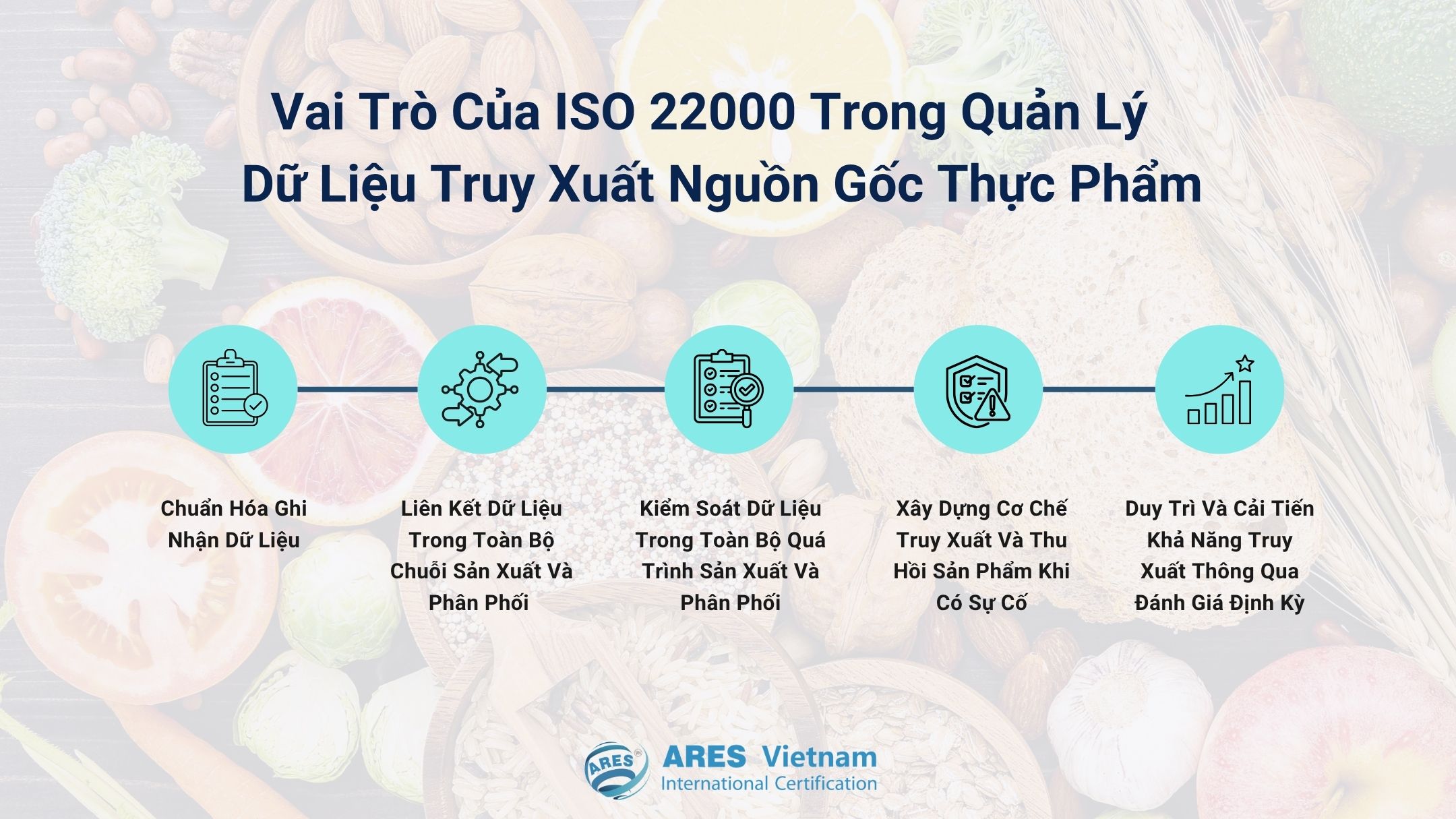
The Role of ISO 22000 in Managing and Controlling Traceability Data
1. Standardizing Data Recording
Under ISO 22000, organizations must establish uniform recording methods for each lot of raw materials, semi-finished, and finished products. Standardizing forms and records ensures data is comprehensive, consistent, and easily retrievable.
2. Linking Data Throughout the Production and Distribution Chain
Organizations must establish an information system capable of linking data across suppliers, raw materials, production, finished products, and customers. This serves as the basis for forward and backward tracing during incidents.
3. Controlling Data Throughout Production and Distribution
When operating an ISO 22000-based system, organizations must control the recording, retention, updating, and retrieval of food safety-related information. This ensures continuity from raw material receipt to final distribution and supports information verification when necessary.
4. Establishing Traceability and Product Recall Mechanisms
ISO 22000 requires organizations to develop procedures for potentially unsafe products, including traceability and recall operations. This allows the organization to accurately identify affected batches, contain risks, and implement appropriate corrective actions.
5. Maintaining and Improving Traceability via Periodic Audits
Beyond establishing procedures, organizations must periodically evaluate system effectiveness through internal audits, traceability drills, or product recall simulations. Audit results provide the basis for process improvement and enhanced incident response capabilities.
How to Build an Effective Traceability System?
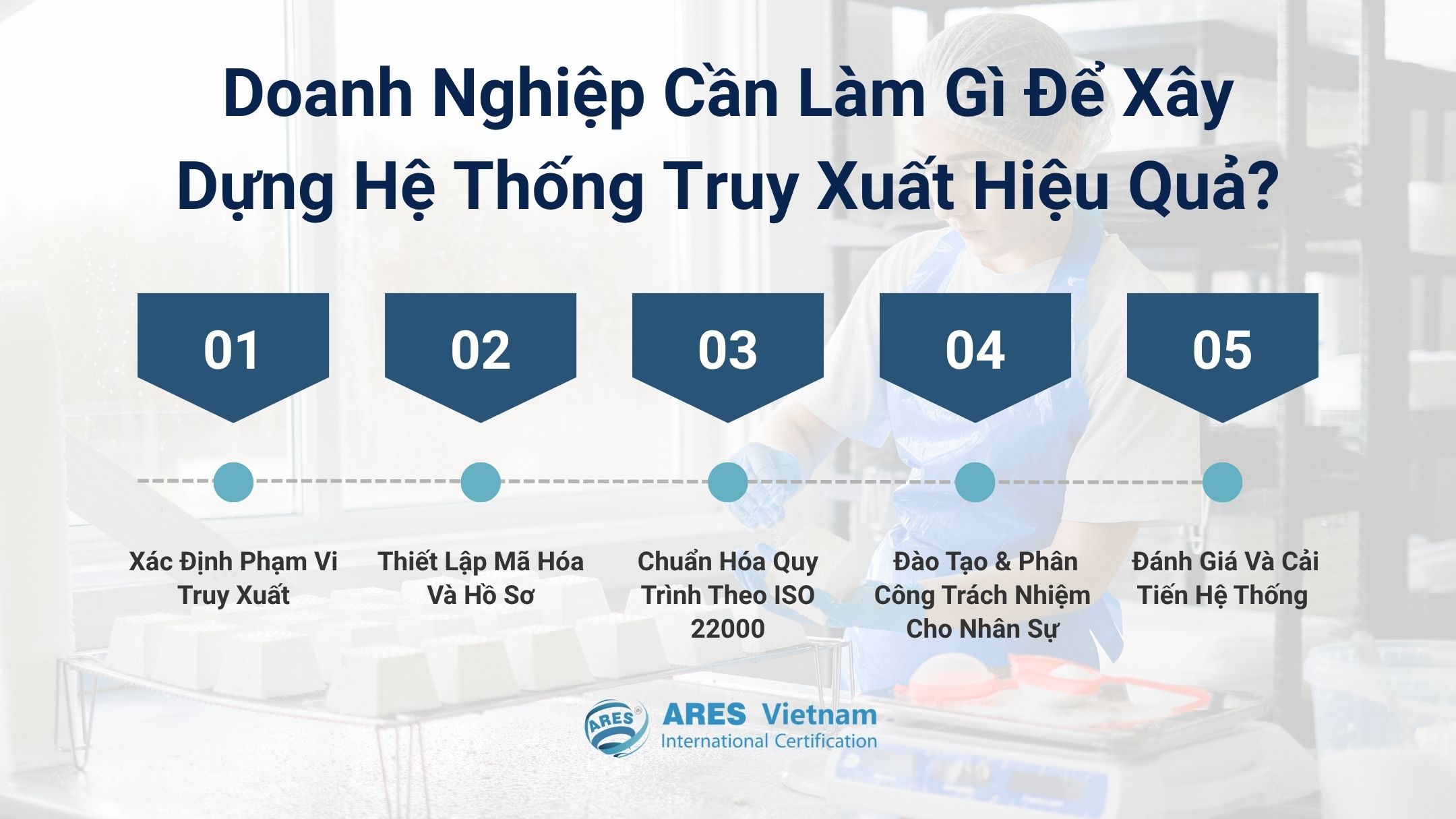
Step 1. Define the Scope of Traceability
Organizations must clearly define elements to be managed—such as raw materials, semi-finished goods, finished products, suppliers, and customers—to build a data system tailored to operational realities.
Step 2. Establish Coding and Record-keeping
Each lot of raw materials and products must be identified by a unique code. Simultaneously, organizations must maintain comprehensive records for traceability, such as production logs, inspection reports, warehouse records, and delivery documentation.
Step 3. Standardize Processes per ISO 22000
Organizations must apply ISO 22000 requirements to standardize operational procedures, hazard control, document management, and FSMS maintenance.
Step 4. Training and Assigning Responsibilities
Personnel must be trained on data recording, form usage, batch identification, and traceability execution. Additionally, responsibilities must be clearly assigned to departments to ensure uniform system operation.
Step 5. Evaluation and Improvement
Organizations should conduct periodic internal audits, traceability drills, and recall simulations to identify areas for improvement, enhance operational efficiency, and maintain response readiness for incidents.
How Does ARES Vietnam Support ISO 22000 Certification?
Food Traceability is increasingly becoming a vital component of food business management systems. Implementing ISO 22000 helps organizations standardize processes, strengthen data management capabilities, and enhance incident handling efficiency.
If your organization is exploring ISO 22000 certification or requires an assessment of your current management system’s conformity, ARES Vietnam is ready to support you through internationally recognized assessment and certification services.
Hotline: 085.3858.553
Email: service@aresvietnam.vn
Frequently Asked Questions (FAQ) About Food Traceability and the Role of ISO 22000
| Question | Answer |
| Does ISO 22000 require traceability? | Yes. ISO 22000 is a Food Safety Management System (FSMS) standard, in which traceability, record control, and incident handling capabilities are critical elements of system operation. |
| Is a QR Code a traceability system? | Not entirely. A QR Code is merely a tool to display or link to product data. A traceability system is a comprehensive data management process where information must be fully recorded, tightly linked, and verifiable when tracing is required. |
| How long should food businesses retain traceability records? | ISO 22000 does not specify a fixed retention period for records. Organizations must determine storage periods based on legal requirements, customer demands, product shelf life, and internal management needs to ensure traceability is guaranteed in the event of an incident. |
| What is the difference between ISO 22000 and ISO 22005? | ISO 22000 is a standard for Food Safety Management Systems, covering requirements for process control, traceability, and system improvement. Conversely, ISO 22005 provides fundamental principles and requirements for the design and implementation of traceability systems in the food chain. Both standards can be applied complementarily depending on an organization’s management objectives. |
| Which organizations should implement ISO 22000? | ISO 22000 is suitable for any organization involved in the food chain, such as food producers, processors, storage providers, transporters, distributors, raw material suppliers, manufacturers of food-contact packaging, and related service providers. |
Related news

Circular 49/2026/TT-BCT Takes Effect Soon: Which Environmental Records Should Factories Review?
Read more

ARES Vietnam Conducts the Second ISO 9001:2015 Surveillance Audit at KAISER 1 & KAISER 2 (Vietnam)
Read more

National Single Window and ASEAN Single Window: What Documents Should Import–Export Businesses Prepare?
Read more

ARES Vietnam Awards ISO 9001:2015 Certification to Simona Leather Company Limited
Read more
ARES Vietnam Conducts ISO 9001:2015 Surveillance Audit at Simona Leather Company Limited
Read more