The 2025 Cybersecurity Law: Effective July 1, 2026 – Strategic Implications for Businesses
In the contemporary business landscape, most enterprises operate through digital platforms—including websites, email systems, management software, ERP, and CRM—managing extensive data reservoirs related to clients, personnel, suppliers, and core business operations. As digital transformation accelerates, ensuring operational continuity and information system security has become a critical mandate for every organization.
Effective July 1, 2026, the 2025 Cybersecurity Law will officially come into force, establishing a more unified legal framework for cybersecurity, network information security, and data protection.
What measures should businesses take to ensure compliance? This article provides a comprehensive overview of the new regulation and its implications.
Understanding the 2025 Cybersecurity Law
The 2025 Cybersecurity Law (Law No. 116/2025/QH15), ratified by the National Assembly on December 10, 2025, serves as a consolidated legislative instrument. It inherits and integrates the relevant provisions from the 2018 Cybersecurity Law and the 2015 Law on Cyber Information Security. Its primary objective is to harmonize cybersecurity governance and ensure the robust protection of information in cyberspace.
This enactment completes the legal framework in response to the evolving digital environment, providing a clear mandate for agencies, organizations, and businesses to meet prevailing cybersecurity requirements.
Why Must Businesses Prioritize the 2025 Cybersecurity Law?
There are four primary reasons why businesses must align their strategies with this new legislation:
1. Data as a Strategic Asset
Data is no longer merely stored; it drives operations, decision-making, and business growth. Protecting information—ranging from customer and supplier details to technical records and financial contracts—is now vital for institutional integrity.
2. Mitigation of Operational Risks
Cyber incidents can lead to operational paralysis, data breaches, and severe reputational damage. Beyond financial loss, businesses may face challenges in meeting contractual obligations to clients, partners, and regulatory authorities.
3. The Need for Structured Information Security Management
Many organizations currently manage information based on ad-hoc experience, lacking formalized processes for risk assessment, access control, data backup, or incident response. This fragmentation compromises effective risk management.
4. Proactive Compliance Standards
The 2025 Law mandates a proactive approach. Beyond basic protection, it emphasizes the legal responsibility for the prevention, detection, and mitigation of cyber threats, urging firms to audit and refine their existing security posture.
Which Sectors Require Immediate Attention?
While the 2025 Cybersecurity Law applies broadly, the scope of obligations depends on the specific industry, the nature of processed data, and existing information systems.
The following categories should exercise heightened vigilance:
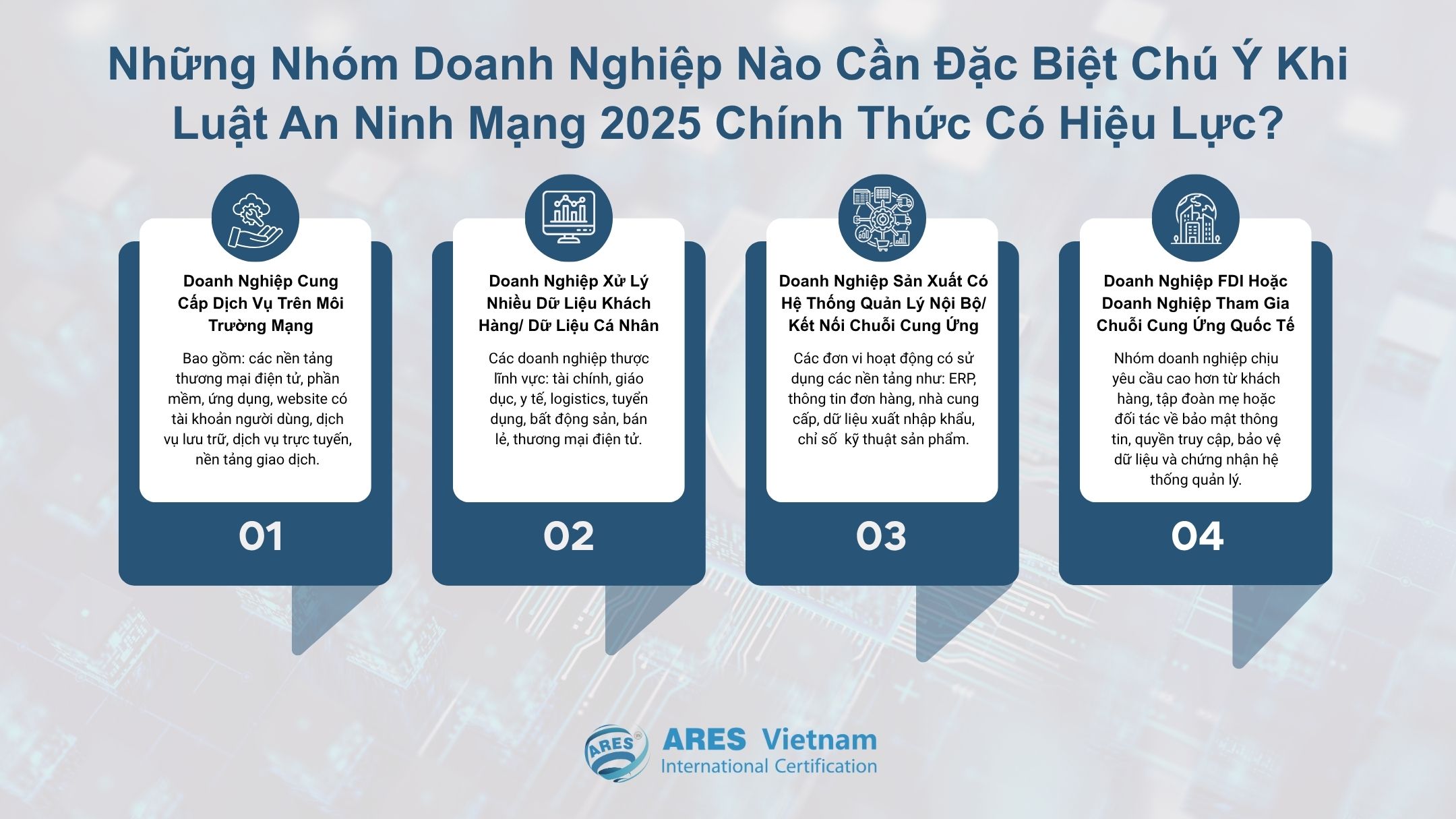
1. Digital Service Providers
Including e-commerce platforms, software and application developers, service providers with user accounts, cloud hosting services, and online transactional platforms.
2. Data-Intensive Organizations
Entities handling significant volumes of customer or personal data, particularly in finance, education, healthcare, logistics, recruitment, real estate, and retail.
3. Manufacturers with Integrated Systems
Enterprises utilizing ERP systems, managing supply chain logistics, import/export data, and proprietary technical specifications.
4. FDI and Internationally Integrated Enterprises
Businesses operating within global supply chains, which typically face stringent security requirements from parent companies, international partners, and external certification bodies.
Recommended Actions for Businesses Following the Enactment of the 2025 Cybersecurity Law
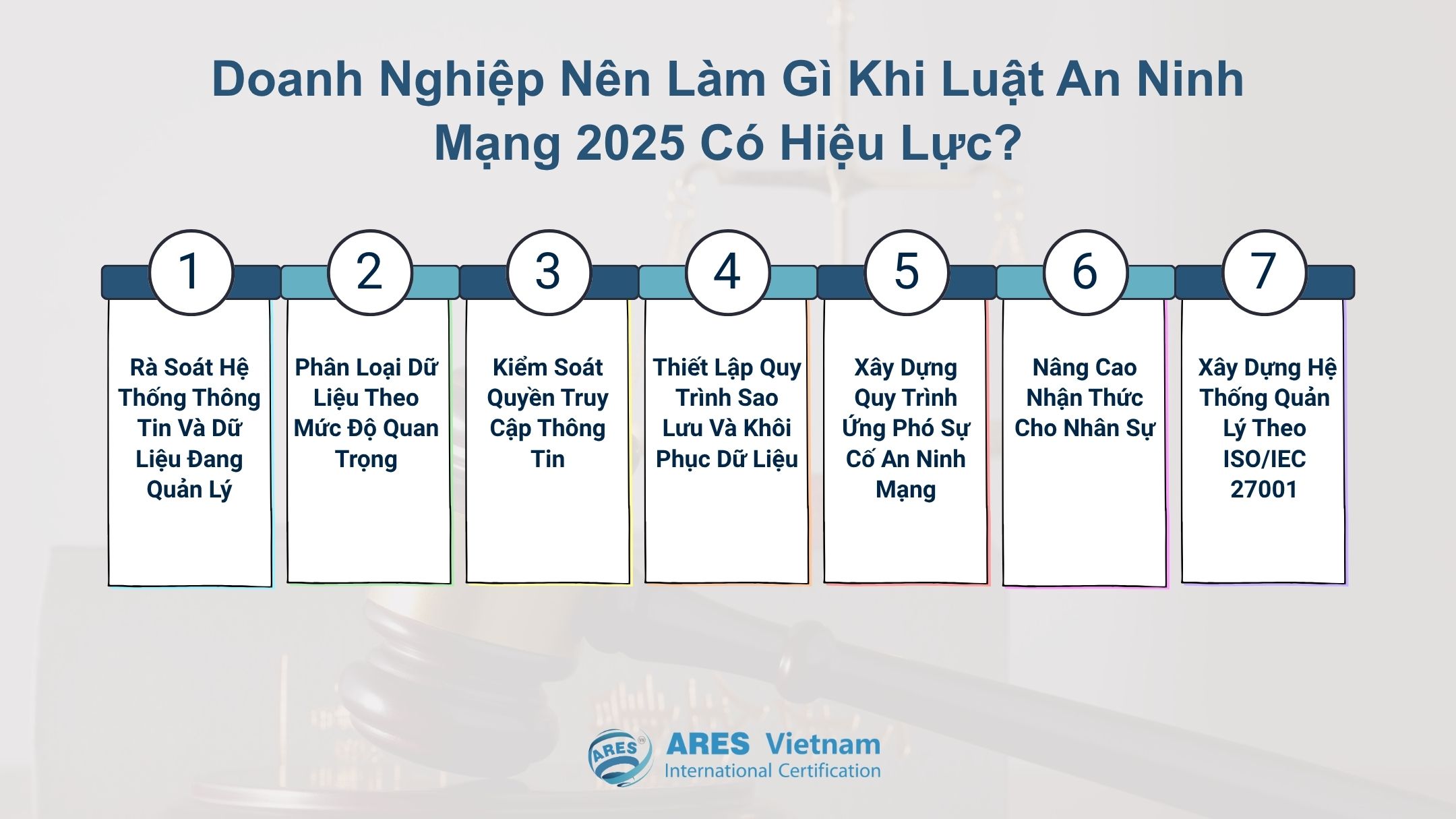
To proactively adapt to cybersecurity and data protection requirements, enterprises must move beyond simple technology investments and focus on establishing robust management processes. The following steps should be prioritized:
1. System and Data Inventory
Conduct a comprehensive audit of all operational systems, including websites, corporate email, ERP, CRM, accounting software, HR platforms, and data storage repositories. Clearly define the categories of data stored and the scope of each system’s utility.
2. Data Classification
Not all data holds the same level of risk. Categorize information (e.g., public, internal, personal, sensitive/confidential) to apply appropriate security controls to each tier.
3. Access Control Management
Review user access rights to ensure that personnel only hold privileges necessary for their specific roles. Revoke inactive accounts, enforce periodic password updates, and strictly govern third-party access.
4. Data Backup and Recovery Protocols
Establish a regular backup schedule and verify the feasibility of recovery processes. This is critical for minimizing the impact of ransomware, system failures, or accidental data loss.
5. Incident Response Planning
Clearly define departmental responsibilities, escalation procedures, and forensic documentation requirements for security incidents. Providers of online services must be prepared to execute response plans and fulfill reporting obligations as mandated by law.
6. Staff Security Awareness Training
Many breaches originate from simple human errors, such as opening suspicious attachments, using weak passwords, or account sharing. Regular training is essential to ensure employees understand and adhere to security policies.
7. Implementation of ISO/IEC 27001
Beyond technical measures, adopting an Information Security Management System (ISMS) based on ISO/IEC 27001 standards helps standardize policies, processes, and controls. This framework provides the foundation for operational consistency and compliance readiness.
Business Readiness Checklist
Use this self-assessment tool to gauge your organization’s security preparedness:
Does it include personal or high-value information requiring strict protection?
| Category | Key Assessment Questions |
| Data | What data is being stored? |
| Systems | Are websites, email, ERP, CRM, and internal software protected by adequate security measures? |
| Permissions | Are access rights aligned with roles/responsibilities and reviewed periodically? |
| Backup | Is data backed up regularly, and has the ability to restore data been tested? |
| Incidents | Is there an established procedure for responding to cyberattacks, data loss, or breaches? |
| Personnel | Have employees completed information security awareness training? |
| Suppliers | Have IT and software service providers been vetted for competency and risk? |
| Governance | Does the company hold ISO/IEC 27001 certification or have an ISMS implementation plan? |
How ISO/IEC 27001 Supports Information Security Management
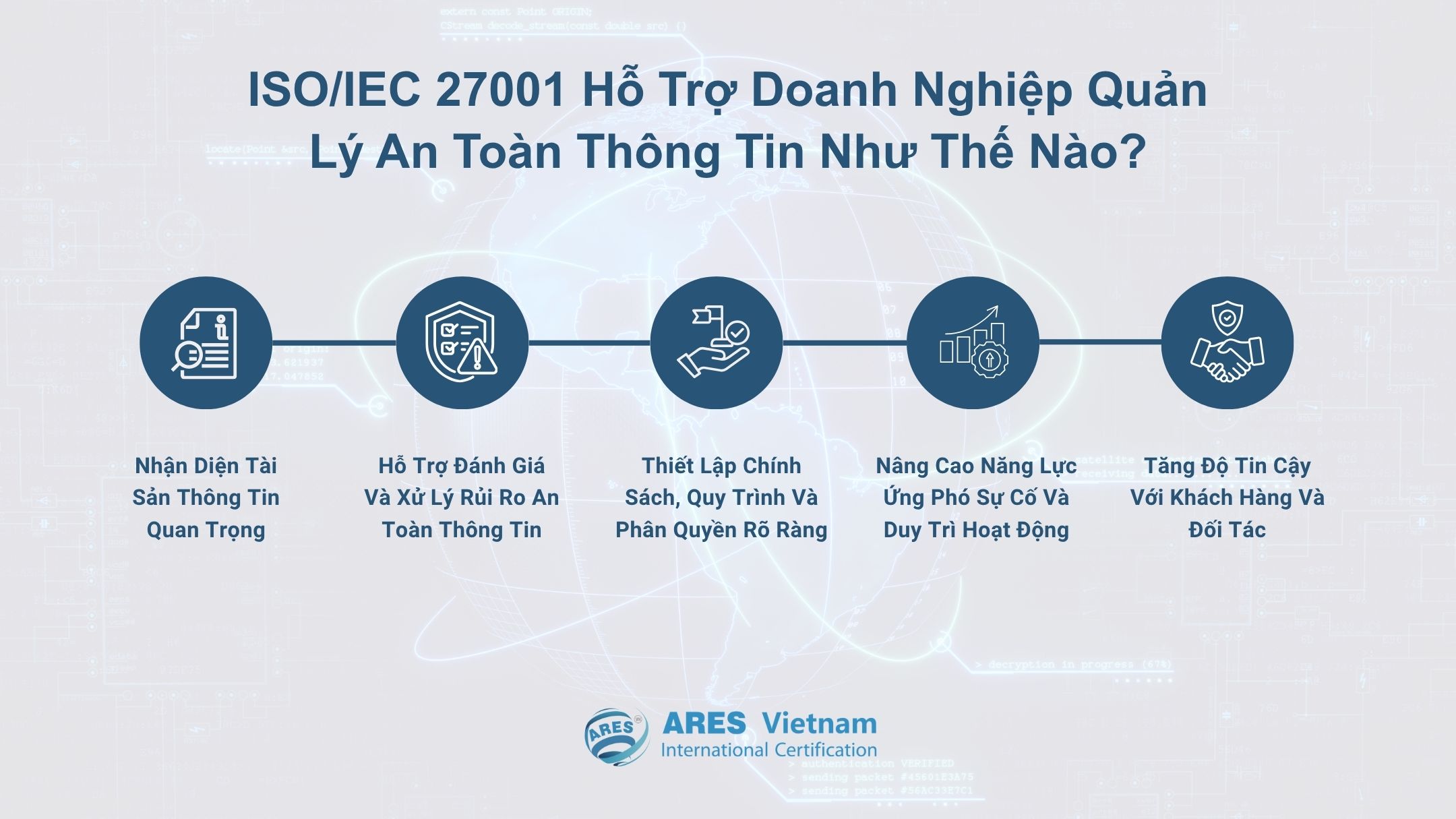
ISO/IEC 27001 does not replace legal cybersecurity regulations; however, this standard assists enterprises in establishing systematic information management processes, thereby enhancing data protection capabilities and risk control during operations. Key benefits include:
1. Identification of Critical Assets
ISO/IEC 27001 requires organizations to identify information assets within the scope of their Information Security Management System (ISMS), such as customer data, personnel records, technical documentation, software systems, and technological infrastructure. This serves as the foundation for businesses to assess risks and select appropriate security measures tailored to the sensitivity of each asset.
2. Support for Risk Assessment and Treatment
The standard mandates the identification of threats, assessment of risk levels, and the selection of suitable controls. Consequently, risk management is executed through a structured, planned approach rather than solely responding to incidents after they have occurred.
3. Establishment of Clear Policies, Processes, and Access Rights
ISO/IEC 27001 facilitates the development of a comprehensive system of policies, procedures, and regulations regarding information management throughout the organization. Simultaneously, access rights are assigned based on roles and responsibilities, which helps mitigate the risk of unauthorized access or information leakage.
4. Enhanced Incident Response and Business Continuity Capabilities
Within the framework of an ISMS, businesses are required to establish appropriate controls for incident management, data backup, recovery, and business continuity based on risk assessment outcomes. This enables organizations to minimize the impact of incidents while significantly shortening system recovery time.
5. Increased Reliability with Clients and Partners
Building an information security management system compliant with ISO/IEC 27001 demonstrates a business’s commitment to information protection. This serves as a strategic advantage when working with clients, partners, or participating in global supply chains that require stringent data security standards.
Strengthening the Information Security Foundation for New Regulatory Requirements
In summary, the 2025 Cybersecurity Law, which came into effect on July 1, 2026, serves as a crucial reminder for businesses to re-evaluate how they manage information systems, data, and cyber-related risks. Rather than adopting a reactive approach to security incidents, enterprises should proactively build a structured information security management system, for which ISO/IEC 27001 serves as an ideal framework.
ARES Vietnam provides international-standard assessment and certification services for ISO/IEC 27001, assisting organizations in enhancing their control capabilities, ensuring information security, mitigating data risks, and strengthening trust with clients and partners.
Contact ARES Vietnam for professional consultation regarding audit scope, the certification process, and preparation roadmaps tailored to your company’s scale and industry.
Frequently Asked Questions (FAQ)
| FAQ | Brief Answer |
| Does the 2025 Cybersecurity Law apply to foreign enterprises operating in Vietnam? | Yes. Foreign entities operating, providing services, or processing data in Vietnam must comply with relevant provisions under the 2025 Cybersecurity Law and its guiding documents.
Businesses should audit their actual operations to determine |
| Do small businesses need to prioritize cybersecurity? | Yes. Small businesses routinely store customer data, contracts, account credentials, emails, and transactional information. These are all critical information assets that require protection. |
| Should businesses wait for official guidelines before implementing security measures? | No. Activities such as system audits, data inventory, risk assessment, access control implementation, and the development of incident response procedures are proactive steps that businesses should take immediately to enhance management capacity and minimize operational risks. |
Related news

Circular 49/2026/TT-BCT Takes Effect Soon: Which Environmental Records Should Factories Review?
Read more


ARES Vietnam Conducts the Second ISO 9001:2015 Surveillance Audit at KAISER 1 & KAISER 2 (Vietnam)
Read more

National Single Window and ASEAN Single Window: What Documents Should Import–Export Businesses Prepare?
Read more

ARES Vietnam Awards ISO 9001:2015 Certification to Simona Leather Company Limited
Read more

ARES Vietnam Conducts ISO 9001:2015 Surveillance Audit at Simona Leather Company Limited
Read more