Important Update for Food Businesses: From 2026, HACCP, ISO 22000, and FSSC 22000 Will Not Replace the Food Safety Eligibility Certificate
For many years, food businesses have relied on HACCP, ISO 22000, and FSSC 22000. This is especially true for exporters and supply chain participants.
These systems demonstrate effective food safety control capability. Moreover, they establish structured operations and preventive hazard control. As a result, businesses can meet strict international partner requirements.
However, from 2026, the regulatory framework will be adjusted. This change follows Decree 46/2026/ND-CP. Accordingly, the boundary between internal management systems and legal operating conditions becomes clearer.
Therefore, businesses should reassess a key question: Can system certification replace the Food Safety Eligibility Certificate?
HACCP / ISO 22000 / FSSC 22000: Will They Replace Food Safety Certificates from 2026?
The answer is no.
From April 16, 2026, the regulatory approach is clarified. Under Decree 46/2026/ND-CP, voluntary certifications stand independently. These include ISO 22000, HACCP, FSSC 22000, IFS, and BRC.
This means:
• Management system certification does not constitute legal grounds permitting a business to manufacture or trade.
• The food safety certificate remains a mandatory administrative document issued by the competent state authority.
• Businesses must ensure they have all the necessary licences in accordance with current regulations.
Importantly, this adjustment does not reduce the professional value of international standards. On the contrary, ISO and HACCP remain highly effective management frameworks. They are based on risk assessment and continual improvement principles. However, from a legal perspective, operating licenses follow a separate mechanism.
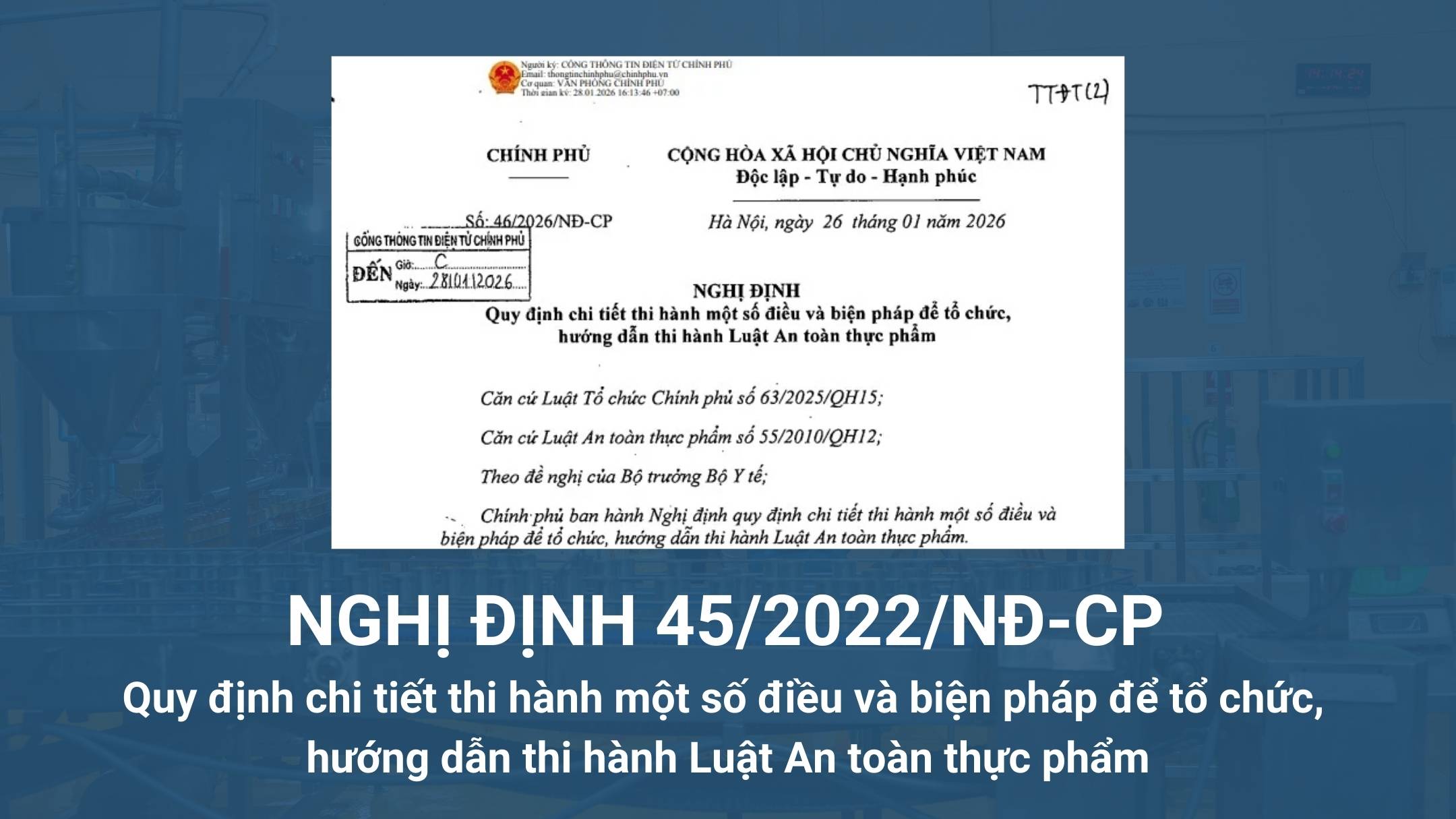
Decree 46/2026/NĐ-CP stipulates that ISO 22000, HACCP, and FSSC 22000 will no longer replace the Food Safety Certificate from 2026
The Distinct Nature Of ISO/HACCP/FSSC And The Food Safety Certificate
To ensure clarity, businesses should understand their independent functions.
| ISO / HACCP / FSSC 22000 | Food Safety Eligibility Certificate |
| A system for hazard and risk control throughout production | An administrative document confirming legal operating conditions |
| An internal governance tool based on prevention and continual improvement | The minimum legal basis for production and business activities |
| Periodically audited by independent certification bodies | Issued and managed by competent state authorities |
| Supports market access, partners, and export requirements | Ensures compliance with government regulations |
In summary:
- ISO/HACCP/FSSC strengthen risk control capability.
- The ATTP Certificate establishes legal operating status.
Therefore, these two mechanisms do not replace each other but coexist and complement each other in the modern governance structure. From 2026, food production units must simultaneously ensure food safety management systems. These include ISO 22000, HACCP, FSSC 22000 and valid food safety certification. One mechanism demonstrates the ability to control risks. The other establishes legal status to be permitted to operate.
Conversely, the absence or inadequacy of legal conditions may lead to production suspension, mandatory product recall and destruction, and substantial administrative fines. If serious consequences arise for consumer health, individuals and organisations involved may also face criminal liability under the law.
What Should Food Businesses Do From 2026?
In light of significant policy changes in 2026, businesses need to proactively reassess their current level of compliance. The following actions should be considered and implemented early:
1. Review the validity and scope of the Food Safety Certificate
• Check the expiration date
• Verify registered business lines, capacity, and production sites
• Record any scale changes requiring updates
2. Compare certification scope with licensed scope
• Identify areas covered by ISO/HACCP/FSSC
• Review the scope stated in the ATTP Certificate
• Confirm legal updates for new lines, warehouses, or facilities
The objective is clear alignment between operations and licensing.
3. Conduct necessary administrative procedures when required
• New application
• Reissuance
• Scope amendment
• Location amendment
4.Maintain system documentation in a ready state
• Hazard control records
• Facility condition records
• Traceability documentation
In this context, ISO supports evidence during regulatory inspections.
5. Establish a periodic legal review mechanism
• Integrate legal compliance into internal audits
• Recheck permits when operational scale changes
• Manage systems and legal status in parallel
Proactive alignment always supports sustainable operations.
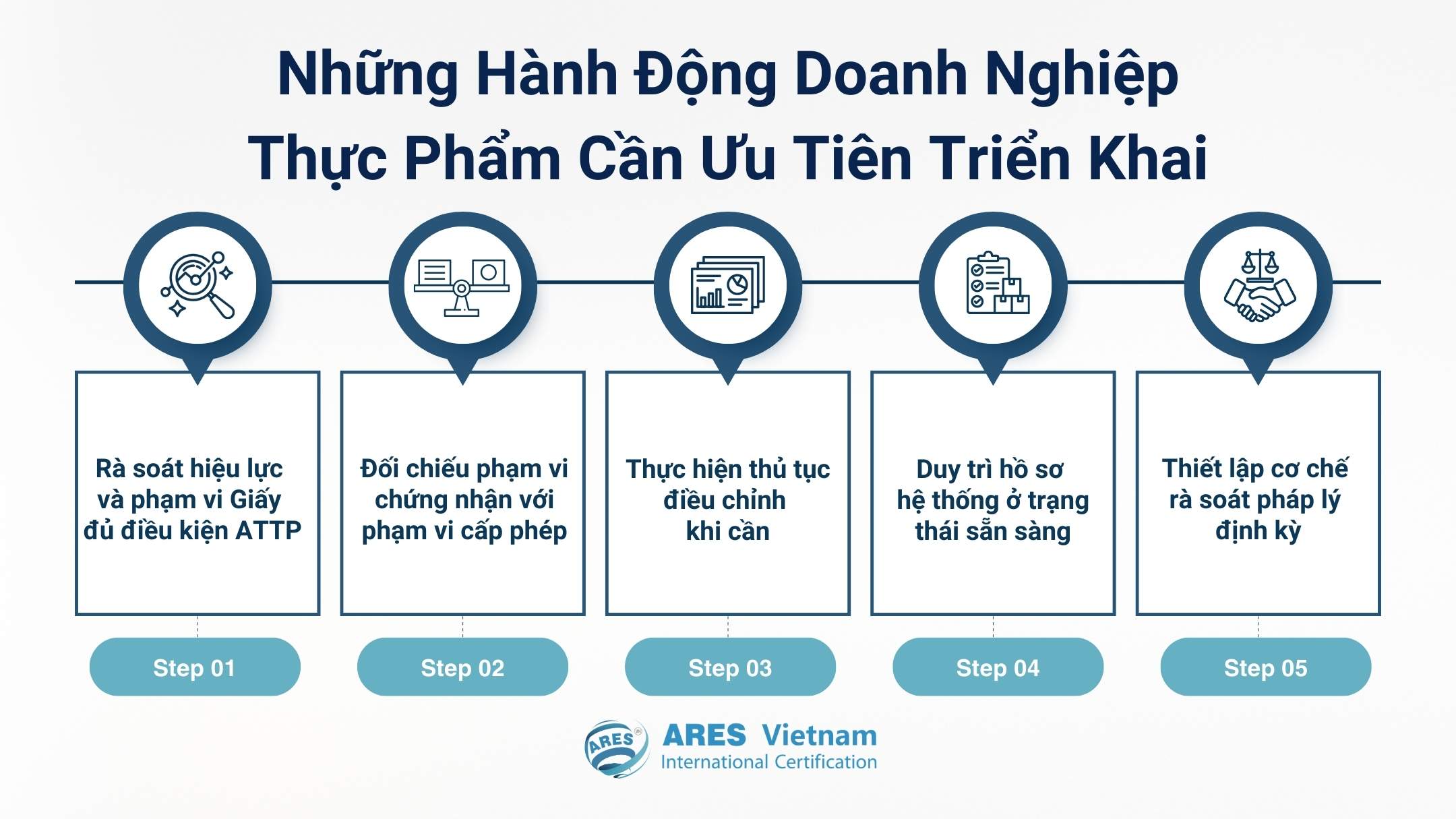
Actions businesses need to prioritise before Decree 46/2026/NĐ-CP takes effect
Aligning ISO and the ATTP Certificate – A Foundation for Stable Operations After 2026
From 2026, the key focus is alignment. It is no longer about certification alone. Instead, it is about consistency between management systems and legal authorization. When these elements are synchronized, businesses improve compliance performance. They also gain greater confidence in inspections and trade activities. Furthermore, expansion opportunities become more structured and secure.
ARES Vietnam supports businesses in reviewing compatibility between ISO/HACCP/FSSC and the ATTP Certificate. We help identify legal gaps and recommend practical adjustments. Our approach aligns with actual operational conditions.
Contact ARES Vietnam for professional assessment and consultation. Early alignment ensures sustainable and compliant business development.
Related news

ISO And Compliance Trends In 2026 That Vietnamese Businesses Should Not Overlook
Read more


Looking Back at the Journey of 2025 – A Year of Value and Trust
Read more

International ISO Certification Standards
Read more

ARES Vietnam Awards ISO 9001:2015 Certification To Dong Nguyen Design Construction Co., Ltd.
Read more

Lunar New Year of Binh Ngo 2026 – Sustaining Values, Shaping Standards
Read more