

CARBON EMISSIONS STANDARDIZATION
THE FIRST STEP TOWARDS PARTICIPATION IN THE GLOBAL ESG ECOSYSTEM
Measuring, inventorying, and achieving carbon neutrality are essential prerequisites for transparent ESG disclosure, overcoming green trade barriers, and integrating into global supply chains.


EMISSIONS TRANSPARENCY – ACTING TO MAINTAIN ESG ADVANTAGE
The low-carbon economy is becoming a global norm. Organizations can no longer remain outside the emissions transparency trend if they seek to maintain their position within international supply chains.


Pressure from investors and supply chains is compelling organizations to disclose emissions data.


The ISO 14064, ISO 14067, and ISO 14068 standards provide a robust foundation for achieving Net Zero objectives.


Organizations that standardize carbon data at an early stage will secure a green competitive advantage.

THE EMISSIONS DATA CRISIS ON THE ESG JOURNEY
Available data indicates that Vietnamese enterprises are facing a significant gap in carbon data—one of the primary barriers preventing ESG strategies from achieving meaningful progress.
– Only 10% of listed companies (out of approximately 1,700 enterprises on HOSE and HNX) disclose carbon emissions, highlighting a very low level of ESG data readiness.
– Only 22% of enterprises have a comprehensive ESG program, most of which have not been independently audited, resulting in a lack of credible evidence for investors.
– Fewer than 200 out of 2,000 enterprises subject to mandatory requirements under Decree No. 06/2022 have completed greenhouse gas inventories, reflecting a substantial gap between regulation and actual implementation.
THREE PILLARS OF CARBON EMISSIONS STANDARDIZATION
A ROADMAP TO GLOBAL ESG INTEGRATION
From measurement to carbon neutrality, ISO 14064, ISO 14067, and ISO 14068 serve as guiding frameworks enabling organizations to take substantive, transparent, and credible action in line with international ESG standards.

STANDARDIZING EMISSIONS – TOWARDS SUSTAINABILITY

Transforming carbon into a data asset
ISO-based measurement, reporting, and verification systems enable organizations to control carbon flows and make informed, data-driven decisions.

Product carbon footprint quantification
ISO 14067 enables emissions traceability at the product-unit level, supporting design optimization, fair pricing, and alignment with green consumption trends.

Operational optimization through reliable data
Standardized emissions data helps identify inefficiencies, improve energy and material efficiency, and enhance overall operational productivity.

Integrating ESG into operations
The three standards require the digitalization of environmental data, creating a foundation for ERP integration, audit readiness, and accurate ESG reporting.

Demonstrating capability through international verification
ISO-verified emissions disclosure serves as evidence of responsible operational capability, strengthening brand credibility and enhancing access to global markets.


WHICH ORGANIZATIONS NEED TO IMPLEMENT
THE THREE CARBON EMISSIONS STANDARDS?
Regardless of size or industry, all organizations need to standardize carbon emissions if they aim to expand internationally, strengthen competitiveness, and achieve sustainable growth.



IMPLEMENTATION ROADMAP FOR EMISSIONS STANDARDIZATION
As a comprehensive provider of consultancy, training, and certification services, ARES Vietnam establishes an implementation roadmap that strictly complies with international ISO requirements and applicable domestic regulations.

INITIAL CONSULTATION
Organizations contact ARES Vietnam via the hotline or official communication channels. ARES Vietnam’s experts receive initial information and gain an understanding of the organization’s ESG objectives and emissions standardization direction.

PRELIMINARY ASSESSMENT AND QUOTATION
ARES Vietnam conducts a preliminary review of the existing system and relevant documentation related to organizational and/or product emissions. Based on this assessment, the applicable scope is defined, a service proposal and quotation are developed, and the service contract is concluded.

GAP ASSESSMENT AND SYSTEM IMPROVEMENT
A comprehensive assessment of the emissions management system is carried out—from operational activities to the product life cycle. Process improvements are proposed, and the measurement and reporting system is refined in full alignment with ISO requirements.

INDEPENDENT VERIFICATION
ARES Vietnam supports the consolidation, analysis, and calculation of emissions data in accordance with ISO 14064, ISO 14067, and ISO 14068. Coordination with an independent verification body is conducted to ensure transparency and objectivity of the results.

CERTIFICATION ISSUANCE
Upon full compliance with applicable requirements, the dossier is submitted to an internationally accredited certification body. The organization is awarded the corresponding emissions certification with global recognition.

PERIODIC SURVEILLANCE
Certification is valid for three years and subject to annual surveillance to maintain its validity. ARES Vietnam continues to support system improvement, ensuring continuity and ongoing compliance with increasingly stringent ESG requirements.
ARES VIETNAM – DIFFERENTIATED FROM STRATEGIC THINKING TO EFFECTIVE EXECUTION
As a trusted ESG partner, combining international expertise with in-depth understanding of the Vietnamese market, ARES Vietnam supports organizations throughout their sustainable transformation journey.

3 Reasons to Choose ARES Vietnam
EXPERT TEAM - THE FOUNDATION FOR DIFFERENCE
Bringing together experienced experts, internationally trained and accredited, ARES Vietnam is committed to supporting organisations on their journey toward standardisation and sustainable development




SUCCESSFUL PROJECTS
Pioneering organizations have partnered with ARES Vietnam on the journey to standardize carbon emissions and demonstrate sustainable governance capability.
PRO ACTIVE GLOBAL
VIETNAM COMPANY LIMITED

KAISER 1 FURNITURE
INDUSTRY (VIETNAM) COMPANY LIMITED
KAISER 2 FURNITURE
INDUSTRY (VIETNAM) COMPANY LIMITED

GE LAN HI-TEX IND.
COMPANY LIMITED
JI YANG ELECTRONIC
MATERIALS COMPANY LIMITED

GOLD WELL
COMPANY LIMITED


SAMPLE ISO 14064-1:2018 & 14067:2018 & 14068-1:2023 CERTIFICATE ISSUED BY ARES VIETNAM
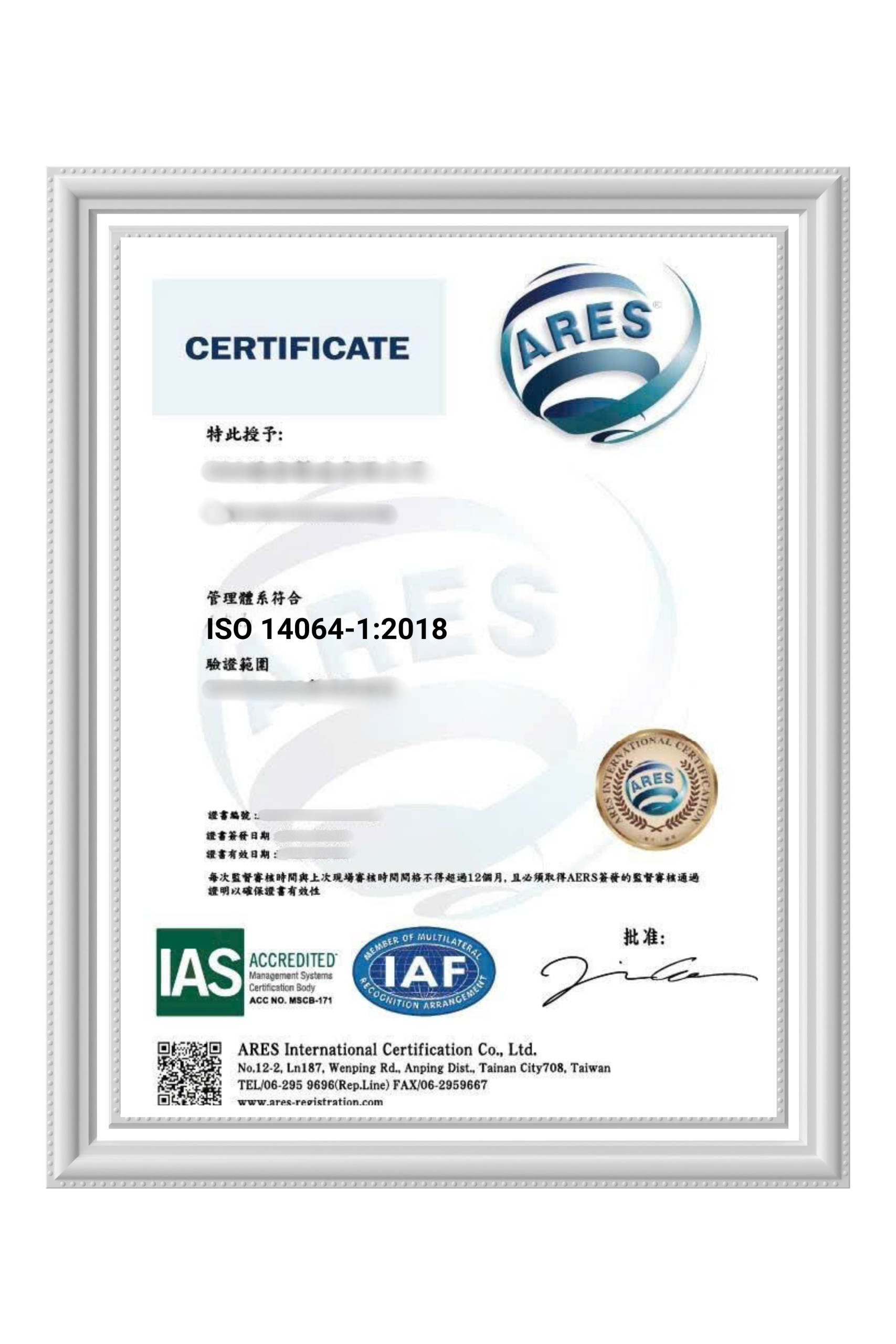
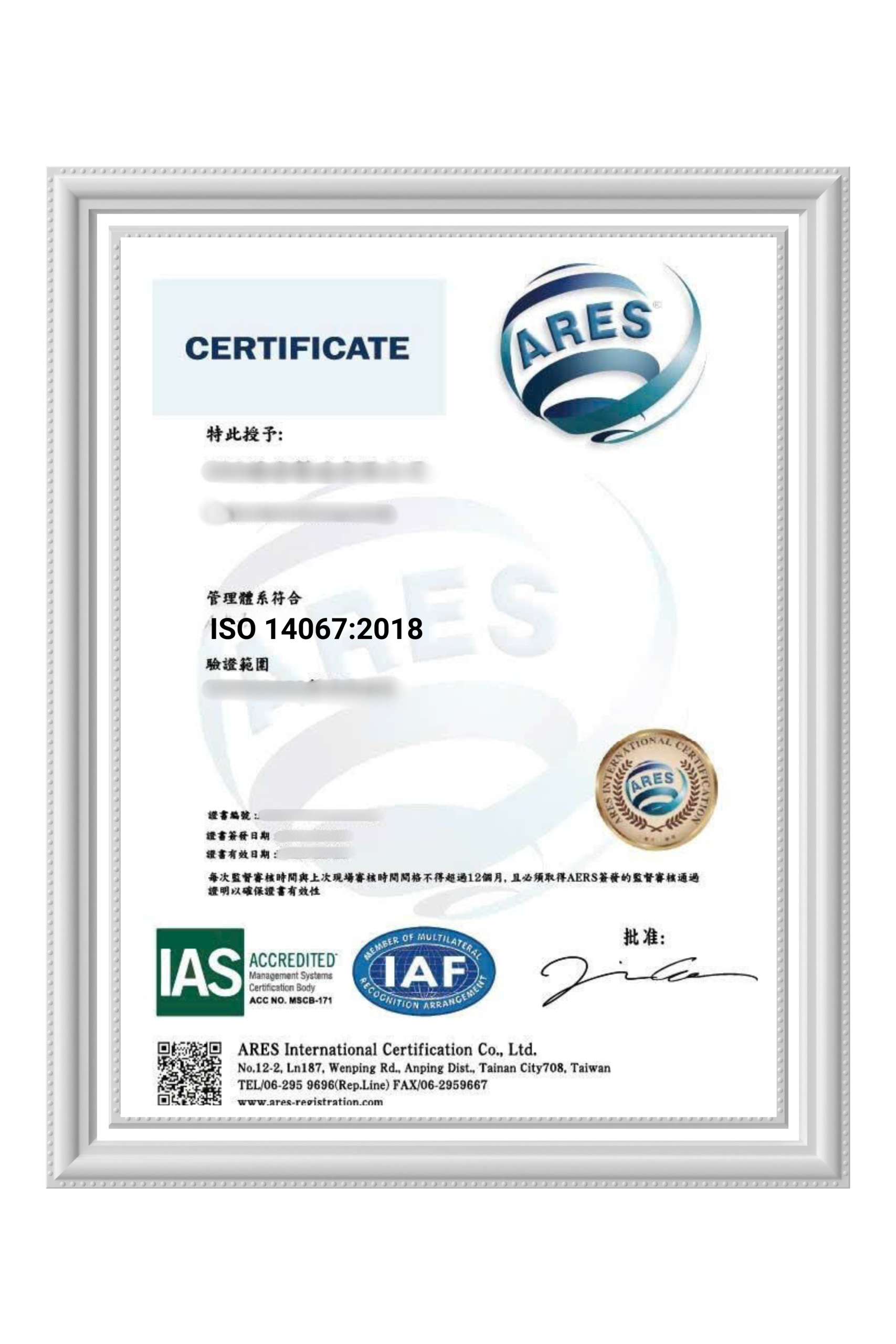
*Illustrative image of an ISO 14064-1:2018 & 14067:2018 & 14068-1:2023 certificate issued by ARES Vietnam
FREQUENTLY ASKED QUESTIONS ABOUT ISO 14064 – 14067 – 14068
-
Which standard should organizations start with within the ISO trio?
Organizations are advised to begin with ISO 14064-1 (organizational greenhouse gas inventory), then expand to ISO 14067 (product carbon footprint calculation), and implement ISO 14068 when pursuing carbon neutrality objectives. These three standards are complementary and follow a progressive pathway; they do not replace one another.
-
Can ISO standards be implemented without an existing emissions data system?
It is entirely possible. ARES Vietnam provides end-to-end support from the initial stage, including system setup, internal training, and data collection in accordance with international standards—even for organizations with no prior implementation experience.
-
Can organizations measure and declare emissions on their own?
Internal measurement is possible; however, international recognition requires assessment and verification by an independent certification body such as ARES Vietnam. Self-declaration alone is not sufficient for official ESG disclosure, participation in carbon markets, or green capital raising.
-
Does ARES Vietnam support product carbon footprint calculation under ISO 14067?
Yes. ARES Vietnam supports organizations in defining system boundaries, selecting appropriate calculation methodologies, and collecting, analyzing, and verifying data— enabling transparent PCF disclosure fully aligned with ISO 14067 for export and green procurement purposes.
-
Can data from ISO 14064 be used to develop a Net Zero strategy?
It is entirely possible. ISO 14064-1 provides comprehensive data across Scope 1, Scope 2, and Scope 3 emissions, forming a reliable foundation for emissions reduction roadmaps and Net Zero strategies that meet investor expectations.
-
If ISO 14064 has already been implemented, is it necessary to start over when transitioning to ISO 14068?
No. ISO 14068 builds upon data from ISO 14064 and ISO 14067. Organizations only need to update additional elements such as carbon credits and neutrality plans, without rebuilding the entire system.
-
Are implementation costs suitable for small and medium-sized enterprises (SMEs)?
Yes. ARES Vietnam designs streamlined, cost-optimized implementation roadmaps tailored to organizational size and objectives, focusing on material emission sources to ensure effective and efficient adoption for SMEs.
-
Is reassessment required after certification is achieved?
Yes. Certification is valid for three years and is subject to annual surveillance audits to maintain validity and ensure continuous system updates and improvement.

SPECIAL OFFER FOR IMPLEMENTING
INTERNATIONAL CARBON EMISSIONS STANDARDS
End-to-end support for ISO 14064, ISO 14067, and ISO 14068 implementation with optimized costs, a streamlined roadmap, and in-depth expert consultancy.
- Certification fee reduction for organisations implementing ISO for the first time
- Special incentives for registration integrating two or more standards
- Receive 10 Internal Auditor Certificates
- Free Pre-audit Consultation – Reviewing the System Prior to Assessment
- Priority scheduling for early assessment and support for fast certificate issuance
*Service incentives applicable to organisations registering via the Website